How Many Inches Is A Size 12 Shoe – Length Conversion Guide
A size 12 shoe generally measures between 11.5 and 12 inches, but the exact length can vary depending on gender, brand, and region. Men’s size 12 shoes usually fit about 11.6 to 11.8 inches, while women’s size 12 typically ranges from 11.4 to 11.8 inches.
Regional sizes like UK 12 or European 45 convert differently because of varying standards. It’s also important to remember that an accurate fit depends on width and foot measurements. Understanding these factors will help you choose the best size for comfort and fit.
Key Takeaways
- Men’s size 12 shoes typically measure about 11.6 to 11.8 inches in length.
- Women’s size 12 shoes usually range around 11.4 to 11.8 inches long.
- Children’s size 12 shoes are shorter, approximately 7.75 to 8 inches in length.
- Regional sizes vary: UK 12 is about 11.6 inches, EU 45 around 11.8 inches, and Japanese 28.5 near 11.2 inches.
- Shoe sizes reflect internal dimensions, but material, padding, and brand variances affect actual fit and length.
What Is the Length of a Size 12 Shoe in Inches?
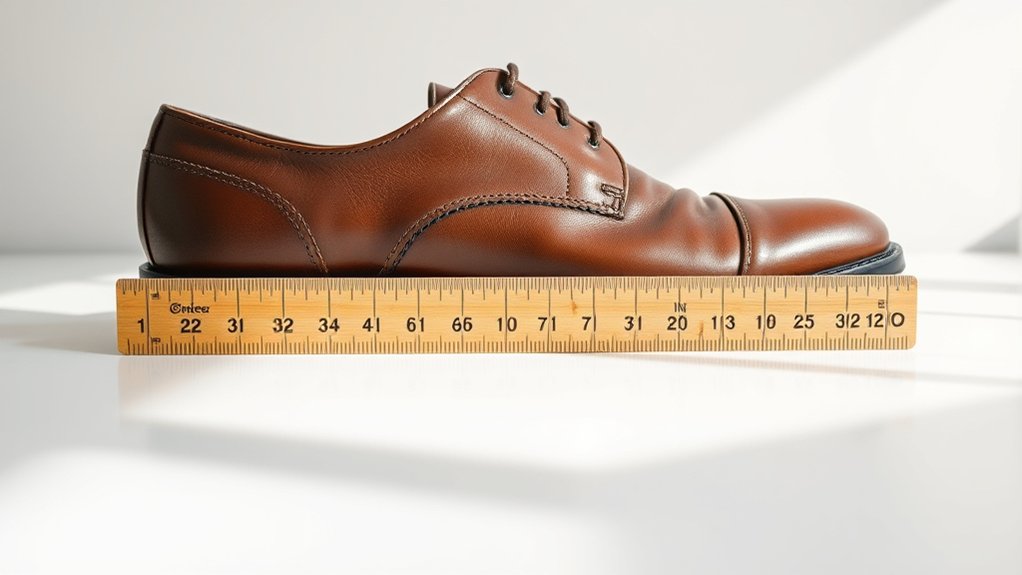
A size 12 shoe typically measures between 11.5 and 12 inches in length, depending on whether it’s designed for men, women, or children. Men’s size 12 shoes usually measure about 11.6 inches, while women’s size 12 shoes tend to be slightly longer, around 11.8 inches.
Children’s size 12 shoes are considerably shorter, measuring approximately 7.75 to 8 inches.
When selecting a size 12, you’ll notice that material durability plays a vital role in maintaining fit over time, especially as materials expand or contract with wear.
Styling trends also influence shoe dimensions, with some designs favoring a sleeker fit or thicker soles, which may affect perceived length.
Understanding these measurements helps you make informed choices that balance comfort, durability, and current styling trends.
How US Men’s and Women’s Size 12 Shoes Compare in Length
When comparing US men’s and women’s size 12 shoes, you’ll find that men’s versions typically accommodate a foot length of about 11.8 inches (30 cm), while women’s size 12 shoes generally fit slightly shorter feet, around 11.5 inches (29.2 cm).
This 0.3-inch difference influences shoe fit and comfort comparison, as men’s shoes tend to offer a marginally longer space. Understanding these dimensions helps you select the appropriate size for maximum comfort.
| Shoe Type | Foot Length (inches) | Shoe Length (inches) |
|---|---|---|
| Men’s Size 12 | 11.8 | 12.0 |
| Women’s Size 12 | 11.5 | ~11.7 |
| Difference | 0.3 | 0.3 |
This precision guarantees you choose the best shoe fit for your needs.
How Size 12 Shoe Sizes Differ Across Brands and Systems
Understanding how size 12 shoe measurements vary across brands and sizing systems is essential for selecting the right fit.
While a men’s size 12 typically measures around 11.6 inches, length can differ by up to 0.3 inches depending on the brand’s sizing standards and shoe system. This variation impacts material durability, as a snug or loose fit affects wear patterns and shoe lifespan.
Brands with strong reputations often maintain consistent sizing to guarantee customer satisfaction.
Women’s size 12 shoes usually measure slightly shorter, about 11.4 inches, but some brands allocate unique lengths. These discrepancies mean you should consider both brand reputation and material durability when choosing a size 12 shoe, assuring the best fit and performance tailored to your needs.
How UK, European, and Japanese Size 12 Shoes Translate to Inches
When you check out a UK size 12 shoe, it usually measures about 11.625 inches in length.
Now, if you look at a European size 45, it’s a bit longer—around 11.81 inches.
On the other hand, a Japanese size 28.5 shoe comes in a little shorter, closer to 11.22 inches.
Knowing these differences makes it easier to convert between sizing systems based on the exact length of your foot.
UK Size 12 Inches
Although shoe sizing systems differ internationally, a UK size 12 typically corresponds to a foot length of about 11.6 inches (29.5 cm). This measurement serves as a standard reference, though slight variations occur depending on shoe material. Flexible materials may accommodate slightly different fits.
When selecting size 12 shoes, consider how the shoe material influences comfort and fit. This is especially important if you prefer specific color options that might affect material availability.
Keep in mind that while UK size 12 shoes measure approximately 11.6 inches, European and Japanese counterparts align closely but aren’t identical.
For the most accurate fit, measure your foot length precisely and consult the manufacturer’s size chart. This approach guarantees the chosen shoe size matches both length and design preferences.
European And Japanese Lengths
European and Japanese size 12 shoes both correspond to a foot length of approximately 28.5 centimeters, or about 11.2 inches. This measurement aligns closely between the two sizing systems, ensuring consistency when converting from European or Japanese sizes to inches.
While the exact length may vary slightly by manufacturer, the standard remains near 28.5 cm. When selecting size 12 shoes from European or Japanese origins, consider that shoe material and construction can affect fit and comfort, even if the length is standardized.
Additionally, these shoes often come in diverse color options, giving you flexibility to match style preferences.
Understanding these technical details helps you make informed choices when converting size 12 shoes between UK, European, and Japanese measurements.
How to Measure Your Foot for an Accurate Size 12 Fit
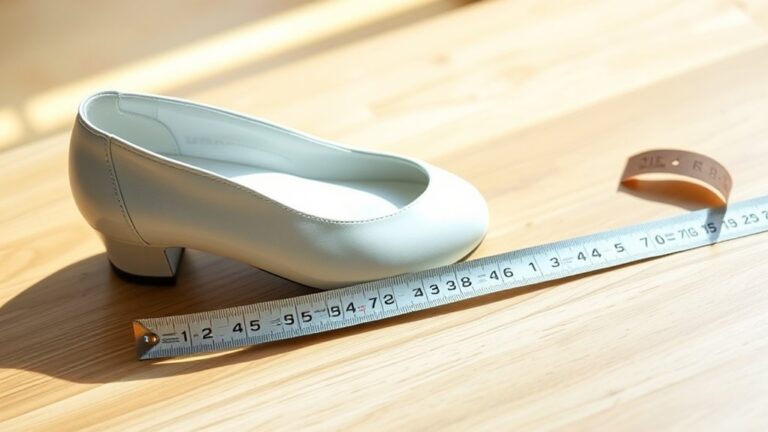
To measure your foot accurately for a size 12 fit, start by standing barefoot on a flat, hard surface with your weight evenly distributed.
Place a piece of paper securely under your foot, making sure it’s fully extended. Mark the tip of your longest toe and the outer edge of your heel with a pen.
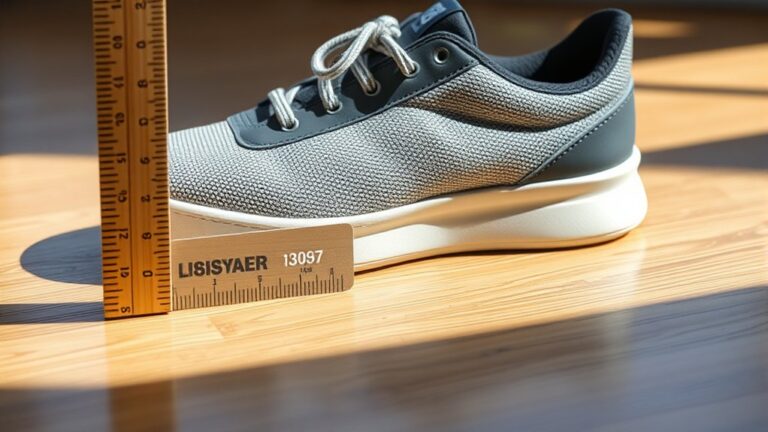
Next, measure the distance between these two points using a ruler or tape measure. This measurement determines your foot length.
Be sure to repeat the process on both feet, then use the longer measurement for sizing.
Keep in mind that shoe material and arch support influence how a shoe fits. So, having an accurate foot length helps you choose shoes that accommodate these factors.
Getting a precise measurement is key to ideal comfort, especially in size 12 footwear.
Even slight inaccuracies can affect support and overall wearability, so take your time to do it right.
Why Shoe Size Labels Don’t Always Match Foot Length
You might’ve noticed that shoe size labels don’t always line up perfectly with the length of your foot. That’s because those labels usually represent the inside dimensions of the shoe, not your exact foot length.
On top of that, there are different ways to measure feet and various sizing systems around the world—like US, UK, and European sizes—which makes things even more confusing.
Label Versus Foot Length
Although shoe size labels provide a quick reference, they don’t always match your actual foot length because they’re based on the internal last or cavity length rather than the precise measurement of your foot.
In shoe manufacturing, the last, the mold shaping the shoe’s interior, determines the labeled size. This internal length often exceeds your foot length by 0.5 to 1 inch to guarantee fit comfort.
Manufacturers add “ease” to accommodate natural foot movement and variations in foot shape. For instance, a US men’s size 12 generally fits a foot about 11.5 inches long but has an internal length closer to 12 inches.
So, if you’re just going by the size label, you might be a bit off on the true fit.
This difference means relying solely on shoe size labels can mislead you about true fit. It really shows why it’s important to consider internal shoe dimensions alongside foot measurements.
Taking both into account will help you find shoes that actually feel comfortable.
Measurement Method Differences
Because shoe size labels come from different measurement methods instead of just your foot length, they often don’t match up exactly with the actual size of your foot. In shoe manufacturing, sizing standards are based on last measurements or cavity sizes, not your precise foot length.
Different systems like US, UK, and European use various units such as inches, barleycorns, or Paris points, which can cause discrepancies between the labeled size and your true foot length.
Plus, manufacturers add extra interior space and padding, which changes the effective fit even if the labeled size stays the same. Shoe width, shape, and manufacturing tolerances also play a role in how sizing standards work.
So, shoe size labels are more of an indirect reference rather than an exact match to your foot.
Knowing these differences in measurement methods can help explain why a size 12 shoe label mightn’t line up perfectly with your foot’s length in inches. It’s all about the way sizes are measured and how shoes are made.
Regional Sizing Variations
How do regional sizing systems influence the inconsistency between shoe size labels and actual foot length? Different regions apply distinct sizing standards, causing discrepancies. European sizes rely on last length measured in Paris points, which doesn’t directly reflect your foot length.
In contrast, UK and US systems use barleycorn increments but factor in extra space for comfort, making shoe size labels often larger than the actual foot length. Shoe manufacturing practices also contribute.
Manufacturers add padding or room inside shoes to enhance fit, further distancing the labeled size from precise foot measurements.
Because these regional sizing standards and measurement points vary, you’ll find that a size 12 in one system doesn’t perfectly convert to another or match your exact foot length. Understanding these differences helps you navigate sizing inconsistencies. It’s all about knowing what each size really means where you are.
How to Choose the Right Shoe Size When Between Sizes
When you find your foot measurement falls between two sizes, choosing the right shoe size requires careful consideration. Size up to accommodate foot swelling and ensure comfort, especially for athletic footwear.
Also, think about the shoe material. Stretchable fabrics may conform better over time, while rigid materials might need more room to avoid discomfort.
Make sure to measure both feet accurately and use sizing charts to confirm your choice. It’s a good idea to try shoes later in the day when your feet are naturally swollen for the best fit.
| Factor | Recommendation |
|---|---|
| Foot Swelling | Size up to prevent discomfort |
| Shoe Material | Stretchable materials allow snug fit |
| Measurement Time | Measure later in the day |
How Size 12 Shoe Width Affects Fit
Selecting the right shoe length is only part of achieving a proper fit, especially with a size 12 shoe. Shoe width plays a vital role in ensuring a comfortable fit by accommodating the shape of your foot.
Men’s size 12 shoes typically range from narrow (B) to wide (E), with D or M as the standard width.
Women’s size 12 shoes usually range from medium (B) to wide (E), with B being standard for narrower feet.
Choosing the correct width prevents pressure points and discomfort, particularly in the toe box and ball of the foot. If your feet are wider, opting for E or 2E widths provides extra room, enhancing comfort and reducing the risk of foot-related issues.
Always match the shoe width to your foot for ideal fit and support. It really makes a difference in how comfortable your shoes feel throughout the day.
Frequently Asked Questions
Can Insoles or Socks Affect the Fit of a Size 12 Shoe?
Yes, insoles impact the shoe width and overall fit of a size 12 shoe. They add thickness, which reduces the interior space. So, you’ll need to consider the thickness of your insoles.
Don’t forget about your socks, too. The layers of socks you wear can also affect the fit. It’s all about keeping proper comfort and support in mind.
How Does Foot Arch Height Impact Size 12 Shoe Comfort?
About 30% of people have high foot arches, which can strain shoe support in size 12 shoes. You need proper arch alignment; otherwise, discomfort or injury may occur. So, choose shoes that match your foot arch precisely.
It really makes a difference to get the right fit. Wearing shoes that don’t support your arch can lead to pain or even long-term problems. Taking the time to find the perfect match is worth it for your comfort and foot health.
Are Size 12 Shoes Harder to Find for Children?
Yes, you’ll find size 12 shoes harder to get for children due to shoe size history and regional sizing differences. These factors limit production and stock.
Demand tends to shift toward adult sizes near this measurement, which makes it trickier to find kids’ size 12 shoes. So, it’s not just about availability—it’s about how the market works too.
What Materials Offer the Best Durability for Size 12 Shoes?
You might be surprised which shoe material options top the durability comparison. Full-grain leather, reinforced with thermoplastic toe caps and double-stitched seams, outlast synthetic nylon and mesh fabrics. It offers unmatched strength for size 12 shoes you rely on.
When you think about durability, these materials really stand out. They hold up better over time, especially if you wear your shoes a lot. So, if you want something that lasts, full-grain leather with those reinforcements is definitely the way to go.
How Do Size 12 Shoe Prices Vary by Brand Quality?
You’ll find size 12 shoe prices vary by brand quality due to shoe manufacturing processes and adherence to sizing standards. Premium brands use superior materials and craftsmanship, which raises the costs. On the other hand, budget brands offer affordability with less durability and precision.
Conclusion
Now that you know how a size 12 shoe varies in length across different systems and brands, you’re better equipped to find your perfect fit. Remember, shoe sizes aren’t set in stone. Measuring your foot accurately and considering width can make all the difference.
Don’t get caught between sizes. Use this guide as your north star to avoid any missteps. With the right knowledge, you’ll step confidently into shoes that truly fit.