What Does H Mean In Shoe Size – Width Meaning Explained
The letter “H” in shoe sizing indicates an extra-wide width designed for broader feet, primarily in men’s shoes. If your feet feel cramped in standard widths, choosing an H width gives you more room across the ball and instep, reducing pressure and discomfort.
Widths like H vary by brand, so accurate foot measurement is key to finding your ideal fit. Understanding how H compares to other widths and sizing factors helps you pick shoes that truly support comfort and foot health. It’s all about making sure your shoes feel good and keep your feet happy.
Key Takeaways
- “H” in shoe sizing indicates an extra-wide width, designed to accommodate broader feet comfortably.
- It provides more room across the ball and instep compared to standard widths like “D” or “G.”
- “H” is most commonly used in men’s footwear for extra-wide fits, but its meaning can vary in women’s shoes.
- Accurate foot width measurement is essential to determine if an “H” width shoe is the right fit.
- Width sizing varies by brand, so always consult specific brand charts to ensure proper fit with “H” width shoes.
What Does the Letter H Mean in Shoe Size?
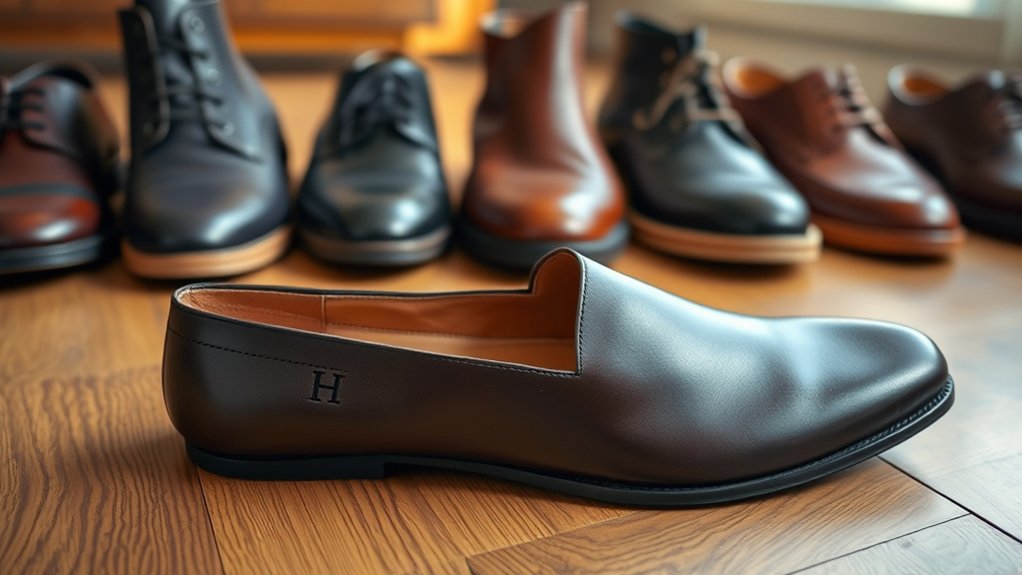
What does the letter “H” mean in shoe size? In shoe width variations, “H” typically signifies an extra-wide fit designed for broader feet.
When you measure your foot using precise foot measurement techniques, you might find that a standard width doesn’t provide adequate comfort.
The “H” width accommodates this by offering considerably more room across the ball and instep compared to regular widths. Manufacturers use “H” to address the demands of wider feet, especially in men’s footwear, though it occasionally appears in women’s sizes.
Selecting shoes labeled with an “H” width helps prevent discomfort and foot issues caused by narrow shoes.
Understanding the role of “H” in shoe sizing ensures you choose footwear tailored to your foot’s true dimensions, enhancing fit and comfort.
How Shoe Width Letters Differ by Gender
When you look at shoe width letters by gender, you’ll notice the codes actually stand for different things.
For men, an “H” is pretty straightforward—it means extra-wide fit.
But for women, “H” isn’t used as often and usually points to an extra width beyond the typical A to EEE range.
Knowing these differences can really help you pick the right width depending on whether you’re shopping for men’s or women’s shoes.
Gender-Based Width Codes
Although shoe width letters serve the same purpose across genders, their meanings can differ considerably.
Historically, shoe sizing evolved with distinct codes for men and women, influenced by fashion trends and anatomical differences.
For men, width letters range from B (narrow) to H (extra-wide), with H representing one of the broadest standard widths available.
Women’s shoe widths typically span from A (narrow) to EEE (extra-wide), and the letter H is rarely used in standard sizing charts.
When it does appear in women’s shoes, H may indicate a wider fit, but this varies by brand.
So, it’s not as consistent as in men’s sizing.
Understanding these gender-based width codes helps you select properly fitting footwear.
Especially since H most consistently means extra-wide in men’s shoes but is less standardized for women’s sizing.
It’s good to keep this in mind when shopping for shoes.
Men’s Vs. Women’s Width
How do shoe width letters differ between men’s and women’s sizing? In men’s shoe manufacturing, the letter “H” denotes an extra-wide width. It’s positioned beyond the standard widths from narrow “E” up to “H.”
For women, however, the “H” width is rarely applied. Instead, wider fits use labels like “E” or “EE,” reflecting narrower width categories overall. Typically, women’s widths range from “A” to “D” or “E.”
This difference comes from varying sizing standards influenced by foot shape variations and fashion trends that target gender-specific preferences. Because women’s shoe widths seldom include “H,” you’ll find that “H” primarily signals extra-wide men’s shoes.
Understanding this difference helps you select the correct fit, especially when comparing cross-gender sizing charts or shopping for shoes designed with specific width codes in mind.
Comparing H Width to Other Common Shoe Widths
When you compare H width to standard widths like G for men or D for women, you’ll notice that H gives you noticeably more room across the widest part of your foot.
It goes beyond typical wide sizes, offering extra space to comfortably fit broader feet.
Getting to know these differences really helps when you’re trying to pick the right fit based on how wide your feet are.
H Width Versus Standard
Because shoe widths vary considerably, understanding how the H width compares to standard sizes like D for men or B for women is vital for selecting the right fit.
The H width offers considerably more space across the ball and toe area, accommodating very broad feet with greater volume than standard widths like D or B.
This extra width difference, often several millimeters, enhances comfort for those needing a wider fit.
While fashion trends sometimes favor narrower profiles, choosing an H width guarantees proper fit over style compromises.
Additionally, material flexibility plays an important role.
Even with flexible uppers, an H width provides necessary room to prevent pressure points and discomfort.
Selecting H width means prioritizing fit precision over conventional sizing norms.
Comparing H And Wide
Although shoe width labeling can vary across brands, the H width consistently indicates an extra-wide fit, especially in men’s footwear. Compared to common widths like G or F, H offers considerably more room across the ball of the foot, accommodating those with wider feet and reducing pressure points.
In women’s shoes, H is less common but generally aligns with very wide measurements, similar to men’s E or EE widths. When comparing H to standard “wide” widths, H tends to provide a noticeably broader fit. It’s ideal if you face discomfort in regular wide sizes.
For effective shoe fitting tips, prioritize trying on H width shoes if you need extra breadth. Keep style considerations in mind; some designs may look bulkier in H widths, but comfort should take precedence for proper fit.
Do H Widths Mean the Same Across Brands?
Understanding the meaning of “H” width across different shoe brands requires careful attention, as it doesn’t carry a universal standard. You’ll find that while many American brands use “H” to denote extra-wide widths for men, others may apply it differently or not at all for women’s sizing.
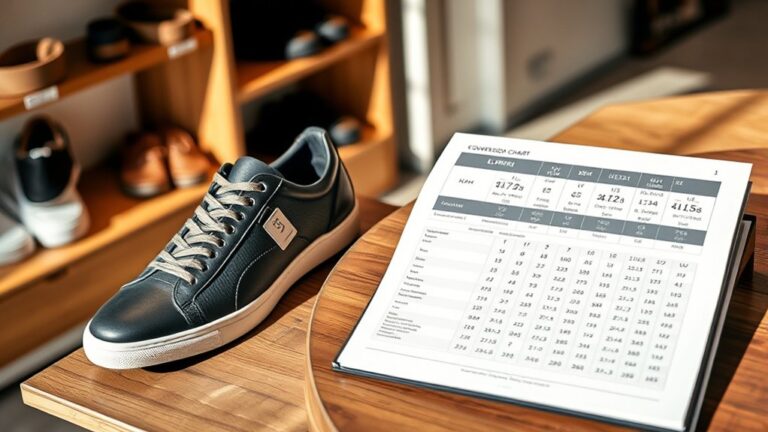
This lack of brand consistency means “H” widths can vary markedly in actual measurements, such as millimeters or inches. If you want sizing accuracy, it’s essential to consult each brand’s specific width chart rather than assuming “H” corresponds to the same fit everywhere.
Relying solely on the letter can lead to improper fit, so always verify how a brand defines “H” to ensure you select the correct width for your comfort and needs. It’s a small step that can make a big difference in how your shoes feel.
Why Wide Shoe Widths Like H Matter for Comfort
When your feet require extra room, choosing shoes with an “H” width guarantees a proper fit that accommodates broader foot dimensions. This wider fit prevents compression, reducing the risk of blisters, pinching, and foot fatigue.
Adequate space across the ball and toe area also supports natural foot alignment, which is essential for overall foot health.
Incorporating proper foot arch support within an “H” width shoe further enhances comfort by evenly distributing pressure. Additionally, the shoe material choice plays a critical role.
Flexible, breathable materials complement the wider fit to accommodate foot swelling and movement without restriction.
When Should You Choose an H Width Shoe?
If your feet feel cramped or uncomfortable in standard-width shoes, opting for an H width can give you the extra space you need to ease pressure points. Shoes with an H width have a broader sole and a deeper toe box, which work well for wider foot shapes.
This width is great if you’re dealing with pinching, toe crowding, or heel slipping in regular sizes. Men who need extra-wide shoes and women with wider feet can really benefit from H width options.
It helps ensure proper support and comfort, so you’re not sacrificing fit for style. Plus, as fashion trends change, more brands are offering wider widths like H to suit different needs.
Choosing an H width shoe is smart when standard widths just don’t fit right. That way, you can keep your feet healthy and aligned without giving up on style or performance.
Measuring Your Foot for H-Width Shoes
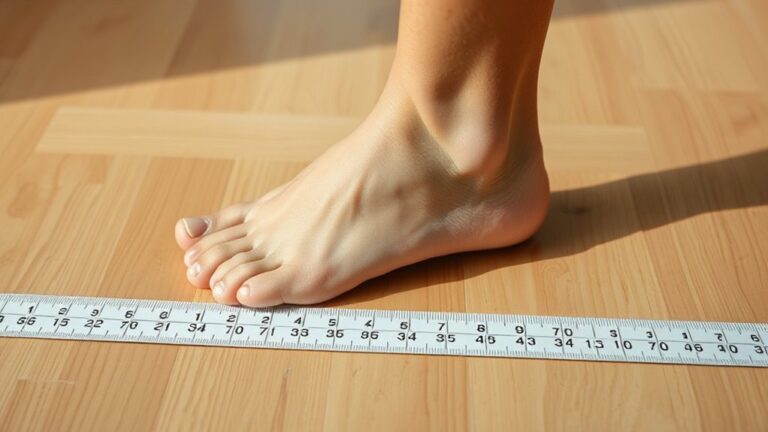
To guarantee you select the correct H-width shoe, start by measuring the widest part of your foot. This is typically across the ball, while standing upright. Accurate foot measurement is key for proper shoe fitting, especially when figuring out if an H-width shoe is right for you.
Use a flexible tape measure and make sure it’s snug but not tight. You want to capture the maximum width without squeezing your foot.
Follow these steps for precise measurement: measure both feet because one might be wider than the other. Record the width in millimeters or inches, then compare your results to standard shoe width charts.
It’s best to pick a shoe based on the larger foot to ensure comfort and a proper fit. Taking this careful approach to shoe fitting helps avoid discomfort and keeps your feet healthy.
How Shoe Widths Change With Shoe Size
Although shoe size increases usually bring wider shoe widths, the exact relationship varies markedly across brands and models. As you move up in size, shoe widths often expand to accommodate greater foot volume, but this expansion isn’t always proportional.
Some brands offer wider width options like E, EE, or EEE for larger sizes, ensuring a better fit.
However, other manufacturers maintain consistent widths across sizes, which can affect comfort. Shoe material flexibility and sole thickness also influence how width changes feel on your foot.
Thicker soles may require a slightly wider fit to prevent pressure points.
Ultimately, the correlation between shoe length and width isn’t linear. So, you should consider both size and width options carefully to achieve ideal fit and comfort.
Frequently Asked Questions
Can H-Width Shoes Affect Athletic Performance?
Yes, wearing H-width shoes enhances your foot stability and ankle support by accommodating wider feet. This reduces pressure points and prevents injuries. It also allows you to perform better by maintaining proper alignment and comfort throughout athletic activities.
When your feet feel comfortable and supported, you can focus more on your performance instead of any discomfort. So, choosing the right shoe width really makes a difference in how you move and feel during exercise.
Are H-Width Shoes More Expensive Than Regular Widths?
Yes, H-width shoes usually cost more than regular widths due to higher material costs and specialized manufacturing. Even though fashion trends influence pricing, the complexity and niche demand primarily drive the increased expense you’ll encounter.
It’s kind of like paying a bit extra for something that fits just right. So, if you need that wider fit, the price difference reflects the extra care and materials involved.
Do Children’s Shoes Use the H Width Designation?
Imagine fitting a puzzle piece perfectly; that’s how child shoe sizing works. Yes, children’s shoes use the H width designation. It aligns with width measurement standards to accommodate wider feet precisely.
This helps guarantee ideal comfort and support. So, if your little one has wider feet, looking for the H width can make a big difference. It’s all about getting the right fit without any hassle.
How Does H Width Impact Shoe Durability?
H width impacts shoe durability by requiring reinforced seams and sturdier materials to guarantee shoe fitting and comfort enhancement. You’ll notice stronger stitching and resilient soles designed to support wider feet without sacrificing long-term wear.
It’s all about making sure the shoe holds up well, even with a broader shape. So, the materials and construction have to be up to the task. That way, you get durability and comfort in one package.
Can Insoles Convert Regular Shoes to H Width?
You can’t convert regular shoes to H width with insoles alone.
Insole customization and advanced shoe fitting techniques improve comfort but don’t actually change the shoe’s width.
Conclusion
Now that you know the letter H in shoe sizing stands for a wide width, you’re better equipped to find shoes that fit comfortably. Just like a knight once chose armor tailored perfectly for battle, you should pick shoes that accommodate your foot’s width to avoid discomfort.
Remember, widths vary by brand and gender, so always measure carefully. Choosing the right width, especially H, guarantees ideal support and lasting comfort in every step you take.