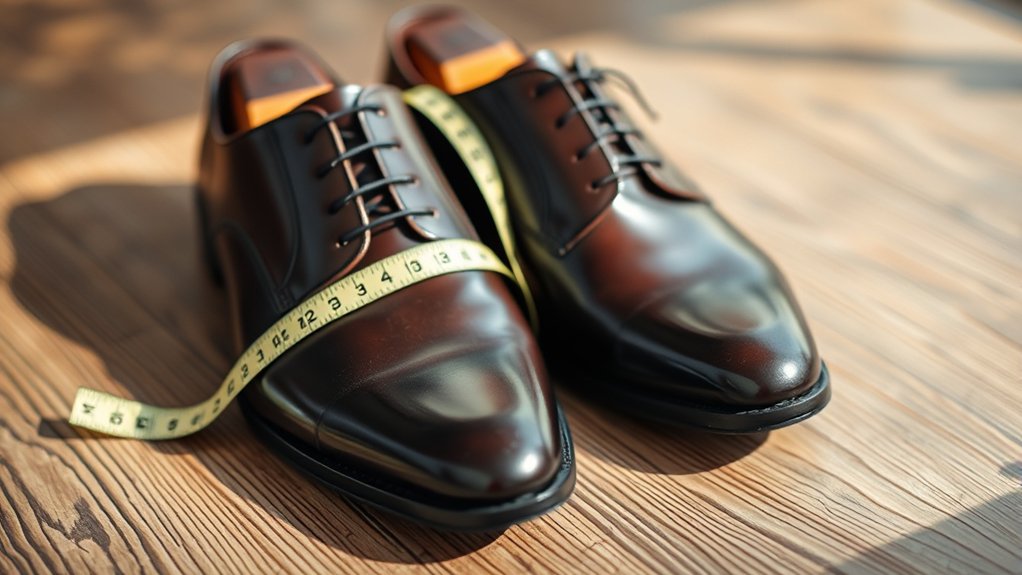
What Is Shoe Width D – Width Measurement Guide
Shoe width D is the standard or medium width for men’s shoes, measuring about 3.74 inches across the widest part of your foot. It fits roughly 80% of men’s feet, balancing enough room across the ball without being too narrow or wide.
To measure, trace your foot’s widest point and compare it to width charts. If your shoes pinch or slip, you might need a different width.
Keep exploring to understand how D width compares and how to find your perfect fit.
Key Takeaways
- Shoe width D is a standard medium width, measuring about 3.74 inches across the widest part of the foot.
- It fits approximately 80% of men’s feet, offering balanced comfort between narrow and wide widths.
- Measure foot width by tracing the widest part barefoot and comparing it to width charts or using a Brannock device.
- Proper D width shoes provide ample toe box space and a snug heel fit, preventing discomfort and foot strain.
- Consider other widths if shoes feel tight, cause pain, or have heel slipping, indicating the need for a different fit.
What Is Shoe Width D And Why It Matters For Men’s Shoes
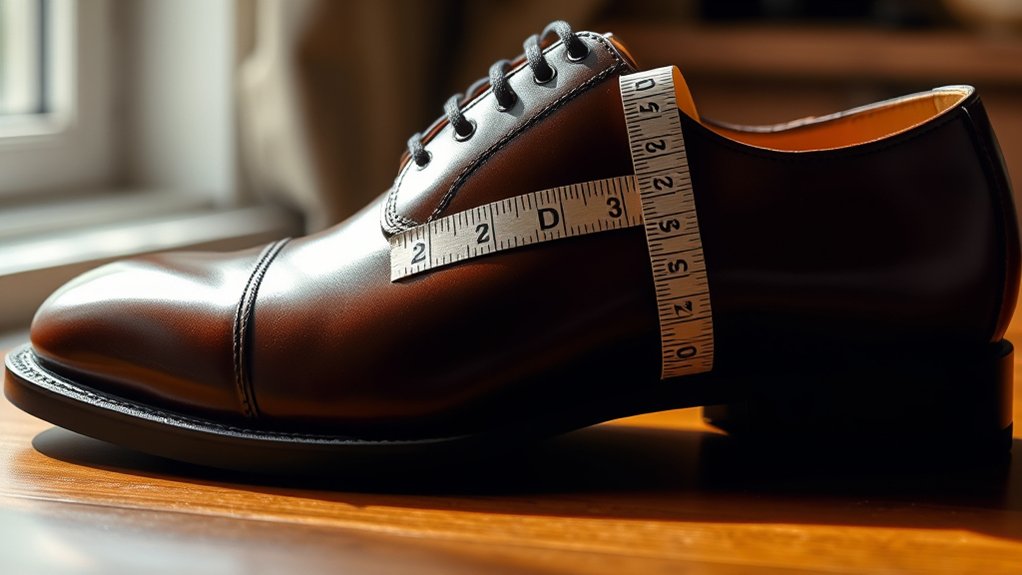
Although shoe sizes often focus on length, shoe width D plays a crucial role in fit and comfort for men’s shoes. Width D represents a standard or medium measurement, roughly 3.74 inches (95 mm) across the widest part of the foot. This sizing accuracy guarantees a balanced fit, providing sufficient space across the ball without excess bulk.
For men with wider feet, width D often offers ideal comfort, reducing pressure points and preventing common issues like blisters and foot pain. Properly selecting width D supports foot health by minimizing strain and promoting natural foot alignment during movement.
Ignoring width measurements can compromise fit, leading to discomfort and long-term foot problems. So, understanding and choosing the correct shoe width, such as D, is crucial for overall foot well-being. It’s not just about length—width matters just as much for a comfortable, healthy fit.
How To Measure Your Foot For Men’s Shoe Width D
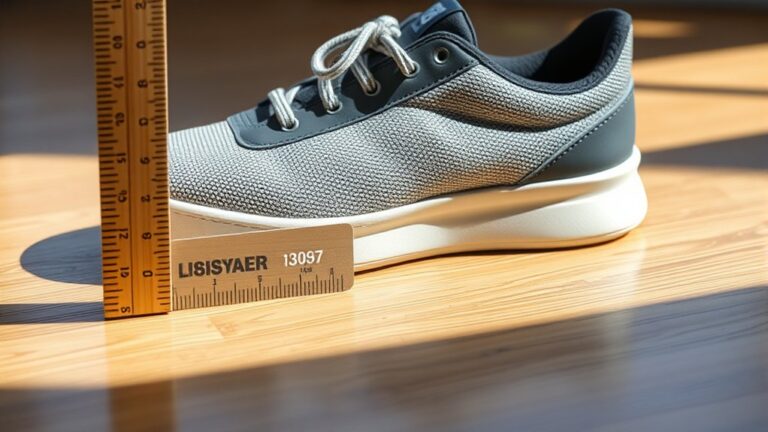
To measure your foot for Men’s Shoe Width D, start by standing barefoot on a piece of paper and trace the widest part of your foot, which is usually at the ball.
Next, grab a ruler or flexible tape and measure the distance between the two widest points. Make sure you’re standing with your weight evenly distributed while doing this.
Once you have your measurement, compare it to a width D chart to see if your foot fits this standard width.
It’s a simple way to make sure you’re getting the right fit for your shoes!
Measuring Foot Length
How do you accurately measure your foot length for Men’s Shoe Width D? Start by standing barefoot on a piece of paper. Make sure your foot bears full weight to account for the natural expansion caused by your foot arch.
Trace around your foot carefully, including the contours influenced by the arch. Using a ruler or measuring tape, measure the longest distance from your heel to the tip of your longest toe. Record this length in inches or millimeters.
Repeat with both feet, choosing the larger measurement for accuracy. Remember, shoe padding inside the shoe affects fit, so precise foot length measurement guarantees comfort.
Finally, compare your measurement with a width chart to confirm if Width D matches your foot’s dimensions for an ideal fit.
Identifying Widest Foot Area
Once you have your foot length measured accurately, the next step is to determine the widest part of your foot for a proper Men’s Shoe Width D fit.
Stand barefoot on a piece of paper, distributing your weight evenly to account for natural foot expansion. Trace around the ball of your foot, the area across the widest section.
Use a flexible measuring tape or ruler to measure the distance between the outermost points of the traced outline in inches or millimeters. Always measure the larger foot for accuracy.
Identifying this broadest area ensures proper arch support and accommodates orthotic inserts if needed.
Accurately measuring here helps you select a width D shoe that provides both comfort and stability. This prevents pressure points and improves overall foot health.
It’s a simple step that makes a big difference when choosing the right shoe.
Using Width D Chart
Although measuring your foot length is essential, determining your foot’s width accurately guarantees a proper fit when selecting Men’s Shoe Width D.
To use the Width D chart effectively, stand barefoot on paper and trace around the ball of your foot, which is its widest part.
Measure the distance between the marks with a flexible tape in inches or millimeters. Make sure your weight is evenly distributed for precision.
Then, compare your measurement to the Width D chart, where typical widths range from 3.35 to 4.23 inches based on shoe size.
Accurate width measurement is vital in shoe manufacturing to maintain footwear aesthetics and comfort.
For ideal results, consider professional verification or a Brannock device to confirm your foot fits within the D width classification.
Using Width Charts To Find Your Perfect Shoe Width
When you measure the widest part of your foot and compare it with a width chart, you can accurately determine your ideal shoe width. Width charts use letter codes like D for standard width to guide your selection. Since shoe material and fashion trends influence fit, consulting these charts guarantees you pick a shoe that balances style and comfort.
Accurate measurement prevents discomfort caused by improper widths, such as pinching or slipping.
| Width Code | Foot Width (inches) |
|---|---|
| C | 3.5 – 3.75 |
| D | 3.75 – 4.125 |
| E | 4.125 – 4.5 |
Use this data to select shoes that match your foot’s width for perfect fit and comfort. It really makes a difference when you find a shoe that fits just right!
How Shoe Width D Compares To Narrow And Wide Sizes
You’ll find that Width D is basically the standard or medium option. It offers a balanced fit that works well for most foot shapes.
When you compare it to narrow widths like A or B, it gives you a bit more room across the ball of your foot, so it’s less tight.
On the other hand, it’s still narrower than wide sizes like E or EE, which are designed for much broader feet.
Width D Explained
Since shoe width D serves as a standard width for men and a wide width for women, understanding its fit relative to narrower and wider sizes is essential for choosing the right shoe.
Width D provides more room across the ball of the foot compared to narrow widths like B or AA, accommodating feet that require extra space without excessive bulk.
For men, it ensures a comfortable, regular fit; for women, it offers a wide fit that maintains a streamlined look.
When selecting shoe material, consider flexibility, as some materials stretch more, affecting fit in width D.
Additionally, color options rarely influence width but can impact your shoe’s overall appearance and style.
Width D balances comfort and aesthetics, making it a versatile choice for many foot shapes.
Comparison With Other Widths
Understanding how width D compares to narrower and wider shoe widths helps you select the best fit for your foot shape. Width D acts as a standard or medium width in men’s shoes, providing more room than narrow widths like AA or 2A.
For wider feet, it serves as a baseline, with E and EE widths offering increased comfort.
In women’s shoes, D is classified as wide, so you’ll notice different style compatibility depending on gender sizing. Material flexibility can influence fit, especially if you’re between widths.
D width ranges approximately 3.35 to 4.23 inches across sizes. Narrow widths (AA, 2A) offer less room at the ball of the foot. Wider widths (E, EE) accommodate broader feet beyond D.
Material flexibility affects how D width adapts to foot shape and style choices.
Signs You Might Need A Different Shoe Width Than D
How can you tell if your shoe width needs to change from D? If your shoes feel tight across the widest part of your foot or cause discomfort at the toe box or ball of the foot, you might need a wider width. Pay attention to heel slipping or gaps at the sides, which usually means the fit is narrower than your foot demands.
Persistent foot pain or numbness after wearing D width shoes is another sign you might need to adjust your shoe width. Also, consider your foot arch and the shoe material since rigid materials or high arches can make fit issues worse.
If you find yourself constantly tightening laces or adjusting your shoes to stop slipping, that’s a clear sign your current width doesn’t fit your foot properly. It’s worth exploring different widths to find one that feels just right.
Why Shoe Width D Is The Most Common Fit For Men
Although foot shapes vary widely, shoe width D fits the majority of men’s feet comfortably, making it the industry standard. This width offers an ideal balance, accommodating about 80% of male foot volumes without being too narrow or too wide.
Shoe fashion designers and manufacturers often select width D as the default to guarantee consistent sizing and broad availability across styles.
Key reasons why shoe width D dominates include:
- It suits a wide range of foot shapes, enhancing fit accuracy.
- Material selection in D-width shoes balances flexibility and support.
- Most men’s footwear categories, from dress shoes to sneakers, prioritize D width.
- Standardized production processes reduce manufacturing complexity and costs.
Tips For Buying Comfortable Men’s Shoes In Width D
Since shoe width D fits most men’s feet comfortably, focusing on selecting the right pair within this category can considerably improve your overall comfort.
Start by ensuring the toe box offers ample space without allowing your foot to slide excessively. Choose shoes with a snug heel fit and a well-filled midfoot to avoid pinching.
Pay close attention to shoe material; breathable leather or mesh can enhance comfort, especially in warmer climates. Stay updated with fashion trends that incorporate ergonomic designs and adjustable features, which can further optimize fit within the width D range.
Also, select brands that explicitly specify width D, as many default to narrow or standard widths without clear labeling. If you have slightly wider or narrower feet, consider half sizes or styles with adjustable straps for customized comfort.
Frequently Asked Questions
Can Shoe Width D Vary Between Different Shoe Brands?
Yes, shoe width D can vary between brands due to style variations and fashion trends affecting design. You’ll find differences in measurements and fit, so always consult specific charts or try shoes on for precise sizing.
It really helps to remember that each brand might have its own way of defining width. So, even if you usually wear a D, it’s smart to double-check before buying. Trying shoes on or looking at the brand’s size guide can save you a lot of hassle.
Are Shoe Inserts Necessary for Width D Shoes?
You know, “one size doesn’t fit all.” You don’t always need inserts for Width D shoes, but using them can enhance shoe fit and comfort comparison, especially if your feet are narrow or have high arches.
Sometimes, inserts help fill extra space and provide better support. It really depends on your foot shape and what feels best. So, while not necessary, they can make a difference for some people.
How Does Shoe Width D Affect Athletic Performance?
Shoe width D enhances your athletic performance by ensuring fit comfort, reducing foot slippage, and providing proper arch support. It also offers versatile style options, balancing snugness and stability essential for agility and injury prevention during activity.
When your shoes fit well, you feel more confident moving around. Plus, the right width helps keep your feet secure without feeling too tight or too loose. This means you can focus more on your game and less on adjusting your footwear.
Can Children Wear Shoe Width D Sizes?
Yes, children can wear shoe width D sizes if their foot measurements show they need a wider fit. It’s all about making sure the shoes feel comfortable and support their feet properly.
Always prioritize your child’s comfort by checking their shoe size carefully. This helps prevent slipping or discomfort when they’re running around and playing.
Is Shoe Width D Suitable for Diabetic Foot Care?
Like a telegram from the past, you should know Width D can suit diabetic footwear if it meets foot health considerations. Guarantee proper fit and support, but wider widths often better prevent pressure points and circulation issues.
Conclusion
Choosing shoe width D is like finding the perfect balance between tight and loose. It’s not about pinching your foot or leaving too much extra space. You measure carefully, check width charts, and compare sizes to make sure your shoes feel comfortable and supportive.
Width D is actually the most common size, but it’s important to know when you might need something narrower or wider. That way, you avoid any discomfort or blisters.
When you understand and use these measurements, you’ll step confidently in shoes that fit just right every time. It really makes a difference in how your feet feel all day long.