What Does B Mean In Shoe Size – Width Meaning Guide
When you see “B” in shoe sizing, it means different widths depending on gender: for women, “B” is a medium or standard width, while for men, it indicates a narrow fit. This distinction matters because a proper width supports comfort and foot health by preventing pinching or slipping.
Shoe width also adjusts with size to match foot volume. Understanding these details helps you pick shoes that promote natural toe spread and stability. Exploring these factors further will improve your shoe fit decisions.
Key Takeaways
- In women’s shoes, “B” represents a medium or standard width, while in men’s shoes, it indicates a narrow width.
- “B” width varies by gender, with women’s B wider than men’s B for properly fitting different foot shapes.
- Signs you need B width shoes include heel slipping, toe pinching, side tightness, or visible pressure marks on feet.
- Accurate foot width measurement, ideally with a Brannock device, helps select the correct B width for comfort and fit.
- Proper B width fit ensures toe space, foot stability, and prevents common issues like blisters, bunions, and discomfort.
What Does B Mean In Shoe Size For Women And Men?
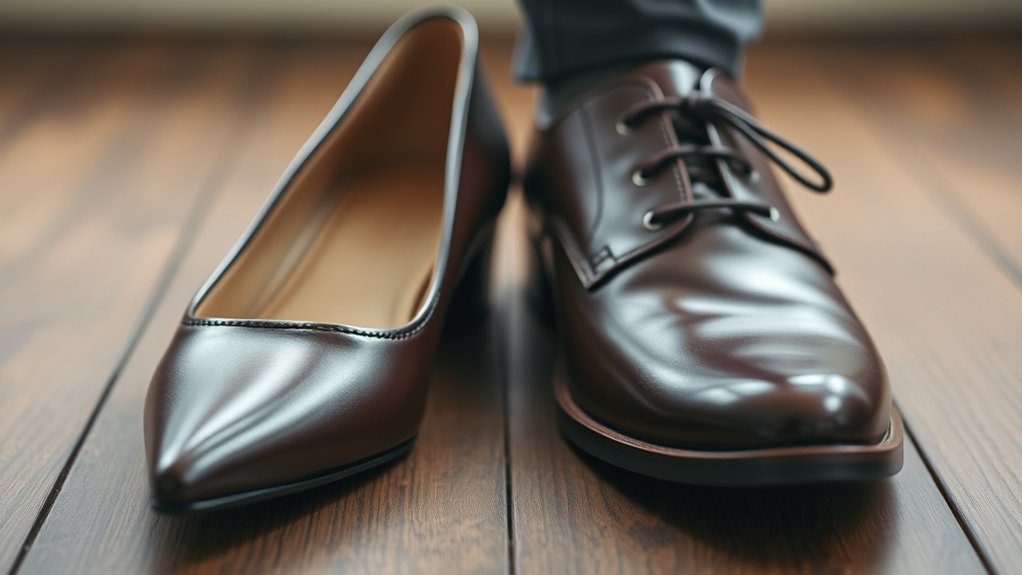
Although the letter “B” appears in both men’s and women’s shoe sizes, its meaning differs. In women’s shoes, “B” denotes a standard or medium width, while in men’s shoes, it indicates a narrow width. This distinction is pretty important for shoe size compatibility and getting the right fit.
Women’s “B” width is the default fit, offering enough space for most foot shapes. On the other hand, men’s “B” width is narrower than the standard men’s “D” width and is designed for slimmer feet.
Women’s B width fits most feet comfortably, while men’s B width is narrower for slimmer feet.
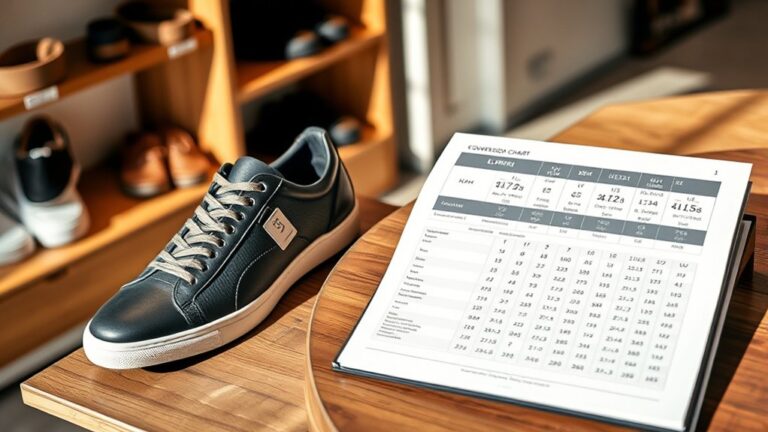
Because the same “B” label corresponds to different actual widths, you need to check gender-specific sizing charts to make sure your shoes fit properly.
Knowing these differences helps you pick shoes that are comfortable and good for your foot health. It also helps avoid mistakes when it comes to width, so you’re not assuming the size means the same thing for everyone.
Do You Need B Width Shoes? Signs To Look For
You might need B width shoes if you notice your heel slipping, your toes hitting the front, or if your standard size just feels loose overall.
Also, keep an eye out for pinching on the sides, pressure points, or any discomfort around the midfoot area—these can be signs that your shoes are too narrow.
If your shoes feel tight across the width but fit just right in length, switching to a B width could really boost your comfort and help reduce foot pain.
It’s all about finding that perfect fit!
Identifying Fit Issues
When your heels slip out or your toes repeatedly hit the front of your shoes, these are clear signs that the fit may be off. Fashion trends and material considerations can affect how snug or loose shoes feel, so pay close attention to fit.
Pinched sides, pressure points, or tightness across your foot’s widest part often indicate a need for B width shoes. Discomfort, blisters, or calluses on your foot edges also signal improper fit.
| Issue | Possible Cause | Fit Indicator |
|---|---|---|
| Heel slipping | Shoe too wide | Heel lifts during walking |
| Toes hitting front | Shoe too short | Repeated toe impact |
| Pinched sides | Shoe too narrow | Pressure points on foot sides |
| Tight across foot width | Inadequate width | Cramped toes, tightness |
| Blisters/calluses | Improper width fit | Painful foot edges |
Common Narrow Fit Signs
If your heels slip out while walking but the shoe feels tight across the ball of your foot, it signals a mismatch in width rather than length. This is a common narrow fit sign indicating you may need B width shoes.
Narrow shoe discomfort often arises when standard shoes cause pinched sides or pressure points due to foot shape considerations.
Look for visible indentations or red marks on the sides of your feet after removing shoes. These are clear indicators of an improper fit.
Also, if your toes overlap or rub against the sides of the shoe, it suggests the shoe is too narrow in length but too wide in width.
This usually means you need a narrower fit. Paying attention to these signs can really help you find shoes that offer proper comfort and support.
It’s always worth making the switch for your feet’s sake!
What Shoe Width Letters Mean For Your Comfort
You need to understand that shoe width letters, like B, directly affect how your shoe fits at the ball of your foot. And keep in mind, this can vary between men’s and women’s sizing.
Picking the right width is important because it helps prevent problems like blisters and bunions. When your shoe fits well, it lets your toes spread naturally and gives you stable support.
Understanding Width Letter Codes
Although shoe size numbers indicate length, width letter codes like B, D, and E specify the shoe’s fit across the widest part of your foot. This directly impacts comfort and support.
The letter B typically denotes a medium width for women’s shoes, while in men’s sizing, it indicates a narrow fit. These codes help you select footwear that aligns with your foot’s dimensions, ensuring ideal comfort.
Keep in mind, shoe material and fashion trends may influence how a brand interprets these widths. So, always consult the specific sizing chart.
Properly understanding width letter codes lets you avoid discomfort and foot issues by choosing shoes that accommodate your foot’s shape precisely. This enhances overall fit without compromising style or durability.
Impact On Foot Health
When selecting shoes, choosing the correct width like B directly influences your foot’s health by ensuring proper fit and support.
For women, B typically offers a medium fit that accommodates most foot arches comfortably, while in men, it provides a narrow fit essential for slimmer feet.
Wearing a shoe with the right width promotes natural toe spread, preventing deformities such as bunions and hammertoes.
Improper width compromises shoe cushioning effectiveness, leading to increased pressure points, blisters, and calluses.
Additionally, an inaccurate fit can alter your gait, causing fatigue and long-term foot issues.
Prioritizing the appropriate width, like B, maintains ideal foot arch alignment and overall comfort.
Ultimately, this safeguards your foot structure and enhances shoe performance.
Width Variations By Gender
Proper shoe width plays a significant role in maintaining foot health, but the meaning of width letters like B varies considerably between genders. In footwear fashion, understanding these differences is essential for selecting the right fit, especially when considering custom shoe sizing.
In women’s shoes, B denotes the standard or medium width, fitting average feet comfortably. For men, B indicates a narrow width, slimmer than the common D width.
Men’s widths range from A (very narrow) to EEEE (extra wide), placing B on the narrow side.
Women’s widths extend from AAA (extra narrow) to EE (extra wide), with B as the default width. Recognizing these distinctions helps you choose shoes that optimize comfort and foot health.
It’s pretty useful info when you want your shoes to fit just right!
Understanding Shoe Width Ranges For Women And Men
Since shoe width standards vary considerably between men and women, understanding these differences is essential for finding the right fit.
Recognizing the distinct shoe width standards for men and women is key to achieving the perfect fit.
For women, a B width represents the standard or medium width, fitting comfortably within a range from AAA (extra narrow) to EE (extra wide). In contrast, men’s B width is classified as narrow, with their scale extending from A (very narrow) to EEEE (extra wide), placing B below the standard D width.
Shoe width flexibility depends on these gender-specific standards and shoe length, meaning a size 6B is narrower than a size 10B.
When selecting shoes, consider custom orthotic options that accommodate your specific width needs. This helps optimize comfort without compromising support or fit precision.
This approach guarantees both function and comfort tailored to your foot’s exact dimensions.
How To Measure Your Foot Width At Home And Professionally
Measuring your foot width accurately is essential to finding shoes that fit comfortably and support your feet properly. Incorrect shoe lace tension or poorly fitting insoles can compromise arch support and overall comfort.
Here’s how to measure at home and professionally:
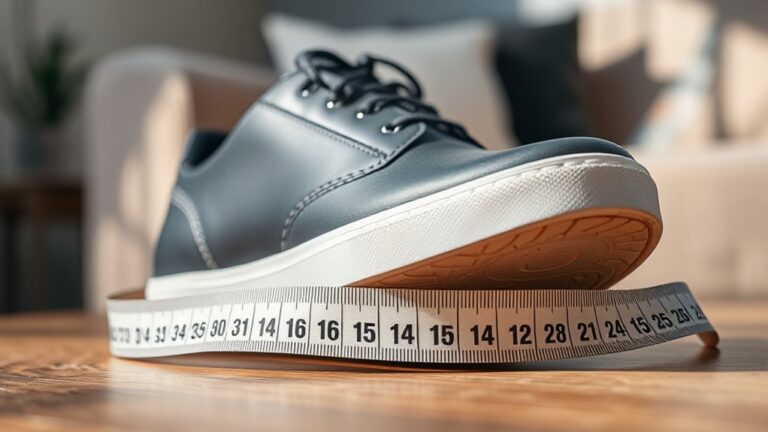
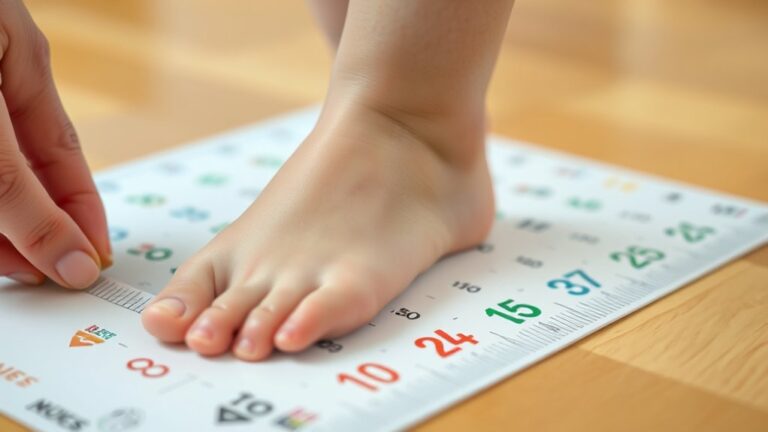
First, stand on paper, trace your foot’s widest part, then measure the width with a ruler. You can also wrap a flexible tape or string around the ball of your foot, mark the overlap, and measure that length. Make sure to wear the socks you’ll use with your shoes to get the most accurate measurement.
If you want a professional measurement, visit a store with a Brannock device. It gauges length and width precisely to help you find the best fit.
Always measure both feet separately and pick shoes based on the larger width to optimize fit and support.
Finding And Choosing B Width Shoes For Women And Men
Once you’ve determined your foot width, finding the right B width shoes becomes much easier. For women, B width usually means a standard, comfortable fit. It also matches popular shoe styles and current fashion trends pretty well.
Men with narrow feet should look for B width options too, but these might be harder to find. You may need to check out specialty brands since they’re not as widely available.
| Gender | B Width Characteristics |
|---|---|
| Women | Standard/medium fit, widely available |
| Men | Narrow fit, less common, specialty needed |
| Both | Supports foot health, reduces pressure points |
When you’re choosing shoes, try on different brands to make sure they feel comfortable and supportive. Also, keep your shoe style preferences and fashion trends in mind. That way, you’ll find styles that fit both your feet and your wardrobe without any hassle.
How B Width Changes With Different Shoe Lengths
Although B width denotes a specific foot width category, its actual measurement adjusts proportionally with shoe length to guarantee a proper fit. This width adjustment assures your shoe accommodates foot volume changes as size increases.
B width changes with shoe length to ensure a comfortable, well-fitting shoe as size increases.
For example, a size 6B shoe is narrower than a size 10B shoe, even though both share the B designation. The width scales with shoe length to maintain natural toe spread and balance.
Here’s how B width changes with shoe length:
- Shorter shoe lengths have proportionally narrower B widths.
- As shoe length increases, B width measurements expand.
- Width adjustment maintains consistent foot support across sizes.
- This scaling prevents fit issues despite identical width labels.
Understanding this helps you select properly fitting shoes across different sizes. It’s pretty handy to keep in mind when you’re shopping around!
Why Proper B Width Shoe Fit Matters For Foot Health
Because your foot’s natural shape and function depend on proper width, wearing shoes that match the B width guarantees adequate toe space and stable support. This fit preserves your foot arch alignment and heel stability, preventing discomfort and long-term deformities.
When your shoes fit well, you reduce risks of bunions, hammertoes, and blisters caused by slippage or pressure. Proper B width maintains natural toe spread and gait, which is essential for foot health. It just makes walking and standing more comfortable overall.
| Benefit | Effect on Foot | Health Outcome |
|---|---|---|
| Adequate toe space | Prevents bunions, hammertoes | Reduced deformities |
| Stable heel fit | Enhances heel stability | Lower ankle injury risk |
| Proper foot arch support | Maintains arch integrity | Prevents foot fatigue |
| Prevents foot slippage | Reduces blisters | Comfortable walking |
| Natural toe alignment | Promotes proper gait | Overall foot health |
Special Fit And Health Tips For B Width Shoes
When selecting B width shoes, you should prioritize confirming the fit accommodates your foot’s natural shape without compressing the toes or allowing heel slippage.
Since B width represents a medium fit for women and a narrow fit for men, precision in fit is essential. To optimize comfort and foot health, consider these tips:
First, measure your foot width regularly to detect any changes that might affect the fit. It’s a good idea to check every so often because our feet can change over time.
Also, opt for footwear brands that offer shoe customization to match your exact width needs.
Make sure the toe box supports natural toe spread. This helps reduce risks of bunions and hammertoes.
And try to avoid shoes that cause pressure points or instability, as these can lead to discomfort or injury.
Following these guidelines helps maintain foot health while letting you enjoy stylish, well-fitting footwear.
Taking a little extra time to find the right fit really pays off in comfort and foot care.
Frequently Asked Questions
Are B Width Shoes Available for Children’s Sizes?
Yes, you’ll find B width shoes in children’s fit ranges, offering a standard width. When choosing, consider sizing carefully to guarantee the shoe accommodates average foot shapes. This helps provide comfort without being too narrow or wide.
It’s all about finding that sweet spot where the shoe fits just right. So, take your time and maybe try a few pairs to see what feels best for your child.
Can B Width Shoes Accommodate Swollen Feet?
You can’t rely on B width shoes for swollen feet since 60% of people experience increased foot volume daily.
It’s better to prioritize shoe fit and comfort by opting for wider widths or adjustable designs. This way, you can avoid tightness and pressure that might make your feet feel worse.
Choosing the right shoe really makes a difference when your feet swell.
How Do B Width Shoes Vary by Brand?
You’ll find B width shoes vary by brand because each one measures width a little differently. This can really affect how well the shoe fits your foot.
It’s a good idea to always check the sizing charts for each brand before buying. Trying shoes on is the best way to make sure they match your foot’s exact width needs.
Are B Width Insoles Different From Other Widths?
Yes, B width insoles differ from others by offering a narrower width measurement. This ensures a precise shoe fit for standard feet.
Using the correct width helps maintain comfort and alignment. It also prevents gaps that are common with wider insoles. So, choosing the right width really makes a difference.
Do B Width Shoes Affect Athletic Performance?
Like a tailored suit, B width shoes fit your foot precisely, improving orthopedic considerations by enhancing support and stability. They also influence fashion implications, letting you perform athletically without sacrificing comfort or style.
When your shoes fit well, it’s easier to stay focused on your performance instead of dealing with discomfort. Plus, feeling good in what you wear can boost your confidence on and off the field. So, choosing the right width really does make a difference.
Conclusion
When you choose B width shoes, you’re tailoring comfort like a well-cut suit. It’s precise and personal. Knowing your foot’s width guarantees every step feels supported, not squeezed or loose.
Don’t let ill-fitting shoes cloud your stride. B width is the bridge between snug and roomy for many. Measuring accurately and selecting the right fit isn’t just about comfort. It’s a technical step toward healthier, happier feet that carry you confidently through every day.