What Is A Shoe Tree – Benefits And Uses Explained
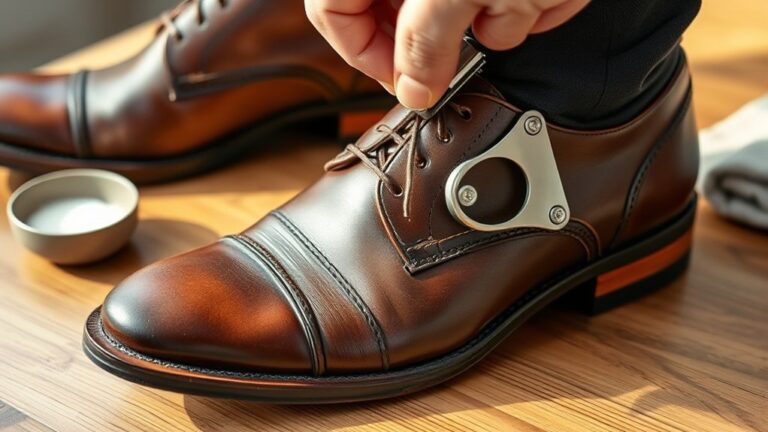
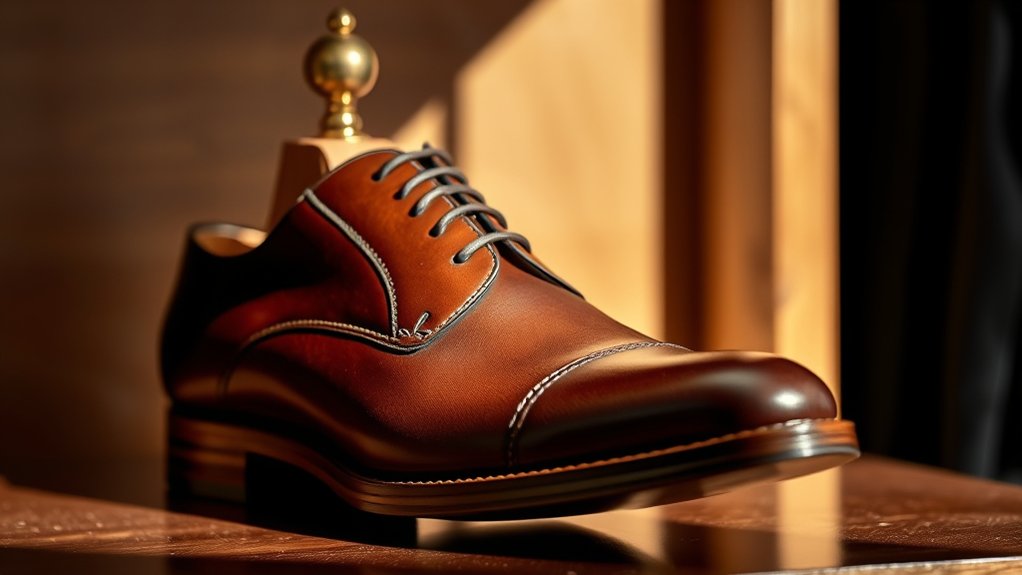
A shoe tree is a precisely shaped device you insert into your shoes to maintain their original form, prevent creases, and evenly distribute tension. It’s usually made from materials like cedar or beechwood, which absorb moisture and control odor. This helps protect leather from cracking and warping.
Using shoe trees right after wearing your shoes is key to preserving their structure and extending their lifespan. If you want to understand proper use, types for different footwear, and care tips, there’s more to explore. Just keep reading!
Key Takeaways
- A shoe tree mimics foot shape to maintain shoe form and prevent creasing or deformation.
- Cedar and beechwood shoe trees absorb moisture and odors, preserving leather integrity and freshness.
- Using shoe trees regularly extends shoe lifespan by reducing internal stress and preventing warping.
- Insert shoe trees immediately after wearing to support drying and maintain the shoe’s original shape.
- Properly fitted wooden shoe trees are essential for evenly distributing tension and preventing damage.
What Is a Shoe Tree and How Does It Work?
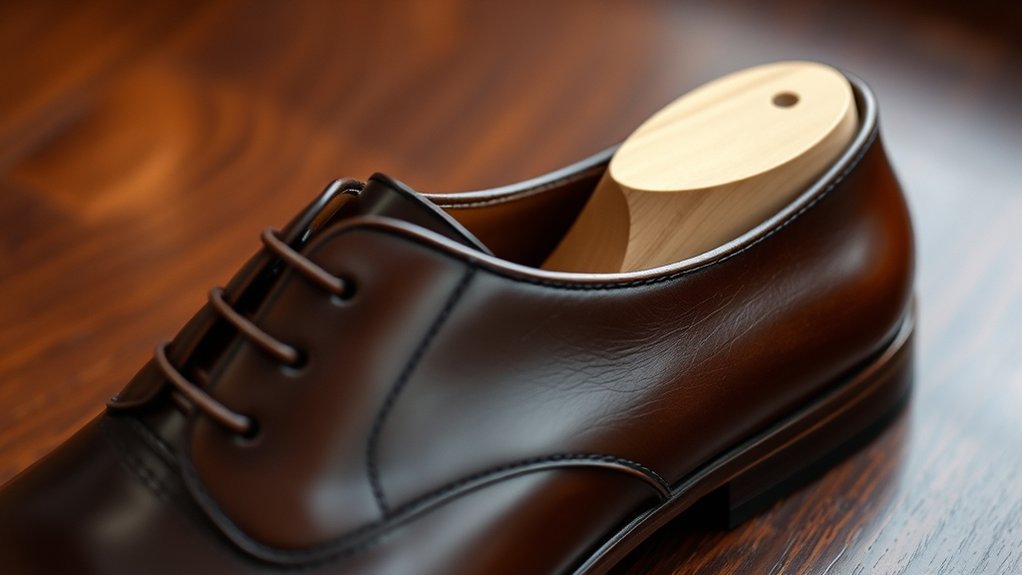
Although you mightn’t notice them at first, shoe trees play an essential role in maintaining your shoes’ shape by filling out their interiors and preventing creases. These devices typically mimic the natural contours of your foot, including the toe box and heel, ensuring a snug fit.
Selecting the correct shoe tree size is important, as it must evenly distribute tension to preserve the shoe’s original form.
Most shoe tree materials are wood-based, with cedar and beech being common choices due to their moisture-absorbing and odor-controlling properties.
Why Using Shoe Trees Extends Your Shoes’ Lifespan
Inserting a properly sized shoe tree does more than just maintain shape. It actively preserves your shoes’ structural integrity over time. Choosing the correct shoe tree sizes ensures even tension distribution. This prevents stress points that cause premature wear.
Properly sized shoe trees preserve structure by evenly distributing tension, preventing stress and premature wear.
Also, selecting shoe tree materials like cedar can absorb moisture and control odor. This helps minimize leather cracking and warping.
Here’s why using shoe trees extends your shoes’ lifespan:
- Maintains original shape, preventing creases and deformation that weaken leather.
- Absorbs sweat moisture, reducing risks of cracking, warping, and odor development.
- Distributes internal tension evenly, avoiding localized damage and preserving structural integrity.
How Long to Leave Shoe Trees in Your Shoes for Best Care
You should leave shoe trees in your shoes overnight to help maintain their shape and reduce creasing.
Now, if your shoes are wet, it’s best to keep the shoe trees inside for at least 24 hours to make sure they dry completely.
And if you wear your shoes a lot, you can actually leave the shoe trees in all the time to keep their shape looking great.
Overnight Shoe Tree Use
When you leave shoe trees in your shoes overnight, you actively preserve their shape and prevent creasing from daily wear. The shoe tree material plays a vital role in moisture absorption and maintaining leather flexibility. Equally important is the shoe tree fit; it must match your shoe’s dimensions precisely to provide uniform tension without overstretching.
To optimize overnight use, keep these points in mind:
- Insert the shoe trees immediately after removing your shoes to prevent early-set creases.
- Choose a shoe tree made of quality cedar or similar material for effective moisture control.
- Make certain the shoe tree fit is snug to support the shoe’s structure consistently, avoiding deformation.
Consistent overnight use prolongs your shoes’ lifespan and preserves their professional appearance. So, making shoe trees part of your routine really pays off!
Wet Shoes Duration
How long should shoe trees stay in wet shoes to guarantee ideal care? Leave shoe trees in damp footwear for at least 24 hours to assure effective moisture absorption and odor prevention.
Proper shoe tree sizing is essential; a well-fitted shoe tree evenly supports the shoe’s internal structure, preventing creases and warping during the drying process.
Using shoe trees made from moisture-absorbent materials like cedar enhances drying efficiency and inhibits mold growth. Removing shoe trees prematurely risks setting in deformation and shortens shoe lifespan.
For shoes exposed to rain or sweat, keeping shoe trees in overnight accelerates drying while preserving leather integrity.
Never store wet shoes without shoe trees, as this invites odor, mold, and shape distortion.
Consistent use of correctly sized, quality material shoe trees optimizes wet shoe care. So, make sure you pick the right size and material to keep your shoes looking their best.
Continuous Shape Maintenance
Although many might underestimate their importance, leaving shoe trees in your shoes for an appropriate duration plays a critical role in continuous shape maintenance. The shoe tree material, often cedar or high-quality plastic, supports the shoe’s structure while providing user comfort through moisture absorption and odor control.
To optimize care, follow these guidelines:
- Insert shoe trees immediately after removing shoes to prevent creases from setting.
- Leave shoe trees in overnight for effective shape preservation and crease reduction.
- For wet shoes, maintain shoe trees inside for at least 24 hours to aid drying and maintain form.
Removing shoe trees too soon compromises shape retention and crease prevention.
Do Shoe Trees Really Fix Creases and Protect Your Shoes?
You’ll find that properly fitted shoe trees help keep your shoes in shape by reducing excessive bending of the leather and preventing deep creases. Plus, they absorb moisture, which is great for preserving the leather’s integrity and stopping it from weakening and developing permanent creases.
Using high-quality cedar shoe trees takes these benefits even further. They keep your shoes feeling smooth and can really help extend their lifespan.
Crease Prevention Effectiveness
When you insert shoe trees into your shoes immediately after wearing them, they actively support the leather and maintain the shoe’s shape. This helps prevent deep creases from forming. The effectiveness of crease prevention depends a lot on the shoe tree materials.
Wooden cedar shoe trees are ideal because they gently stretch the leather while absorbing moisture. Using proper crease prevention techniques consistently guarantees your shoes retain their original form. Plus, it reduces wrinkle formation.
Key benefits of using shoe trees for crease prevention include:
- Maintaining structural integrity to prevent new creases.
- Gently stretching leather to smooth out existing wrinkles.
- Absorbing moisture that can weaken leather and promote creasing.
Leather Protection Benefits
Because leather naturally creases and weakens with wear, using shoe trees plays an essential role in preserving its integrity. Shoe tree materials, particularly cedar, not only gently stretch the leather to reduce deep wrinkles but also absorb moisture, preventing warping and shrinkage.
This controlled tension maintains the shoe’s shape, minimizing risks of cracks and deformation. By smoothing out existing creases, shoe trees enhance both the appearance and durability of your leather footwear.
Additionally, regular use supports leather conditioning by reducing stress points caused by foot bending and prolonged compression. While shoe trees don’t completely erase creases, their preventive action effectively protects leather, extending the lifespan of your shoes and preserving their professional look over time.
Can You Use Shoe Trees With Boots and Trainers?
Although boots and trainers differ in design, you can use specialized shoe trees to maintain their shape effectively. Proper boot support prevents shaft warping and creasing, while trainer preservation focuses on maintaining the shoe’s structure and reducing high-wear creases.
Here’s how shoe trees benefit these footwear types:
- Extended boot trees provide full shaft support, preserving the boot’s original form and preventing deformation.
- Cedar boot trees absorb moisture and odors, extending the lifespan of boots with natural ventilation.
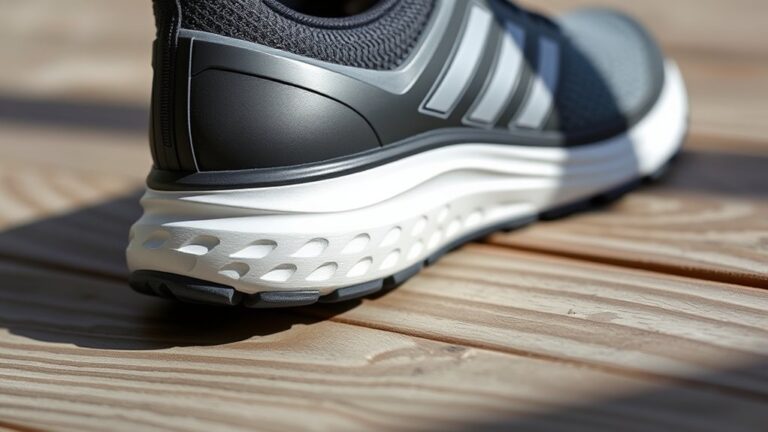
- Trainer shoe trees fit precisely to maintain structural integrity, especially in high-flex areas prone to creasing.
Using shoe trees tailored for boots and trainers ensures ideal shape retention, moisture control, and longevity. They’re really essential for proper footwear care.
Choosing the Right Shoe Tree for Your Footwear
Selecting the right shoe tree hinges on matching its size and shape precisely to your footwear to prevent warping or deformation. Focus on material compatibility and fit adjustment to maintain your shoes’ structure and longevity. For premium leather, cedar or beechwood shoe trees with a lasted shape ensure optimal support and moisture absorption.
Avoid plastic or spring-loaded trees for fine shoes, as they risk creasing. Proper fit requires filling both the toe box and heel, preserving the shoe’s original silhouette. It’s all about keeping your shoes looking their best for as long as possible.
| Shoe Type | Recommended Shoe Tree Material |
|---|---|
| High-end leather | Cedar or Beechwood (Lasted Shape) |
| Casual leather | Hardwood or plastic (snug fit) |
| Synthetic | Plastic (with caution) |
| Dress shoes | Cedar or Beechwood |
| Trainers | Plastic or adjustable fit |
Choosing and Caring for Premium Wooden Shoe Trees
When you invest in premium wooden shoe trees, like those made from high-quality cedar or beechwood, you get superior moisture absorption and shape retention for your footwear. To make the most of them, just follow a few simple care steps.
First, pick custom or lasted shoe trees that match your shoes’ exact shape. This gives ideal support and helps prevent deformation.
Next, lightly sand cedar shoe trees once a year using grit 300+ sandpaper. This refreshes their scent and boosts moisture absorption.
Finally, make it a habit to insert and remove shoe trees after each wear. Doing this keeps your leather flexible and stops creases from setting in.
Frequently Asked Questions
Can Shoe Trees Prevent Odor in Synthetic Shoes?
Yes, shoe trees effectively prevent synthetic shoe odor by promoting airflow and moisture absorption. They help keep your shoes dry, which is key to stopping that unpleasant smell.
Using shoe trees is a smart move because they reduce bacteria buildup inside your shoes. This keeps your synthetic shoes fresher for longer. Plus, it extends their overall lifespan, so you get more wear out of them.
Incorporating shoe trees into your odor prevention routine is an easy way to maintain your shoes. Trust me, your feet (and nose) will thank you!
Are Shoe Trees Suitable for High Heels?
You can’t judge a book by its cover. Shoe trees are suitable for high heels when offering proper heel support and size adjustment. They help preserve shape, prevent creasing, and extend the lifespan of your shoes.
Just make sure to choose ones designed specifically for high heel contours. That way, they fit perfectly and do their job well. It’s all about giving your heels the right kind of care.
How Do Shoe Trees Compare to Shoe Stretchers?
You’ll find shoe trees, often made from cedar or plastic, preserve shape and absorb moisture, while stretchers adjust size. Proper shoe tree maintenance, like cleaning and drying, guarantees durability, unlike stretchers that focus on expansion rather than preservation.
Shoe trees are all about keeping your shoes looking and feeling great over time. Stretchers, on the other hand, are more of a quick fix when you need a little extra room. So, they serve different purposes but both help your shoes in their own way.
Can Children’s Shoes Benefit From Shoe Trees?
Just like a skilled artisan shapes fine leather, you can use shoe trees to maintain child shoe fit and support pediatric footwear. They prevent creasing, preserve form, and absorb moisture.
This helps ensure lasting structure and hygiene in kids’ shoes. Using shoe trees might seem like a small step, but it really makes a difference in keeping shoes comfortable and durable.
What Are the Best Storage Tips for Shoe Trees?
Store shoe trees in a cool, dry environment, avoiding direct sunlight to protect the shoe material. Make sure there’s good ventilation to prevent moisture buildup.
It’s a good idea to rotate your shoe trees regularly to help maintain the shoe’s shape. If you have cedar shoe trees, sand them once a year to keep their moisture absorption working at its best.
Conclusion
Using shoe trees isn’t just a stylish habit. It genuinely preserves your footwear’s shape and extends its life by absorbing moisture and preventing creases.
While some claim shoe trees can completely erase deep creases, the truth is they mainly minimize new ones rather than fix existing damage. For best results, insert them promptly after use and choose the right material for your shoes.
Ultimately, consistent use is a simple and effective investment in your shoe care routine. Give it a try, and your shoes will thank you!