How To Start A Shoe Business – Beginner’s Startup Guide
To start a shoe business, first research the market to find your niche and target audience. Develop a strong brand identity with memorable visuals and a unique selling proposition. Plan your business carefully, covering finances, legalities, and operational logistics.
Design and prototype shoes using quality materials, then choose efficient manufacturing methods. Launch your online store and market strategically through social media and influencer partnerships.
Ready to build a successful shoe brand? There’s plenty more to explore next.
Key Takeaways
- Conduct thorough market research to identify niche, target audience, and unique selling proposition for your shoe business.
- Develop a strong brand identity with a memorable logo, cohesive color palette, and consistent visual elements.
- Design, prototype, and test shoe concepts using quality materials before selecting scalable manufacturing options.
- Create a detailed business plan addressing legal compliance, financial projections, and launch strategies including online store setup.
- Implement marketing tactics leveraging social media, influencer partnerships, and customer feedback to drive growth and engagement.
Research the Shoe Market and Find Your Niche

To build a successful shoe business, you need to start with thorough market research that uncovers gaps and unmet needs. Analyze competitors, customer reviews, and best-sellers on Amazon, eBay, and Etsy to spot opportunities for footwear innovation.
Use Google Trends to track seasonal demand and demographic interests, helping you assess growth potential in specific categories.
Understand the US market’s profitability, where average spending hits $154.99 for women and $107.23 for men. This generates over $78 billion annually.
Focus your efforts by applying market segmentation. Narrow down your target audience using geographic data and style preferences found on online marketplaces and Pinterest.
This sharp focus lets you develop a unique selling proposition that fills market voids and sets you apart in the crowded shoe industry.
Create Your Brand Identity
You need to clearly define your target audience so your brand speaks directly to their needs and style. Think about who you’re trying to reach and what matters most to them.
Then, craft visual elements like a memorable logo and a cohesive color palette that really express your shoe brand’s personality. When your identity is focused like this, it’ll set you apart and help you build lasting connections with your customers.
Define Target Audience
How well do you really know the people you want to wear your shoes? Defining your target audience is essential for shaping your brand identity and designing footwear that truly connects.
Focus on target demographics like age, gender, location, and lifestyle to tailor your approach effectively.
Use customer profiling to create detailed personas capturing buying habits and style preferences. This sharp focus will guide your marketing and product development.
To define your target audience, you should:
- Analyze demographics to pinpoint your ideal customer base
- Use market research tools to understand their needs and pain points
- Develop customer personas reflecting their footwear preferences
- Continuously refine profiles based on feedback and trends
With precise targeting, you’ll build a brand that resonates and stands out in the crowded shoe market.
Craft Visual Elements
Knowing exactly who your shoes are for sets the stage for crafting visual elements that truly speak to your audience. Start by developing a strong brand identity with a memorable logo, consistent color palette, and cohesive visual style that reflect your shoe business’s unique personality.
Use mood boards to align designers, manufacturers, and marketing teams on your brand’s aesthetic and core values. Incorporate professional photography and custom packaging, like magnetic-top boxes with logos, to elevate recognition and customer experience.
Make sure your visuals adapt seamlessly across all platforms: website, social media, packaging, and promos. Conduct market research to spot visual trends in your niche, helping your brand stand out and appeal directly to your target audience.
This focused approach builds trust and drives lasting connections. It’s all about making your brand memorable and relatable so customers keep coming back.
Write a Business Plan for Your Shoe Startup
Although launching a shoe startup can be exciting, crafting a detailed business plan is vital to turn your vision into reality. Your plan should clearly define your target market and unique selling points, backed by competitor research.
Launching a shoe startup is thrilling, but a detailed business plan is essential to realize your vision.
Don’t forget to address footwear regulations and select the right shoe material to meet safety and quality standards.
Financial projections and startup costs provide a realistic funding roadmap, while operational details like legal structure ensure compliance and smooth management.
Focus on these key areas:
- Define your niche, target audience, and product differentiation
- Outline sourcing of shoe material and compliance with footwear regulations
- Develop financial forecasts and funding strategies
- Plan marketing tactics and operational logistics
A solid business plan keeps you focused and investor-ready, setting your shoe startup up for success.
Design Shoe Concepts and Create Technical Sketches
With a solid business plan in place, your next step is to bring your shoe ideas to life through design concepts and technical sketches. Start by gathering shoe design inspiration from current trends and your target audience’s needs.
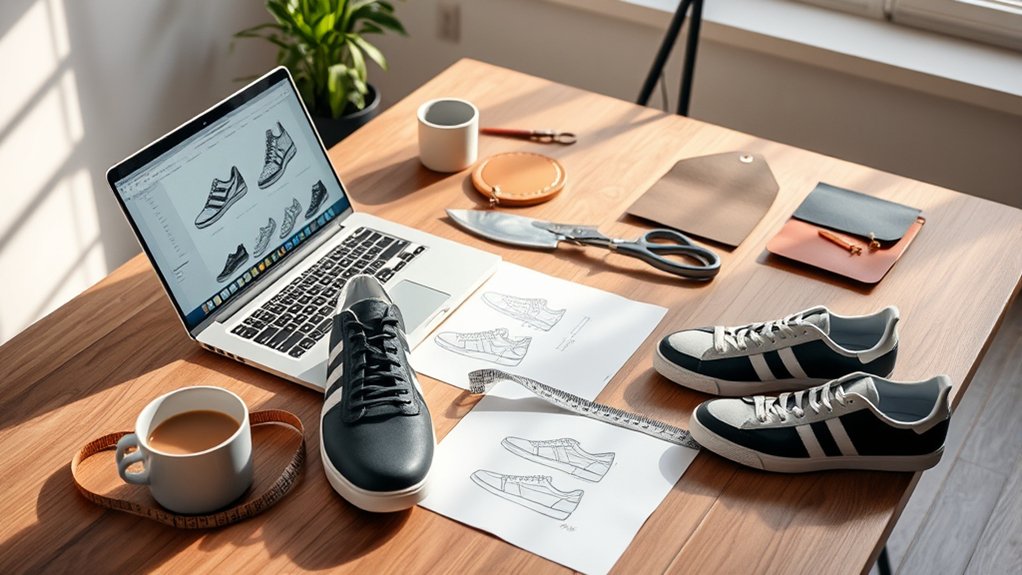
Use sketching techniques to create rough drafts, experimenting with shapes, materials, and color palettes.
Gradually refine these ideas into detailed technical sketches that specify materials, construction details, and measurements. Incorporate annotations and material descriptions to guarantee clear communication with manufacturers.
These precise sketches form the foundation for your tech packs, which are essential for accurate prototype development.
By mastering this process, you’ll create unique, well-documented designs that stand out in the market and set your shoe business on the path to success.
It’s all about turning your vision into something tangible that others can understand and bring to life.
Develop Prototypes and Source Materials
Now it’s time to turn your designs into tangible prototypes by working with pattern makers and selecting the right materials. You’ll want to focus on sourcing durable, high-quality fabrics and soles that not only match your vision but will also stand up to wear.
Once you have your prototypes, use them to test fit and function. This way, you can make any necessary adjustments before scaling up production.
It’s all about refining your product to get it just right!
Prototype Development Process
Before moving to mass production, you need to develop prototypes that bring your sketches or tech packs to life. This step guarantees your vision translates perfectly into a physical shoe, highlighting material quality and design accuracy.
Focus on sample testing to evaluate fit, comfort, and durability. Use feedback to refine your prototypes before scaling up.
Key steps include:
- Translate designs into physical samples using technical consultation and pattern making
- Source high-quality materials and create custom molds if needed
- Conduct thorough sample testing for fit, comfort, and durability
- Produce trial shoes to verify manufacturing quality and prepare marketing samples
Material Sourcing Strategies
Although developing prototypes demands close collaboration with pattern makers and manufacturers, sourcing the right materials is just as essential to bring your shoe designs to life. Focus on finding eco friendly fabrics and reliable suppliers through trade shows or online directories.
Prioritize quality and sustainability while mastering supplier negotiations to get the best prices without sacrificing standards. Testing samples ensures durability and consistency in your final product. Remember, custom molds or specialized materials can affect costs and timelines, so plan accordingly.
| Material Type | Source Options | Key Considerations |
|---|---|---|
| Eco Friendly Fabrics | Certified suppliers | Durability, sustainability |
| Custom Molds | Specialized manufacturers | Cost, production time |
| Print-on-Demand | Platforms like Printify | Flexibility, minimal upfront |
| Leather Alternatives | Vegan material vendors | Quality, supplier reliability |
Choose Manufacturing Methods and Plan Production
Since your manufacturing choices directly impact your product quality and business scalability, you’ll need to carefully decide whether to produce your shoes in-house, outsource to a factory, or use print-on-demand services. Each option affects your manufacturing scalability and quality control differently.
In-house production offers maximum control but demands significant investment. Outsourcing helps scale efficiently and lowers costs, but you’ll need to vet partners for consistent quality. Print-on-demand services offer flexibility without inventory risk, though they may limit customization.
Consider these factors when planning production: equipment, space, and skilled labor needs for in-house manufacturing. Also think about minimum order quantities and timelines with factories. Don’t forget quality standards to maintain your brand reputation.
Finally, weigh cost-effectiveness and scalability aligned with your growth goals. Choose the method that balances quality control and scalability to set your shoe business up for success.
Launch Your Shoe Business Marketing and Online Store
How do you turn your shoe designs into a thriving business? Start by setting up a professional online store using platforms like Shopify or WooCommerce. You can also integrate marketplaces such as Etsy and Amazon to expand your reach.
Develop a solid marketing plan that includes social media campaigns, SEO, and email marketing to attract and keep customers coming back. Use high-quality photos and targeted ads on Facebook and Instagram to boost your brand’s visibility.
Leverage influencer partnerships and collaborations to tap into wider audiences and build credibility quickly. Share behind-the-scenes content, launch promotional offers, and collect customer reviews to foster trust.
Finally, track sales data and customer feedback to continually refine your strategies and optimize your online store’s performance. This approach will help you enjoy steady growth and build a strong market presence.
Frequently Asked Questions
How Do I Handle Shoe Inventory Management Efficiently?
You’ll handle shoe inventory management efficiently by implementing inventory tracking software, practicing regular stock rotation, conducting audits, and aligning orders with demand forecasts. This keeps your stock fresh, accurate, and minimizes costs while maximizing sales potential.
It’s all about staying on top of what you have and what you need. Regular checks and smart ordering help you avoid overstocking or running out of popular styles. Plus, keeping your inventory organized makes everything run smoother.
What Are the Best Payment Gateways for Shoe E-Commerce?
With over 200 countries supported, PayPal tops shoe e-commerce gateways. You’ll enjoy low transaction fees and robust payment security.
Shopify Payments and Square also excel, balancing cost-effectiveness and seamless fraud protection for your store’s success. They really help keep things running smoothly without breaking the bank.
How Can I Protect My Shoe Designs Legally?
You can protect your shoe designs legally by applying for a design patent and securing trademark registration for your brand. These steps prevent copycats and safeguard your unique visual elements.
This way, you get strong, exclusive rights that help keep your designs safe. It’s all about making sure no one else can use what you’ve created without your permission. Taking these steps early can really pay off in the long run.
What Shipping Options Are Most Cost-Effective for Shoe Delivery?
Don’t put all your eggs in one basket; explore packaging options like flat-rate boxes. Compare shipping carriers such as USPS and DHL to see what works best for you.
This approach helps you find the most cost-effective delivery method for your shoes. It’s all about trying out different options and seeing which one saves you the most money without sacrificing quality.
How Do I Manage Customer Returns and Exchanges?
You manage customer returns and exchanges by setting clear return policies, tracking customer feedback to identify issues, and responding promptly. This builds trust, minimizes defects, and turns returns into opportunities to improve and retain loyal customers.
It’s really about being clear and quick with your customers. When they know what to expect and feel heard, they’re more likely to stick around. Plus, every return gives you a chance to make things better.
Conclusion
Starting your shoe business is like lacing up for a marathon. You need focus, strategy, and persistence. By researching your market, building a strong brand, and planning every step from design to production, you set yourself up for success.
Keep your goals clear, stay adaptable, and push forward with confidence. Remember, every great shoe brand started with a single step. Now it’s your turn to take it and run toward your dream.