What Size Shoe Does A 5 Year Old Wear – Shoe Size Chart
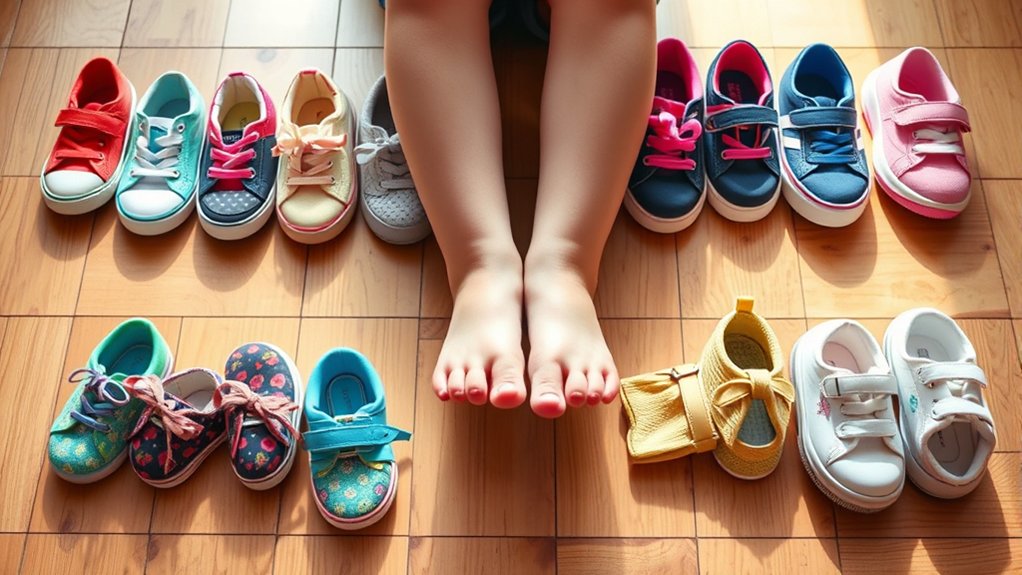
A 5-year-old typically wears shoes between US size 11 and 13, with foot length around 6.5 to 7.5 inches. You’ll want to measure their feet every 2 to 3 months by tracing or using a printed size guide for the best fit.
Always pick the larger size if measurements fall between two sizes to guarantee comfort and room to grow. Knowing how to check fit and when to size up helps protect their foot health and comfort as they grow. It’s all about making sure their shoes are just right!
Key Takeaways
- A typical 5-year-old wears US shoe sizes 11 to 13, with foot lengths ranging from 6.5 to 7.5 inches.
- Foot size grows about half a size every 2 to 4 months, especially during rapid growth phases.
- Measure feet every 2 to 3 months, using the longer foot length and checking width for accurate sizing.
- US sizes 11-13 correspond to European sizes 28-31 on standard shoe size charts.
- Always choose the larger size when between sizes to ensure comfort and room for growth.
Average Shoe Size for a 5 Year Old
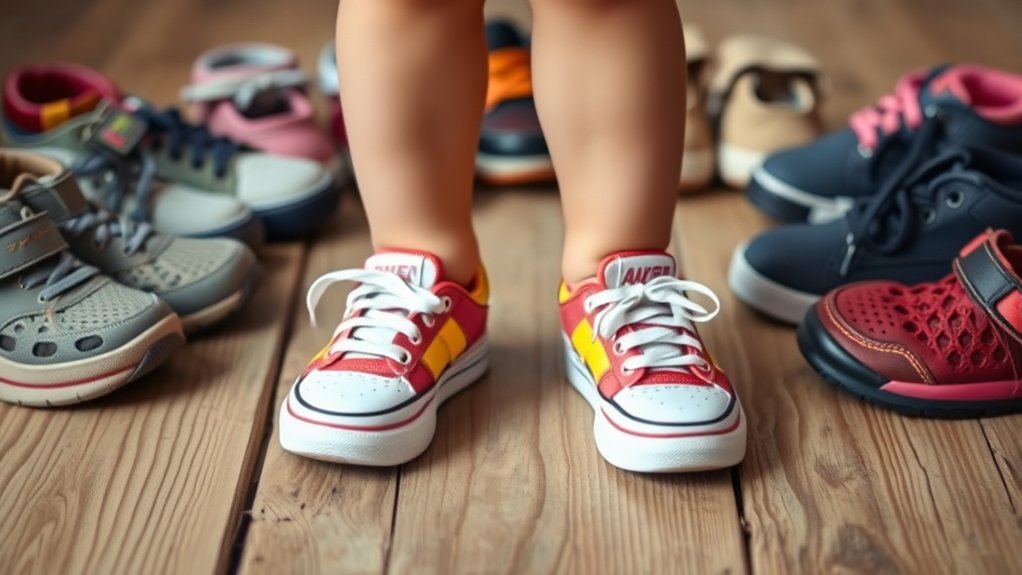
Although every child grows at their own pace, you can generally expect a 5-year-old’s shoe size to fall between US sizes 11 and 13.
Most 5-year-olds wear shoes sized between US 11 and 13, though growth rates vary.
At this age, their feet measure roughly 6.5 to 7.5 inches in length, meaning you’ll want to focus on shoes that accommodate this growth.
Keep in mind that kids’ feet can grow about half a size every 2 to 4 months, so staying updated on their size is vital.
When choosing shoes, consider not just size but also shoe material, as breathable and flexible fabrics support growing feet better.
Plus, paying attention to current fashion trends means your child’s shoes can be both comfortable and stylish, making it easier for them to enjoy wearing them daily.
How to Measure Your 5 Year Old’s Feet Accurately
To make certain your 5-year-old’s shoes fit comfortably and support healthy foot development, you’ll need to measure their feet accurately. Start by printing a size guide at 100% scale, verifying it with a credit or ID card.
Have your child stand barefoot on a hard surface with their heel against the wall.
Next, mark the longest toe point on paper, then measure heel to toe in centimeters or inches. Don’t forget to measure both feet and use the longer length for sizing. It’s easy to overlook, but measuring both feet really makes a difference.
Wrap a ribbon around the widest part to gauge foot circumference, making sure the shoe material can accommodate this width.
When choosing shoes, consider color and style preferences too, but always prioritize fit.
Proper measurements help you pick shoes that protect growing feet without compromising comfort or support. That way, your child stays comfortable and their feet grow healthy.
How to Read Kids Shoe Size Charts for 5 Year Olds
When you’re looking at a kids’ shoe size chart, the first thing to do is get a good grasp of the size numbers and how they match up with your child’s foot length. It’s a good idea to measure your 5-year-old’s foot carefully.
Once you have that measurement, you can check the chart and find the size that’s closest to your child’s foot length.
And don’t forget, it’s not just about the length. You’ll want to consider the width too, to make sure the shoe feels comfy and fits just right.
That way, your little one can run and play without any discomfort.
Understanding Size Numbering
Since kids’ shoe sizes can vary widely even among 5-year-olds, understanding how to read size charts is key to finding the right fit. Shoe size numbering relates directly to foot length, with sizes increasing roughly 0.5 to 1 inch per full size. You’ll often see US, Euro, and inch measurements side by side, making shoe size conversion easier.
Remember, shoe width options also matter. Some kids need wider shoes for comfort.
Here’s a quick look at typical size conversions for 5-year-olds:
| US Size | Euro Size |
|---|---|
| 11 | 28 |
| 12 | 29 |
| 13 | 31 |
| 1 (Kids) | 32 |
Use this to match your child’s foot length and width perfectly.
Measuring Foot Length
Finding the right shoe size starts with accurately measuring your child’s foot length. Have your child stand flat on a hard surface while you measure from heel to the longest toe using a ruler or measuring tape.
Measure both feet since one may be slightly longer. Use the longer foot’s length to guide your size choice.
When comparing to a kids’ shoe size chart for 5-year-olds, always select the larger size if the measurement falls between two sizes.
Remember, the shoe material should allow some flexibility to accommodate the foot arch and growing feet comfortably.
Checking both foot length and circumference on the chart guarantees a better fit.
This supports your child’s foot health and comfort throughout their active day.
Choosing Correct Fit
Although choosing the correct shoe size might seem straightforward, reading kids’ shoe size charts for 5-year-olds requires careful attention to both foot length and circumference.
You should measure your child’s feet regularly because growth can be quick and unpredictable.
When your child’s foot falls between sizes, always pick the larger size to guarantee comfort and allow room for growth.
Don’t forget to think about width, as a proper fit depends on both length and circumference.
Also, keep in mind the shoe material. Flexible fabrics often accommodate slight size variations better than rigid ones.
While shoe color mightn’t affect fit, it’s worth choosing colors your child loves to encourage wearing them happily.
Accurate measurements combined with thoughtful choices make selecting the right shoes easier and more comfortable for your child.
Signs Your 5 Year Old’s Shoes Don’t Fit Right
When your 5-year-old’s shoes don’t fit properly, they’ll likely show signs of discomfort that you can easily spot. Look for redness, blisters, or indentations on their feet after removing the shoes. These usually mean the shoe material or heel height may be causing tightness.
If their toes press against the front or there’s no thumb’s width of space, the shoes are too small. On the other hand, shoes that are too loose can cause tripping or slipping. This affects their balance and walking.
Pay attention to how the shoe material flexes and how the heel height affects stability. Both should support comfort and movement.
Keeping an eye on these signs helps make sure your child’s shoes fit well. This promotes healthy foot development and prevents pain or injury. So, it’s worth checking regularly!
When to Choose a Bigger Shoe Size for Your 5 Year Old
Noticing signs that your 5-year-old’s shoes don’t fit well means it’s time to think about sizing up. Choose a bigger shoe size if the shoe material feels tight or restricts the foot arch’s natural movement. A snug fit is good, but cramping or discomfort means it’s time for more room.
Growth spurts and feet between sizes also call for larger shoes to ensure comfort and proper development. You want your child’s feet to have enough space to move and grow without feeling squeezed.
| Sign | What to Check | Action Needed |
|---|---|---|
| Tightness | Shoe material stiffness | Select larger, flexible shoes |
| Discomfort | Foot arch support | Choose a bigger, supportive size |
| Growth between sizes | Length & circumference | Opt for next size up |
| Restricted movement | Toe room (thumb width) | Increase shoe size |
When and How Often to Check Your Child’s Shoe Size
You should check your child’s feet every 2 to 4 months, especially between the ages of 3 and 8 when their feet grow quickly.
It’s a good idea to keep an eye out for signs like tight shoes, worn-out soles, or if your child says their shoes feel uncomfortable. When you notice any of these, it’s definitely time to measure their foot size again.
You don’t need anything fancy to do this at home. A simple foot tracing or a printable size guide can really help make sure their shoes fit well and feel comfortable.
Doing this regularly can save you from buying shoes that are too small or don’t support their feet properly.
Frequency Of Measurements
Since children’s feet grow quickly, it’s important to measure their shoe size every 2 to 3 months. This helps you keep up with their rapid growth, often about half a size every few months. It also guarantees shoes fit comfortably without causing pain or restricting foot development.
Check sizes especially before new school terms or seasonal changes. When measuring, consider shoe material and decorative embellishments, as these can affect fit and flexibility.
Using a printable size guide or foot tracing method makes tracking growth easy and precise. By measuring frequently, you prevent discomfort from shoes that are too tight or small.
This supports your child’s healthy foot development and comfort every step of the way.
Staying attentive to these details makes selecting shoes simpler and safer for your 5-year-old.
Growth Rate Indicators
Keeping a close eye on your child’s foot growth helps determine when to check their shoe size. Since kids’ feet grow about half a size every 2 to 4 months, regular checks are key to ensuring proper fit and comfort.
Here’s how to monitor growth rate indicators effectively:
- Measure your child’s feet every 2 to 3 months during rapid growth phases.
- Use precise methods like foot tracing or printable size guides for accuracy.
- Consider footwear fashion and shoe material, as flexible materials might fit longer but still need timely updates.
- Adjust frequency based on your child’s unique growth pattern, since rates can vary widely.
Signs Of Poor Fit
Although children’s feet grow rapidly, about half a size every 2 to 4 months, many parents overlook subtle signs that shoes no longer fit properly. You should check your child’s shoe size every 2 to 3 months, especially during growth spurts.
Poorly fitting shoes often cause blisters, red spots, or discomfort.
To guarantee a good fit, leave about a thumb’s width of space between the longest toe and the shoe’s front. Keep in mind that shoe material affects comfort; soft, flexible materials adapt better to growing feet.
While footwear fashion is important, prioritize fit and comfort to support healthy foot development.
Replace shoes promptly when they feel tight or show wear. And remember to regularly inspect for signs of poor fit to keep your child comfortable and safe.
Buying Tips for Your 5 Year Old’s Growing Feet
When you shop for your 5-year-old’s shoes, measuring their feet every 2 to 3 months helps secure a proper fit as they grow quickly. To make the best choices, keep these tips in mind:
- Always select shoes about half a size larger than their current measurement to allow room for growth.
- Choose breathable, supportive shoes with flexible soles to support active play and healthy foot development.
- Consult size charts in inches and centimeters to ensure accuracy, as sizing can vary by brand.
- Keep up with fashion trends but prioritize comfort and fit, and practice regular shoe cleaning to maintain shoe quality and hygiene.
Following these steps helps you balance style and function, ensuring your child’s feet stay comfortable and healthy. It’s all about making sure they can run and play without any discomfort.
Frequently Asked Questions
Can Shoe Size Vary Between Different Brands for 5-Year-Olds?
Yes, shoe size can vary between brands for 5-year-olds because shoe material and construction differ. You’ll find shoe color options vary too, so always measure carefully and consider both fit and style for your child’s comfort.
It’s a good idea to try shoes on when you can, as sizes aren’t always consistent. Remember, what fits one brand might feel different in another. So, keeping an eye on both size and how the shoe feels will help your child stay comfortable.
Are There Specific Shoe Types Better for 5-Year-Old Foot Development?
You should choose shoes with flexible soles and a wide toe box to support your child’s foot growth. Ensuring a proper shoe fit with stability and breathability helps protect their developing feet and encourages healthy movement.
It’s really important to pick shoes that feel comfortable and don’t squeeze their toes. When kids have the right shoes, they can run and play without any discomfort. Plus, breathable materials keep their feet cool throughout the day.
How Do Weather Conditions Affect Shoe Size or Fit for Kids?
Like feet puffing like soft clouds, seasonal footwear must adapt to temperature fluctuations. You’ll want slightly larger shoes in cold or humid weather to guarantee your child stays comfy, avoiding tight fits that can hurt growing feet.
It’s all about giving those little feet room to breathe and move without feeling squeezed. When it’s chilly or damp, feet can swell a bit, so a bit of extra space really helps.
That way, your kiddo stays happy and pain-free, no matter the weather outside!
Should Socks Thickness Influence the Shoe Size Chosen for a 5-Year-Old?
Yes, sock thickness should influence the shoe fit you choose for your 5-year-old. Thicker socks can make shoes feel tighter, so picking a slightly larger size guarantees comfort and prevents blisters during wear.
It’s all about making sure their feet have enough room to move without feeling squished. Plus, kids grow fast, so a little extra space can be a good thing. Just keep an eye on how the shoes fit with different socks to find the best size.
Can Orthotic Inserts Affect the Shoe Size Needed for My Child?
Orthotic inserts can be the secret ingredient that changes your child’s shoe fitting recipe. For orthotic compatibility, you might need to size up to guarantee comfort, support, and prevent tightness.
This helps keep their feet happy and healthy. It’s all about making sure the shoes fit well with the inserts inside. So, don’t be surprised if your child’s shoe size changes once you add orthotics!
Conclusion
Remember, your 5-year-old’s feet are like little seeds, growing fast and needing the right space to flourish. By measuring regularly and choosing shoes that fit just right, you’re nurturing their comfort and confidence every step of the way.
Keep an eye out for signs of tightness or wear. Don’t hesitate to size up when needed.
With these tips, you’re giving your child the perfect foundation for all their adventures ahead.