How To Measure Toddler Shoe Size – Accurate Sizing Tips
To measure your toddler’s shoe size accurately, have them stand barefoot on a flat surface and trace each foot’s outline. Measure from heel to the longest toe, and wrap a tape around the widest part for width. Always measure both feet and choose the larger size.
Make sure to re-measure every 6-8 weeks during growth spurts. Leave about a thumb’s width of space in the shoe and check for comfort while walking. These steps guarantee a healthy fit.
You’ll also find helpful tips on sizing and shoe selection ahead.
Key Takeaways
- Measure the toddler’s barefoot foot length from heel to longest toe on a flat, hard surface using a ruler or foot tracing for accuracy.
- Measure foot circumference around the widest part with a flexible tape to determine foot width and ensure proper shoe fit.
- Use printable size guides at 100% scale or foot tracings to compare measurements against size charts for precise shoe size selection.
- Always measure both feet and choose the larger size if there’s a difference, allowing about a thumb’s width of space inside the shoe.
- Regularly re-measure every 6-8 weeks during rapid growth and have the toddler try shoes on to confirm comfort and proper fit.
How to Measure Your Toddler’s Foot Length Accurately
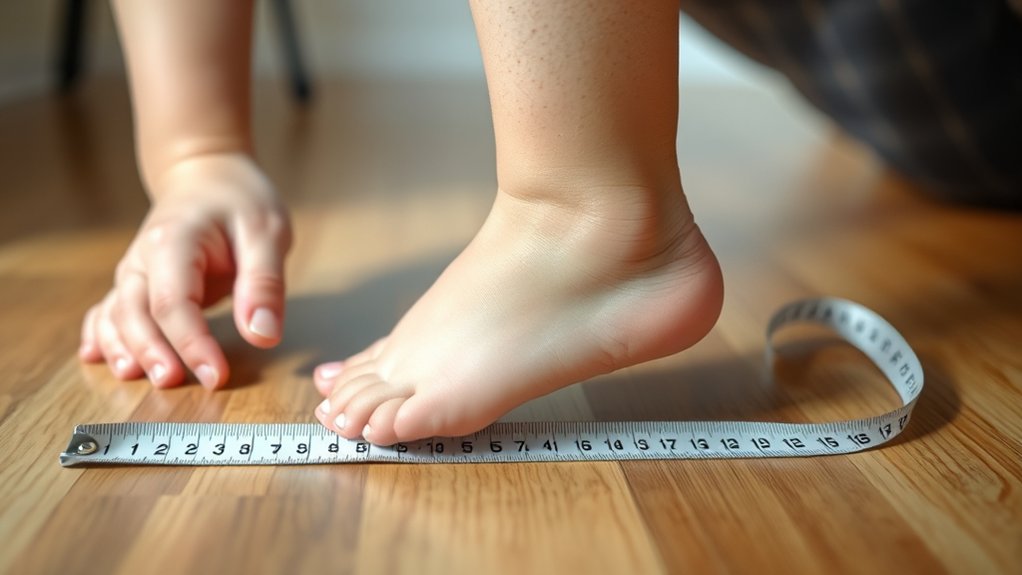
When measuring your toddler’s foot length accurately, start by having them stand barefoot on a flat, hard surface with their weight evenly distributed.
Place a piece of paper under their feet and mark from heel to the tip of the longest toe, usually the big toe.
Place paper under the foot and mark from heel to the longest toe for accurate measurement.
Use a ruler or measuring tape to get a precise measurement in centimeters.
Make sure to repeat this on both feet, as one may be larger.
Record the bigger measurement for sizing.
It’s a good idea to measure twice to guarantee accuracy.
Keep in mind that shoe material and toe shape influence fit.
Softer materials and rounded toe shapes offer more comfort and accommodate natural foot growth.
Accurate length measurement helps you choose shoes that provide proper support and prevent discomfort caused by improper sizing.
How to Measure Toddler Foot Circumference and Width
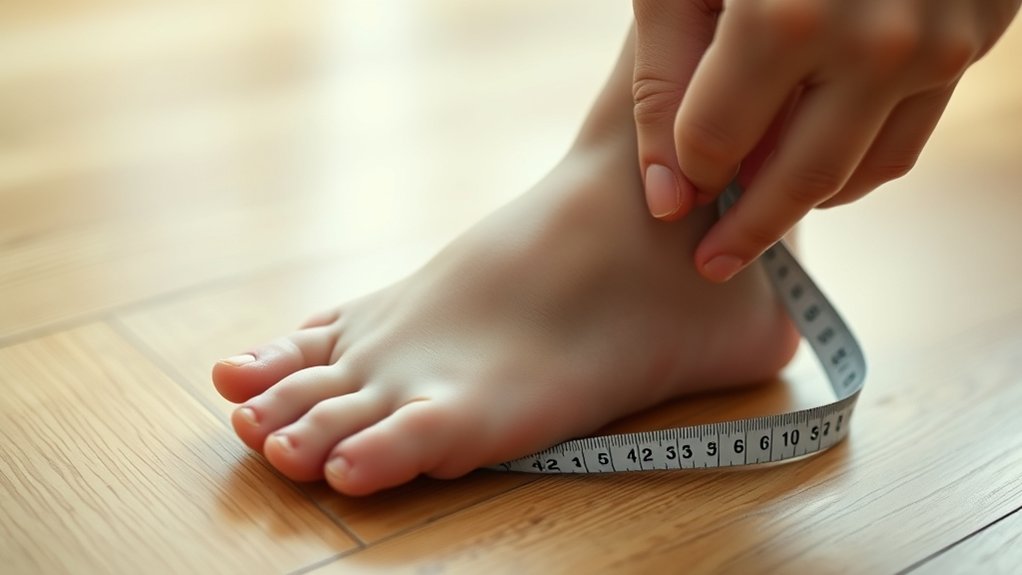
To measure your toddler’s foot circumference, start by wrapping a flexible tape around the widest part of their foot. Make sure it’s snug but still comfortable for them.
This measurement is really helpful because it tells you about the foot’s width, which can actually be different from one foot to the other.
It’s a good idea to measure both feet and write down each number. Since one foot might be a bit bigger, always use the larger measurement when you’re picking out shoes.
That way, you’ll help ensure the shoes fit just right and keep your little one comfortable.
Measuring Foot Circumference
Although measuring your toddler’s foot length is essential, capturing the foot circumference gives you a clearer picture of their shoe width needs. Wrap a flexible tape or ribbon snugly around the widest part of the foot, just behind the toes and over the ball.
Make sure to measure both feet separately. Keep in mind the thickness of socks and the shoe material, since thicker socks or less stretchable shoes need more room.
Record the measurement precisely in centimeters or inches to match sizing charts accurately.
| Foot Part | Measurement Tips | Notes |
|---|---|---|
| Widest part | Wrap tape snugly, not tight | Allows comfort and fit |
| Both feet | Measure each separately | Choose larger measurement |
| Sock thickness | Consider when measuring | Thicker socks need room |
| Shoe material | Account for flexibility | Less flexible needs space |
Determining Foot Width
Since toddler feet vary widely in width, measuring foot circumference accurately is essential for selecting properly fitting shoes. To determine foot width, wrap a flexible measuring tape or ribbon around the widest part of your toddler’s foot, just behind the toes and across the ball. Make sure the tape is snug but not tight to get an accurate reading.
Record the measurement in centimeters or inches, then compare it to a size chart that includes width categories like narrow, medium, wide, or extra wide.
Using this method guarantees the shoe material won’t constrict the foot, preventing discomfort and reducing the risk of foot odor caused by tight, non-breathable shoes.
It’s a good idea to regularly measure width during growth spurts. This helps you choose shoes that fit well and support healthy foot development.
Taking these steps makes sure your toddler stays comfortable and happy as they grow.
How to Use Printable Size Guides and Foot Tracing
Start by printing the size guide at 100% scale. To make sure it’s accurate, use a credit card to check the ruler on the guide.
Next, have your toddler stand barefoot on a hard surface.
Carefully trace the outline of each foot, making sure to mark the heel and the longest toe.
After that, measure both the foot length and the circumference.
Use these measurements to compare with the size chart.
This way, you’ll get an accurate shoe fit for your little one.
Printing And Scale Verification
To measure your toddler’s shoe size accurately using printable guides, start by making sure the printout is at 100% scale. This printing calibration step is really important for getting the scale right. After printing, check the size by comparing the printed ruler against a credit card or a standard measuring tool. This way, you can be sure the guide’s dimensions match real-world measurements.
Next, carefully cut out the length and width rulers along the dotted lines. Place the length ruler on a flat, hard surface, and align the heel with a wall to mark the toe accurately.
Using these verified and scaled guides guarantees a precise measurement of your toddler’s foot length and width. This helps you pick the right shoe size without any guesswork. It’s a simple process but makes a big difference!
Foot Tracing Technique
Once you’ve confirmed your printable size guide is accurate, you can move on to the foot tracing technique for measuring your toddler’s feet. This method guarantees a precise fit by capturing the foot’s true shape, including the foot arch important for shoe support.
First, have your toddler stand barefoot on a flat surface. Then, trace each foot’s outline with a pencil held upright to capture an exact shape.
Next, measure the length from heel to the tip of the big toe on the tracing in centimeters. Make sure to note this for comparison later.
After that, use a ribbon to measure the widest part of the foot, which helps you evaluate the foot’s circumference. This step is useful when choosing shoes with the right flexibility for comfort and growth.
Finally, compare these measurements to your size guide so you can confidently pick the best shoe size for your little one.
Measuring Length And Circumference
Although measuring your toddler’s feet can seem challenging, using printable size guides combined with foot tracing simplifies the process and guarantees accuracy. First, download and print the size guide at 100% scale, verifying its accuracy with a credit card.
Have your child stand barefoot on paper, then carefully outline both feet to capture their shape. Measure the length from heel to the big toe using the ruler aligned with the wall.
Next, wrap a ribbon around the widest part of each foot to find the circumference.
These precise measurements help you select the right shoe size, considering the sock choice and shoe material, as some materials require extra space. Using this method assures a comfortable fit that supports healthy foot development.
How Often Should You Measure Your Toddler’s Feet?
Since toddlers’ feet grow rapidly, you should measure them every 6 to 8 weeks between ages 3 and 6. This frequent monitoring guarantees your child’s toddler footwear fits comfortably and supports healthy foot development.
After age 6, measuring every 4 to 6 months suffices.
Here’s a simple guide to measuring frequency:
- Ages 3-6: Every 6–8 weeks to track fast growth and adjust shoe accessories accordingly.
- After age 6: Every 4–6 months, as growth slows but proper fit remains essential.
- After buying new shoes: Measure to confirm accuracy and avoid discomfort.
Regular measurements prevent foot problems caused by ill-fitting shoes. Use precise tools like foot tracings or size guides to get the best fit and keep your toddler’s footwear safe and comfortable.
How to Convert Measurements to Toddler Shoe Sizes
When you measure your toddler’s foot length, converting that measurement into the correct shoe size is vital for a proper fit. Use a reliable size chart or online size finder to match the foot length in centimeters to the corresponding toddler shoe size.
Remember, sizes might be labeled by age or numeric values aligned with foot length.
Also, measure the foot’s circumference to decide if a wider or narrower shoe is necessary. Since shoe materials and shoe coloring can affect fit and flexibility, consider these factors when selecting the size.
If your toddler’s measurement falls between sizes, always choose the next size up to accommodate growth and comfort.
Accurate conversion ensures your child’s shoes fit well and support healthy foot development. Taking a little extra time here really makes a difference for your toddler’s comfort and foot health!
What to Do When Your Toddler Is Between Shoe Sizes
After you convert your toddler’s foot measurements to a shoe size, you might find their foot falls between two sizes. To keep shoe comfort and sizing consistent, always go for the larger size.
Here’s what to do when sizing feels uncertain:
Measure both feet regularly. Pick the size that fits the bigger foot to make sure there’s enough room and comfort.
Check if your toddler’s toes touch the shoe’s end or if there’s less than a thumb’s width of space. If that’s the case, it’s time to size up.
Choose shoes with adjustable straps or laces so you can customize the fit. This helps the shoe adapt to small size differences.
Make sure to remeasure every 6 to 8 weeks because toddlers grow fast and their sizing needs can change quickly.
Following these steps will help keep your toddler’s shoes comfy and properly sized.
How to Check for a Perfect Toddler Shoe Fit
To guarantee a perfect toddler shoe fit, you’ll want to start by having your child stand barefoot on a flat surface and carefully measure their foot length from heel to the tip of the longest toe. Use a foot tracing or printable size guide for accuracy.
Next, wrap a lace around the widest part of the foot to check circumference, making sure the shoe materials provide enough stretch without being too tight. Compare these measurements to a reliable size chart.
Make sure there’s about a thumb’s width of space at the shoe’s front for toe movement and growth.
Finally, have your toddler walk in the shoes to confirm they’re snug but not restrictive.
Frequently Asked Questions
Can I Measure Toddler Shoe Size Without My Child Standing?
Yes, you can measure without standing by using alternative measurement methods like tracing the foot while your toddler sits with their leg extended and foot flat.
This approach offers a decent approximation when standing isn’t possible. It’s pretty handy if your little one won’t stay still or stand up for you. Just make sure their foot is relaxed and flat for the best results.
Are Toddler Shoe Sizes the Same Across Different Brands?
You’ll find shoe size variability can be up to half a size between brands due to brand sizing differences. Always check each brand’s size chart to guarantee the best fit, as sizes aren’t standardized across manufacturers.
It’s pretty common to see these differences, so don’t be surprised if your toddler wears slightly different sizes depending on the brand. Just take a quick look at their sizing guide before you buy, and you’ll be all set!
How Do I Store Toddler Shoes to Maintain Their Shape?
For effective shoe storage and shoe preservation, store toddler shoes in a cool, dry place. Use shoe trees or tissue paper to help maintain their shape.
Keep them in breathable bags or boxes. Avoid stacking the shoes to prevent deformation.
This way, your toddler’s shoes will stay in great condition and be ready for the next adventure!
What Materials Are Best for Toddler Shoes?
Forget the floppy disk; you want toddler shoes with breathable fabrics like leather or mesh that guarantee material durability. These natural materials support airflow, prevent moisture, and provide flexibility, promoting healthy foot development and lasting comfort for your little one.
Choosing the right materials really makes a difference. Leather and mesh aren’t just durable—they help keep tiny feet cool and dry. Plus, they move with your toddler, which is super important as they explore and grow.
Can Socks Affect the Shoe Size Measurement?
Yes, sock thickness can affect shoe measurement accuracy considerably. You should measure your toddler’s foot with thin or no socks to avoid overestimating size. This helps ensure the shoes fit comfortably without being too tight or too loose.
It’s a small detail, but it makes a big difference when you want the perfect fit. So, keep those socks in mind next time you check your child’s shoe size!
Conclusion
So, measuring your toddler’s feet isn’t rocket science unless you’re aiming for a PhD in tiny shoe detective work. Just remember, their feet grow faster than you can say “new shoes,” so keep that tape measure handy.
Skip the guesswork and use precise methods to avoid the classic “too tight, too loose” drama. After all, perfect-fitting shoes mean happy toddlers and fewer tantrums over footwear battles.
Easy, right?