What Size Shoe Does A 2 Year Old Wear – Sizing Guide
Most 2-year-olds wear US shoe sizes 6 to 8, which fit feet about 5.5 to 6 inches long. You should always measure your child’s feet to find the correct size. Use a printable guide, measure both feet, and allow roughly half an inch of extra room for growth.
Shoes need to fit well to support healthy foot development. They should be replaced every few months as your child grows. Keep exploring for tips on selecting and maintaining the best shoes for your toddler.
Key Takeaways
- A 2-year-old typically wears US shoe sizes 6 to 8, fitting foot lengths between 5.5 and 6 inches.
- Always measure both feet and base sizing on the longer foot for accurate fit.
- Leave about ¼ to ½ inch of extra room at the toe to accommodate growth.
- Replace shoes every 4 to 6 months as toddlers’ feet grow rapidly.
- Choose flexible, breathable shoes with easy fastenings to support foot development and comfort.
What Size Shoe Does a 2 Year Old Typically Wear?
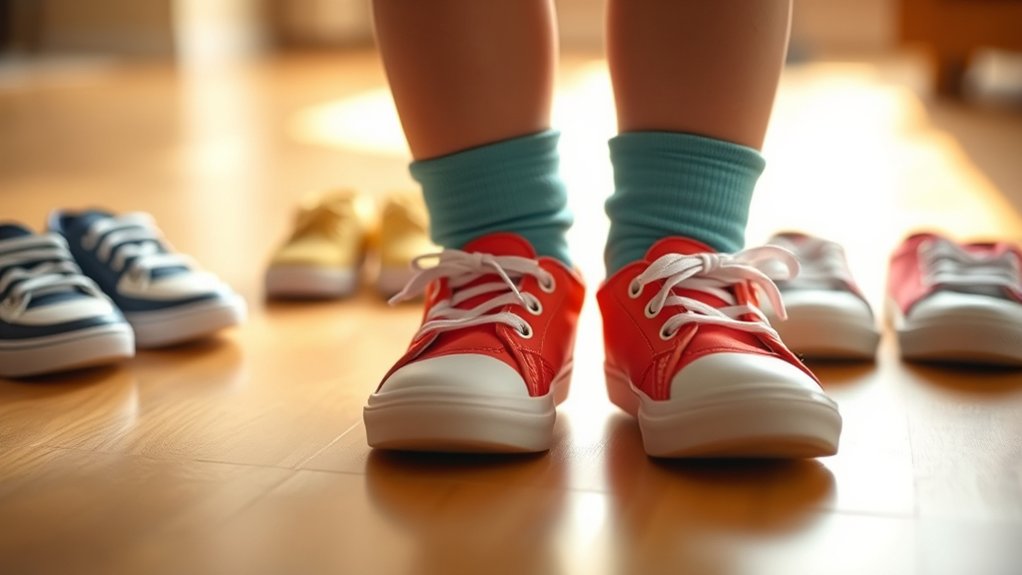
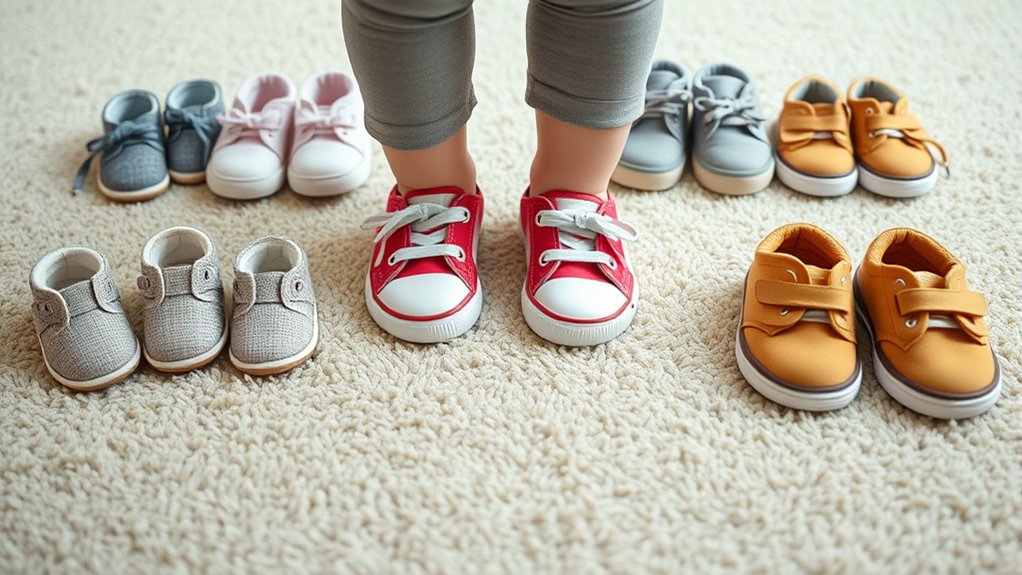
Although every child grows at a different pace, a 2-year-old typically wears shoe sizes between US 6 and 8. This range corresponds to an average foot length of 5.5 to 6 inches. When selecting shoes, focus on accurate sizing rather than age alone.
A 2-year-old’s shoe size usually ranges from US 6 to 8, based on foot length, not just age.
Choose shoe material that offers both flexibility and support to accommodate growing feet comfortably. Breathable fabrics like leather or mesh help maintain foot health, while sturdy soles provide necessary stability.
Shoe color options today are abundant, so you can find styles that suit your child’s preferences or coordinate with their wardrobe.
Remember, proper fit includes leaving about a quarter to half an inch of room at the toe for growth.
Prioritizing these factors ensures your child’s shoes support healthy development and daily activity.
How to Measure Your 2 Year Old’s Feet Accurately
To measure your 2-year-old’s feet accurately, start by grabbing a printable measurement guide set to 100% scale—this helps make sure everything’s precise.
Next, have your child stand or sit with their foot on a piece of paper, then trace around the foot carefully.
After that, measure the longest length from heel to toe. It’s important to check both feet because sometimes one is a bit bigger, so always use the longer measurement when choosing the shoe size.
Measuring Foot Length
How can you guarantee your 2-year-old’s shoes fit perfectly? Start by measuring their foot length accurately.
Have your child stand barefoot on a flat, hard surface with their heel against a wall, then trace their foot onto paper.
Use a ruler to measure from heel to the longest toe in centimeters or inches. Make sure to measure both feet since one may be slightly larger.
Always use the longer measurement to determine the shoe size.
It’s best to take measurements later in the day when feet are at rest and naturally a bit larger to ensure accuracy.
Remember, proper footwear materials and shoe design rely on correct sizing to support healthy foot development.
Accurate foot length measurement is essential before selecting shoes to make sure they’re comfortable and durable.
Taking the time to measure right now will help your little one’s feet stay happy and healthy!
Using Printable Guides
When you use a printable measurement guide, you can quickly and accurately determine your 2-year-old’s foot length at home. First, print the guide at 100% scale and verify its accuracy with a credit card.
Have your child stand upright, distributing weight evenly.
Place their heel on the start line, then mark the longest toe’s tip. Use a ruler to measure this length in centimeters or inches.
Make sure to measure both feet and pick the longer one.
This precise sizing helps you choose shoes with the right materials that support foot health and offer proper ventilation. That way, you avoid discomfort.
Accurate measurement guarantees a comfortable fit with room for growth.
You don’t want shoes that are too tight because they can restrict natural movement and reduce breathability, which is essential for your toddler’s developing feet.
Tracing Feet Method
Although measuring your toddler’s feet can seem tricky, tracing their feet on paper offers a straightforward and reliable method.
Start by having your 2-year-old stand barefoot on a piece of paper placed against a wall, ensuring their heel touches the wall. Use a pencil held perpendicular to the paper to create an accurate footprint tracing of each foot.
Afterward, measure from the heel to the longest toe with a ruler or measuring tape, recording the length in centimeters or inches.
Always trace both feet since one may be slightly larger. Use the longer measurement for a better fit.
For ideal measurement accuracy, do this at the end of the day when your child’s feet are naturally at their largest and most swollen.
This helps ensure the best shoe size selection.
Kids Shoe Sizes: What the Categories Mean
Because children’s feet grow in distinct stages, kids’ shoe sizes are categorized to match their developmental needs. Infant sizes (1-3) focus on early months and rely heavily on soft, flexible footwear materials that support sensitive feet.
As children begin walking, toddler sizes (4-10) accommodate wider feet and active movement. This means shoe manufacturing has to emphasize durability and proper fit to keep up.
Preschool and grade school categories (10.5 and up) address rapid foot growth by offering sturdier designs that balance flexibility with support.
Understanding these categories helps you choose shoes that align with your child’s development, ensuring comfort and safety.
By selecting footwear materials and construction tailored to each stage, you optimize foot health and mobility during critical growth periods.
This knowledge guides you in steering shoe sizing confidently.
Signs Your 2 Year Old’s Shoes Don’t Fit Properly
If your 2-year-old frequently fusses, refuses to walk, or shows visible discomfort, their shoes mightn’t fit properly. Look for signs like pinching or squeezing around the toes and sides, excessive space, or toes constantly touching the shoe’s end. These indicate improper sizing.
Check for redness, blisters, or calluses caused by friction from poor fit. Marks or indentations on their feet also suggest the shoe is too tight.
Remember, shoe material affects fit and comfort. Stiffer materials may cause more rubbing, while softer ones offer flexibility.
Also, brand differences impact sizing, so don’t rely solely on size numbers. Always assess fit based on your child’s comfort and foot shape to make certain their shoes support healthy walking and development.
When to Size Up Your 2 Year Old’s Shoes for Proper Fit and Comfort
When your 2-year-old’s feet reach the maximum length of their current shoes, usually around 4.5 to 5 inches, it’s time to size up for proper fit and comfort. Proper shoe comfort is super important for healthy foot development at this stage.
Here’s when you should size up:
- Measure feet every 2-4 months to keep up with rapid growth and adjust shoe size as needed.
- Check for about a thumb’s width (0.2 inches) of space at the toe; if there’s less, it’s time for a bigger size.
- Notice any tightness or discomfort during walking or play? That’s a clear sign the shoes don’t fit right.
- Also, look for wear or snugness in current shoes, especially when moving between sizes like US 6 to 7.
Sizing up promptly helps your toddler’s foot development and keeps their shoes comfortable all the way through.
Choosing Shoes That Fit Well and Support Your 2 Year Old’s Foot Growth
Selecting the right shoes for your 2-year-old plays an essential role in supporting healthy foot growth and guaranteeing comfort throughout their daily activities. You should choose shoes made from breathable, flexible materials that allow natural foot movement and prevent overheating.
Proper fit is critical. Shoes should have about 0.5 inches of growth room to accommodate rapid foot arch development and overall growth. Avoid shoes that are too tight or rigid, as they can hinder foot arch formation and cause discomfort.
If your child’s foot size falls between two sizes, always opt for the larger one to make certain of ample space. Prioritizing these factors helps maintain healthy foot structure and supports your toddler’s active lifestyle effectively.
How Often to Measure and Replace Your 2 Year Old’s Shoes
Because toddlers’ feet grow rapidly, you should measure your 2-year-old’s feet every 2 to 3 months to make certain their shoes fit properly. Typically, kids outgrow shoes every 4 to 6 months, so timely replacements are essential.
Measure your toddler’s feet every few months to ensure shoes fit and replace them as they outgrow them.
Pay attention to shoe material and heel height, as these affect comfort and support. Use accurate measuring methods, like tracing the foot, to track growth precisely.
Here’s how to manage shoe fit and replacement effectively:
- Measure feet every 2-3 months to monitor growth.
- Check shoe material flexibility and breathability for comfort.
- Ensure heel height remains appropriate to support balance.
- Replace shoes if you notice pinching or less than a thumb’s width of extra space.
Regular checks keep your toddler’s feet healthy and supported.
Tips for Buying Infant and Toddler Shoes
You should measure your toddler’s feet regularly using a printable size guide or tracing method to make sure you get a precise fit. It’s a good idea to do this often since little feet grow quickly.
Always pick shoes that have about half an inch of extra room. This way, there’s enough space for growth without causing any discomfort.
Also, focus on flexible and breathable shoes. These help support active feet and keep them comfortable throughout the day.
Shoes with easy fastenings are a bonus too, because they make getting dressed a lot simpler for both you and your toddler.
Measuring Toddler Feet
When measuring toddler feet, it’s best to do so at the end of the day when swelling is at its peak to guarantee the most accurate fit. Proper measurement ensures the shoe material accommodates growing feet without compromising footwear hygiene.
Follow these steps for precision:
- Use a printable size guide or trace the foot on paper while your toddler stands upright.
- Measure both feet and base the size on the longer foot.
- Add 0.5 to 1 cm for growth and comfort.
- Re-measure every 2-3 months to adjust for rapid growth.
Accurate measuring helps maintain shoe hygiene by preventing tight shoes that can cause discomfort or infections. This way, your toddler’s feet stay healthy and comfortable.
Choosing Proper Fit
Although toddlers’ feet grow rapidly, regularly measuring them every 2-3 months helps you select shoes that fit properly and support healthy development.
When choosing shoes, allow about 1cm of extra room to accommodate natural growth without causing cramping.
Try to prioritize shoe material that’s flexible and breathable. This promotes comfort and prevents irritation.
Make sure the shoes offer adequate support to the foot arch but don’t fit too tightly. Restricting the arch can hinder proper development.
Always try shoes on with the socks your child will wear daily to ensure an accurate fit.
Frequently Asked Questions
Are There Specific Shoe Brands Recommended for 2-Year-Olds?
You’ll want to choose brands like Stride Rite, Pediped, or See Kai Run for your 2-year-old. They focus on shoe fashion, proper fit, and durable closures, making parent shopping easier and supporting healthy foot development.
These brands really get how important it is to have shoes that not only look good but also feel good and stay on little feet. Plus, they’re designed to help your toddler walk comfortably and safely. So, picking any of these is a smart move.
How Do Shoe Materials Affect Toddler Foot Development?
You might think stiff shoes offer better support, but they actually hinder foot flexibility.
Choosing shoes with breathable materials promotes healthy foot growth and comfort. It helps ensure your toddler’s feet develop naturally without moisture-related issues.
Can Orthotic Inserts Be Used for Toddlers?
Yes, you can use orthotic inserts for toddlers if they have specific orthotic needs. Custom inserts, recommended by a pediatric specialist, guarantee proper support and comfort without hindering foot development or growth.
It’s really important to get the right fit and advice from a professional. That way, you make sure the inserts help rather than cause any issues. So, if you’re considering orthotics for your little one, talking to a specialist is the best first step.
What Are the Best Shoes for Toddlers Learning to Walk?
You’ll find 85% of toddlers benefit most from sneaker styles with flexible soles and wide toe boxes.
Use shoe size charts to guarantee a snug heel fit and thumb-width toe room for safe, natural walking.
It really makes a difference when their feet can move comfortably without being squeezed. That way, they can explore and learn to walk with confidence.
How to Handle Shoe Returns if Sizes Don’T Fit?
If shoe sizing accuracy isn’t perfect, follow return policy procedures promptly. Keep receipts, guarantee shoes remain unworn, and check deadlines.
It’s a good idea to contact the retailer early to confirm eligibility. Also, ask if they cover return shipping for size exchanges. That way, you know exactly what to expect.
Conclusion
Choosing the right shoe size for your 2-year-old is like planting seeds for healthy foot growth. Accuracy really matters here. Regularly measuring their feet and watching for signs of discomfort helps make sure their shoes fit well and support their development.
Remember to size up at the right time. This prevents stumbles and keeps little feet comfortable. Stay attentive, and your toddler’s shoes will be the perfect fit on their journey to confident, happy steps.