What Size Shoe Does A 1 Year Old Wear – Size Chart Guide
You’ll typically dress your 1-year-old in size 4C shoes, fitting feet about 4 ¾ inches long with extra room for growth and comfort. Infant sizes range up to 4C, so shifting to toddler sizes means accounting for wider, longer feet. Always measure both feet while your child stands relaxed and add about half an inch to prevent cramping.
Choosing soft, breathable shoes supports healthy foot development as they learn to walk. Keep exploring to find the best fit and shoe types.
Key Takeaways
- A typical 1-year-old wears size 4C, fitting feet about 4 ¾ inches (12.1 cm) long with room for growth.
- Leave roughly ½ inch extra space in shoes to ensure comfort and accommodate rapid foot growth.
- Soft-soled, breathable, and flexible shoes with non-slip soles are ideal for 1-year-olds learning to walk.
- Measure both feet accurately while standing, then add ½ inch for a proper fit and healthy development.
- Check fit every 2-3 months and shop at trusted retailers offering flexible returns and fit guarantees.
What Shoe Size Does A 1 Year Old Typically Wear?
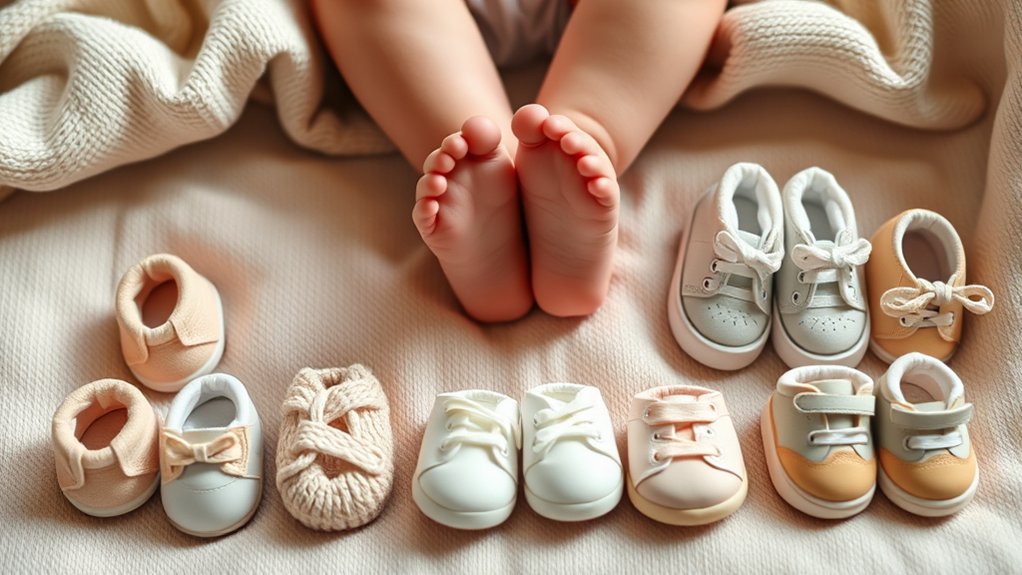
Although every child grows at their own pace, a 1-year-old typically wears a shoe size around 4C. This size fits a foot about 4 ¾ inches (12.1 cm) long. Most 1-year-olds fall within sizes 3.5C to 4.5C, but regular measurements matter since growth varies.
When choosing shoes, you should leave about ½ inch of extra space for comfort and development.
Soft-soled shoes are ideal for beginners learning to walk because they offer flexibility and protect delicate feet.
Keep an eye on fashion trends, but prioritize shoe materials that promote breathability and support. Lightweight, non-restrictive fabrics help your little one move naturally while ensuring their feet remain comfortable during this essential growth stage.
Infant Vs. Toddler Shoe Sizes: What You Need To Know
When you’re choosing shoes for your little one, understanding the difference between infant and toddler sizes can make the process much easier. Infant shoe sizes typically range from 0.5C to 4C, designed for babies up to 12 months old.
Knowing the difference between infant and toddler shoe sizes simplifies finding the perfect fit for your little one.
Toddler sizes start around 4T or 4C and go up to 10T, meant for children aged 1 to 3 years.
Shoe manufacturing reflects this shift by moving from letter-based sizing to numbered sizes, making sure the shoes fit better as your child’s foot anatomy changes. Since foot growth is rapid, toddler shoes accommodate wider and longer feet.
They also support developing arches and bones.
Knowing these distinctions helps you pick shoes that fit comfortably. This promotes healthy foot development without restricting movement or causing discomfort. It’s all about keeping those little feet happy and healthy!
How Do I Measure My 1 Year Old’s Foot Accurately?
To measure your 1-year-old’s foot accurately, you just need some simple tools like a ruler or a printable measurement guide. It’s pretty easy to do!
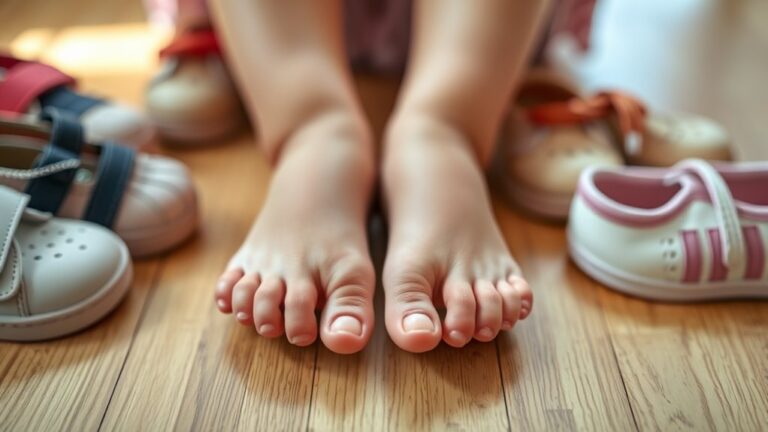
First, have your little one stand up with their toes relaxed.
Then, measure from the longest toe all the way back to the heel.
Doing it this way helps make sure you get the right size.
That way, their feet stay comfy and well supported as they grow.
Measuring Tools Needed
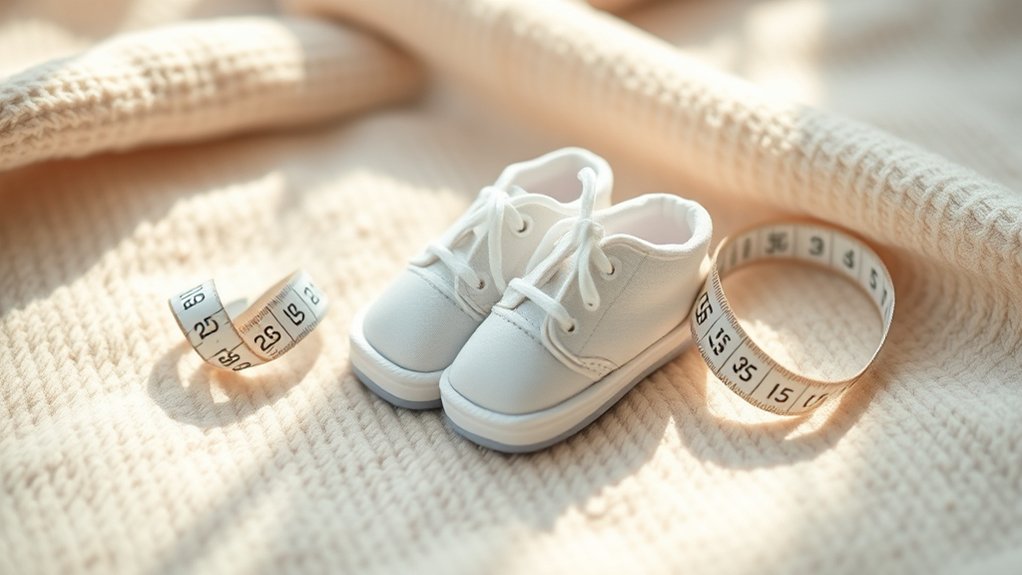
Since getting an accurate measurement is essential for your 1-year-old’s comfort, you’ll need a few simple tools: a printable shoe measurement chart at 100% scale or plain paper to trace your child’s foot, plus a ruler or tape measure to record the length in inches or centimeters.
These tools help guarantee you select shoes with the right shoe materials that support proper foot development. Remember to measure both feet and use the longer one’s measurement.
| Tool | Purpose | Tip |
|---|---|---|
| Printable Chart | Accurate size reference | Print at 100% scale |
| Plain Paper | Foot tracing | Have child stand straight |
| Ruler/Tape Measure | Measure length in inches/cm | Measure at day’s end for accuracy |
Step-By-Step Process
Although measuring a 1-year-old’s foot can seem tricky, following a clear step-by-step process guarantees you get an accurate size. Start by having your child stand with toes relaxed and uncurled. Measure from the tip of the longest toe to the back of the heel using a ruler or measuring tape.
Check both feet and note the longer measurement. Next, use a printed sizing chart or foot measuring device to find the corresponding shoe size. When choosing shoes, allow about half an inch extra for growth and comfort.
Prioritize footwear safety by selecting shoes with breathable, flexible shoe material that supports natural foot development. Accurate measurement guarantees a proper fit, avoiding discomfort or injury as your little one learns to walk confidently.
Why You Should Add Extra Space When Choosing 1 Year Old Toddler Shoes
When you choose shoes for your 1-year-old, adding about half an inch of extra space is essential to support their rapidly growing feet. This extra room prevents cramping and allows natural foot growth, which is super important since toddlers’ feet can grow fast.
Picking shoes made from breathable, flexible material ensures comfort while accommodating this growth. Also, don’t forget about shoe color—it can make the shoes more appealing and encourage your child to wear them happily.
Properly fitting shoes with added space help avoid blisters, red marks, and discomfort during walking.
By measuring your child’s feet and choosing shoes with enough room, you promote healthy foot alignment and development.
This thoughtful approach makes sure your toddler stays comfortable and supported every step of the way.
How To Tell If Your Toddler’s Shoes Fit Or Need Replacing
To make certain your toddler’s shoes still fit well, regularly check the space between their longest toe and the front of the shoe. It should be about half an inch.
Pay attention to the shoe material; it should feel snug but not tight when you gently squeeze the widest part of the foot.
The shoe material should feel snug yet comfortable when gently pressing the widest part of your toddler’s foot.
Watch for signs of discomfort like red marks, blisters, or if your child frequently removes their shoes.
Also, check the shoe color and condition. Faded or scuffed shoes might mean heavy wear, which can affect fit and support.
Make sure to measure your toddler’s feet often, especially during growth spurts.
Replace shoes when they no longer provide enough room or if your child starts tripping or dragging toes while walking.
This guarantees comfort and healthy foot development.
What To Do If Your Toddler’s Feet Are Between Sizes
Keeping a close eye on your toddler’s foot size means you might sometimes find their measurements fall between two sizes. When this happens, choose the larger size to avoid cramping and allow room for growth.
Make sure the shoe provides at least half an inch of extra length and fits your toddler’s foot arch comfortably. Also, think about the shoe material; flexible, breathable materials adapt better to foot shape and active movement.
| Factor | Smaller Size | Larger Size |
|---|---|---|
| Length | May pinch | Provides extra space |
| Width | Risk of tightness | Better fit for wider foot arch |
| Shoe Material | Less forgiving | More adaptable |
| Comfort During Play | Can restrict movement | Supports natural foot arch |
Go for a snug, not tight, fit that supports your toddler’s developing feet. That way, their shoes are comfy and help their feet grow just right.
How Often Should You Check And Replace Your Toddler’s Shoes
Regularly checking your toddler’s shoes every two to three months helps you stay ahead of their rapid foot growth and guarantees their footwear stays comfortable and supportive.
Since toddlers can outgrow shoes within 4 to 12 months, frequent measurements ensure a proper fit that supports healthy foot development.
Pay attention to signs like red marks, a loose fit, or your child’s discomfort, which indicate it’s time to substitute their shoes.
When inspecting, consider the shoe material; worn-out soles or stretched fabric can reduce support.
Also, monitor the shoe color for fading or damage that might affect protection.
Promptly replacing shoes prevents cramping, tripping, and potential foot deformities.
Staying proactive with these checks keeps your toddler’s feet safe and ready for their next steps.
It’s a simple routine that makes a big difference!
Best Types Of Shoes For 1 Year Olds Learning To Walk
While your little one takes those exciting first steps, choosing the right shoes plays a crucial role in supporting their balance and foot health. Opt for soft-soled shoes or booties made from breathable, flexible materials to promote natural foot development.
Confirm the shoe length measures about 4 ¾ inches (size 4C), allowing roughly a half-inch of space for growth and toe movement. Look for non-slip soles to provide stability and prevent slipping as your toddler gains confidence walking.
Prioritizing proper fit and materials also makes shoe care easier, helping maintain the shoes’ condition and your child’s comfort.
Best Places To Buy And Return Toddler Shoes With Fit Guarantees
Finding the right shoes for your toddler means knowing where to shop with confidence. Retailers like Kids Foot Locker, Zappos, and Amazon offer toddler shoes featuring quality shoe material and incorporate the latest fashion trends. They provide fit guarantees and flexible return policies, usually allowing returns or exchanges within 45 days if the shoes are in original condition.
Shop confidently for toddler shoes at trusted retailers offering quality, style, and flexible return policies.
Brands like Stride Rite and Nike go further by covering sizing issues or discomfort with specific guarantees. Shopping at stores with clear return policies ensures you can adjust easily as your toddler’s feet grow.
Plus, many online platforms offer free shipping on returns, making it simpler to find the perfect fit without hassle.
Prioritize places that blend style, comfort, and reliable fit support for your little one. This way, you’ll feel good about your purchase and keep those tiny feet happy and growing strong.
Frequently Asked Questions
Can My 1-Year-Old Wear Hand-Me-Down Shoes Safely?
You can let your 1-year-old wear hand-me-down shoes if you check shoe comfort carefully and guarantee they accommodate foot growth patterns.
Make sure there’s enough space, no damage, and the fit supports safe, healthy development.
It’s all about keeping those little feet happy and healthy! Just take a good look before putting them on.
How Do Weather Conditions Affect Shoe Choice for Toddlers?
Weather impact is the compass guiding your toddler’s seasonal footwear choices. You’ll want insulated boots for cold, breathable shoes for heat, slip-resistant soles for ice, and waterproof options for rain. This helps ensure comfort and safety year-round.
It’s all about matching the shoe to the conditions outside. When it’s chilly, warm boots keep little feet cozy. On hot days, letting feet breathe is key to avoiding discomfort or blisters. And slippery or wet weather? That’s when grip and water resistance really matter.
Are There Specific Socks Recommended for 1-Year-Old Shoe Fittings?
You should choose toddler sock styles made from recommended sock materials like breathable cotton or bamboo. These socks fit snugly, have non-slip soles, and allow room for growth, ensuring comfort and safety during your child’s steps.
It’s really important to pick socks that stay in place but don’t squeeze too tight. That way, your little one can move freely without any discomfort. Plus, non-slip soles help prevent slips and falls as they learn to walk.
What Materials Are Best for Toddler Shoe Durability?
You’ll want shoe material like leather and rubber for top durability factors. They offer flexibility, breathability, and abrasion resistance. Reinforced synthetics with strong stitching also help your toddler’s shoes last through all their adventures comfortably.
These materials don’t just hold up well—they keep your little one comfy too. So when you’re picking shoes, think about both toughness and how they feel on tiny feet. That way, your toddler can explore without any worries.
How Can I Encourage My Toddler to Keep Shoes On?
Getting your toddler to keep shoes on can feel like climbing Everest! Use shoe fitting tips and choose soft, flexible shoes for toddler shoe comfort.
Praise them often, and make wearing shoes fun and part of their daily routine. It really helps to keep things light and positive.
Try turning shoe time into a game or a special moment. That way, your little one might actually look forward to putting their shoes on!
Conclusion
Choosing the right shoe for your 1-year-old is like fitting the perfect key to unleash their first steps. By measuring carefully, allowing room to grow, and checking the fit often, you guarantee comfort and support on their tiny adventures.
Remember, their feet are growing fast. You’re not just buying shoes; you’re nurturing confidence and discovery.
Stay attentive, trust your instincts, and watch those little feet dance with joy and ease.