How Many Inches Is A Size 6 Women’s Shoe – Length Conversion Guide
A women’s size 6 shoe generally measures about 8.9 inches (22.8 cm) in length, but this can vary slightly between 8.875 and 9 inches depending on brand and style. In US sizing, it corresponds to roughly this length, while UK size 4.5 and EU sizes 39-40 align similarly.
For the best fit, measure your foot precisely and compare with brand-specific charts. Understanding these nuances will help you navigate sizing differences confidently.
Key Takeaways
- A women’s size 6 shoe typically measures about 8.9 inches (22.8 cm) in length.
- US size 6 corresponds to approximately 8.9 inches foot length; UK size 4.5 and EU size 39-40 differ regionally.
- Shoe length for size 6 can vary between brands, usually ranging from 8.3 to 9 inches.
- Accurate foot measurement using heel-to-toe length ensures proper fit and comfort.
- Consult brand-specific sizing charts and consider material flexibility for best size selection.
Exact Length of a Women’s Size 6 Shoe
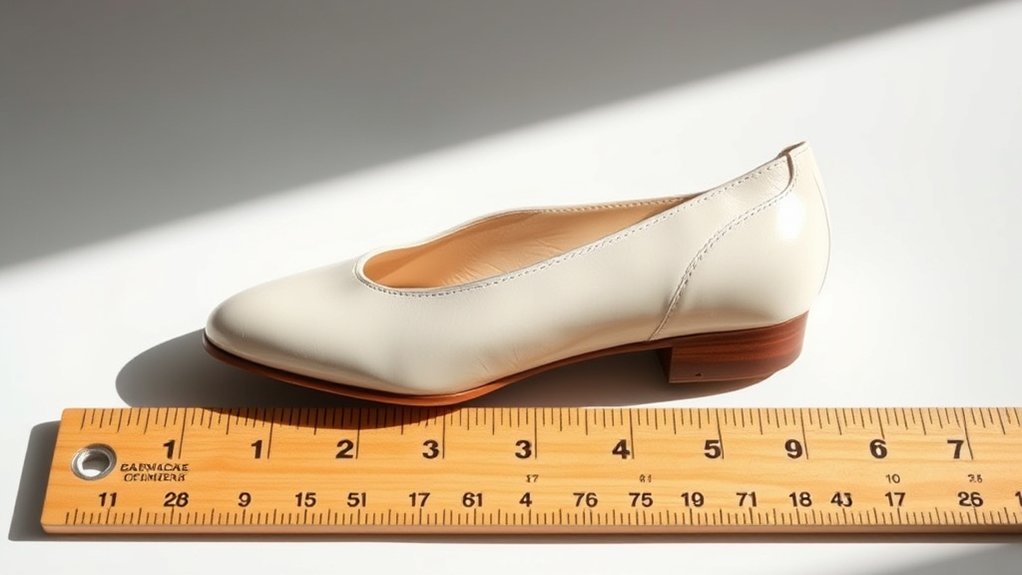
Although shoe lengths can vary slightly by brand and style, a women’s size 6 shoe typically measures about 8.9 inches (22.8 centimeters) in length. This measurement corresponds to the foot length the shoe is designed to accommodate, ensuring a proper fit.
When selecting size 6 shoes, you should consider that fashion trends influence design elements, which may subtly affect internal dimensions despite consistent length standards. Also, shoe materials, whether leather, synthetic, or fabric, impact the shoe’s flexibility and fit. This can change how the length actually feels on your foot.
This means that for the most accurate sizing, always measure your foot and consult the specific brand’s sizing chart. Minor variations in length can occur due to differences in construction and materials used across different styles.
How Size 6 Compares Across US, UK, and EU Sizes
When you compare women’s size 6 shoes across different sizing systems, you’ll find notable differences in numbering and measurement units.
In the US, a size 6 typically corresponds to a foot length of about 8.9 inches (24 cm).
However, UK sizing labels this length as approximately size 4.5, while European shoe manufacturing standards place it around EU size 39-40.
These variations come from regional measurement practices and foot arch considerations, which influence shoe design and fit.
Regional measurement methods and foot arch differences play key roles in shoe design and overall fit quality.
Understanding these differences is essential if you’re buying shoes internationally or online.
Even though the foot length is consistent, the shoe’s internal structure, especially the foot arch support, can differ and affect comfort and performance.
So, size 6 isn’t a universal measurement but more of a comparative standard across US, UK, and EU sizing systems.
It’s always a good idea to check the sizing chart or try on shoes when you can to make sure they fit just right.
Why Accurate Foot Measurement Is Key to a Size 6 Fit
Since shoe sizes can vary between brands and styles, measuring your foot accurately is essential to guarantee a size 6 fits properly. A size 6 typically corresponds to about 8.9 inches in foot length, but variations in foot shape and measurement precision directly affect fit.
Accurate measurement minimizes the risk of blisters, pressure points, and foot pain by ensuring the shoe’s internal dimensions accommodate your foot correctly.
This precision is vital not only for length but also for proper alignment with shoe cushioning and arch support features, which enhance comfort and stability. Without exact measurement, you risk selecting a size 6 that compromises these elements, leading to discomfort.
Use reliable tools to capture your foot length accurately for an ideal size 6 fit every time.
How to Measure Your Foot for the Best Size 6 Fit
To get the best size 6 fit, start by standing on a piece of paper with your heel firmly against a wall and mark the tip of your longest toe. Make sure your foot is flat and bear weight evenly to simulate real conditions.
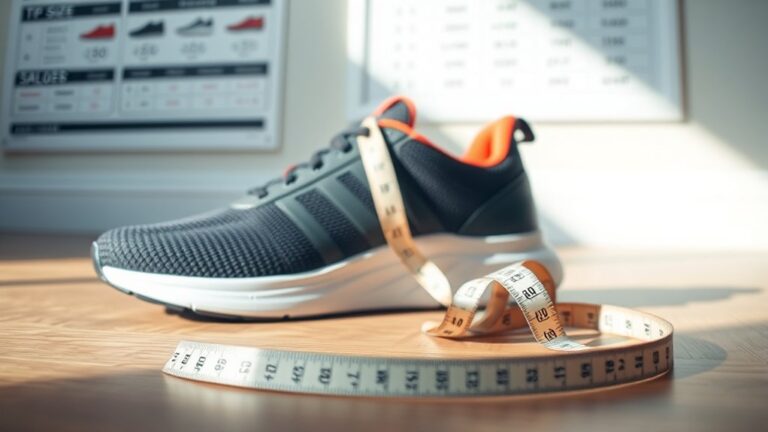
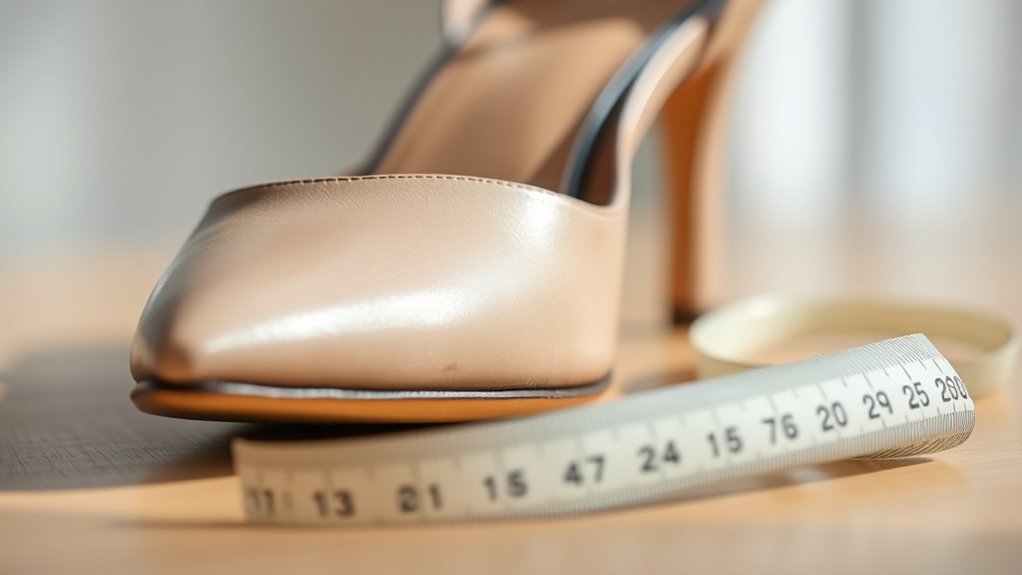
Measure the distance from heel to toe mark in inches using a ruler or measuring tape.
Do this for both feet and pick the larger measurement.
Remember to think about sock thickness when measuring because thicker socks need extra space.
Also, pay attention to your arch height since higher arches can affect how shoes fit and feel.
Use your exact foot length in inches to check a sizing chart for a size 6 shoe.
This method gives you a solid baseline for picking shoes that fit your foot’s unique shape comfortably.
How Different Brands Affect Size 6 Shoe Length
Although size 6 is a standard label, the actual shoe length can vary considerably between brands due to differing sizing conventions and manufacturing tolerances. When you shop, remember that some brands run larger or smaller, causing a size 6 to measure anywhere from 8.3 to 8.5 inches.
Brand-specific sizing charts are essential because even a 0.2-inch difference impacts fit and comfort.
Shoe material also plays a role. Flexible materials like knit fabric may accommodate slight size variations, while rigid leather requires more precise length matching.
Additionally, fashion trends influence sizing designs. Some brands adjust length and width to match current styles, affecting true size.
Always check the exact measurements for your intended brand to guarantee the best fit, rather than relying solely on the size number.
When Should You Size Up From a Size 6?
If your foot length is close to the upper end of a size 6, say around 9.25 inches, it’s a good idea to think about sizing up for a better fit.
Also, if your foot is wider than average, going up a size can help avoid any tightness or uncomfortable pressure points.
Taking these things into account makes sure your shoes fit well in both length and width.
Between Sizes Measurement
When should you size up from a women’s size 6 shoe? If your foot length approaches the upper limit of the size 6 range, about 8.9 inches, it’s best to size up to avoid discomfort.
When your measurement falls between size 6 and size 7, choosing the larger size guarantees a better fit and foot movement.
Keep in mind that fashion trends often influence shoe design, affecting fit and sizing. Flexible material preferences can also dictate whether you need extra space.
Plus, sizing up helps when trying new brands, as sizing can vary slightly.
For active footwear or shoes made from less forgiving materials, the extra room prevents pinching and supports both comfort and foot health.
Foot Width Considerations
How do you determine if your foot width warrants sizing up from a women’s size 6 shoe? Since size 6 typically fits a foot length of about 8.875 inches, width becomes essential if you experience tightness or pinching.
If your foot is approximately 3-4 mm wider than the standard, sizing up by half or a full size improves comfort. This adjustment prevents compromised arch support and accommodates natural foot expansion.
It’s especially important when heel height increases pressure on the ball of your foot.
Narrow feet usually fit standard size 6 shoes well, but wider feet benefit from extra room to avoid discomfort and potential foot issues.
Always prioritize a fit that balances length and width to maintain proper foot biomechanics and overall shoe performance.
Tips for Choosing the Right Size 6 Shoe Based on Foot Length
Start by measuring your foot length accurately—from your heel all the way to your longest toe. This step is really important to make sure a size 6 shoe fits you properly.
Keep in mind, though, that sizing can vary a bit between different brands. So, it’s a good idea to compare your measurement with each brand’s size chart before deciding.
Also, always go by the measurement of your longer foot to ensure the best overall fit and comfort.
Measure Foot Accurately
Although choosing the right size 6 shoe depends on various factors, accurately measuring your foot length is essential for a proper fit.
Stand barefoot on a hard, flat surface with your heel firmly against a wall. Mark the tip of your longest toe and measure the distance from heel to toe using a ruler or measuring tape.
Make sure to measure both feet, as asymmetry is common. Always select your shoe size based on the longer foot to guarantee comfort.
Distribute your weight evenly to avoid altering your foot’s natural length.
Proper measurement also takes into account your foot arch, which affects shoe fit and support.
For a size 6, foot length typically ranges between 8.875 and 9 inches. So, precise measurement will really help guide your selection effectively.
Consider Brand Variations
Why do size 6 shoes from different brands fit differently? Variations in manufacturing standards cause discrepancies of up to half an inch in shoe length, even within the same nominal size. You should always check specific brand sizing charts because some brands run small or large.
While a size 6 generally corresponds to about 8.9 inches, this can shift slightly depending on the brand’s last and shoe style. Material durability also affects how a shoe fits over time. Stiffer materials may require a slightly larger size initially.
To select the best size 6 shoe, measure your foot precisely, then compare it to the brand’s size conversion chart. Reading customer reviews helps you understand if a brand’s size 6 shoes run true, small, or large.
This way, you can optimize your fit and comfort.
Frequently Asked Questions
What Types of Socks Work Best With Size 6 Shoes?
You’ll want socks with sock material compatibility like spandex for snugness, moisture-wicking fabrics for activity, and thin low-profile types for dress shoes.
Always consult shoe sizing charts to ensure ideal fit and comfort with size 6 shoes.
Choosing the right socks can really make a difference in how your shoes feel throughout the day. It’s all about matching the sock to the activity and shoe type.
Can Orthotic Inserts Affect the Fit of a Size 6 Shoe?
If you add orthotic inserts with high arch support, like a runner needing extra heel height cushioning, you’ll likely find your size 6 shoe fits tighter.
You might need to go up a half-size to keep things comfortable and make sure the shoe fits properly. It’s pretty common when adding inserts that take up extra space inside the shoe.
How Do Width Measurements Impact Size 6 Shoe Comfort?
Shoe width variations directly impact your size 6 comfort by accommodating your foot’s breadth, ensuring proper foot arch support.
Choosing the right width reduces pressure points, prevents discomfort, and maintains stability. This helps optimize overall fit and foot health.
It really makes a difference when your shoes fit just right, so paying attention to width is key.
Are Size 6 Shoes Suitable for Wide Feet?
Size 6 shoes usually follow standard sizing standards and often don’t suit wide feet. You’ll need shoes designed with wider widths in shoe manufacturing to guarantee comfort and proper fit, especially if your feet are broader than average.
If your feet are on the wider side, just going by the size number might not cut it. It’s best to look for shoes specifically labeled as wide or extra wide to avoid any discomfort. That way, you’ll get a better fit that feels good all day long.
What Materials Are Best for Comfortable Size 6 Shoes?
Think of breathable fabric as your foot’s fresh air, while sole durability acts like a fortress beneath. You’ll want mesh or perforated leather for fabric breathability, plus EVA or rubber soles ensuring comfort and long-lasting sole durability.
These materials work together to keep your feet cool and supported all day. Plus, they’re lightweight, so you won’t feel weighed down.
Choosing the right materials can make a big difference, especially in a size 6 shoe where comfort is key. Trust me, your feet will thank you!
Conclusion
Just like Goldilocks seeking the perfect fit, you want your size 6 shoes to feel “just right.” Knowing that a women’s size 6 shoe typically measures about 9.25 inches helps you navigate US, UK, and EU conversions with precision.
Remember, accurate foot measurement and brand variations matter. By measuring carefully and understanding when to size up, you’ll step confidently into shoes that fit your unique feet like they were made just for you.