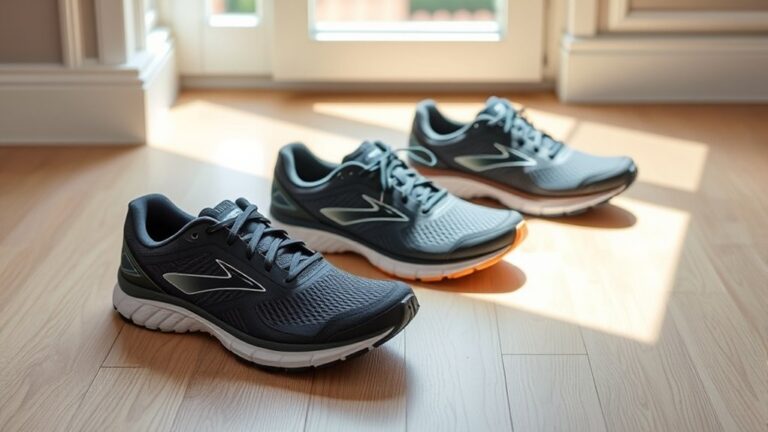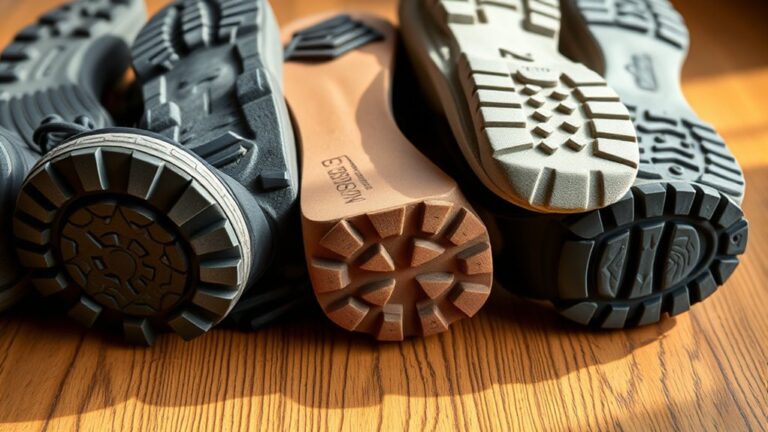
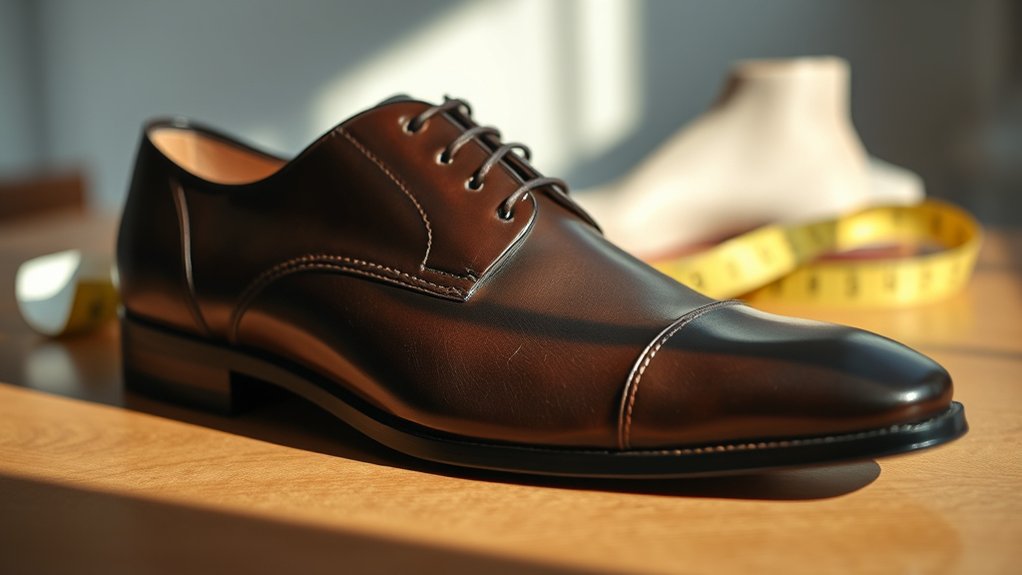
What Is Shoe Width B – Width Guide Explained
Shoe width B generally means a standard, medium fit for women and a narrower fit for men, though this varies by brand, size, and style. As your shoe size changes, B width adjusts proportionally to balance comfort and support.
Proper B width helps prevent discomfort, foot pain, and alignment issues by allowing natural toe spread and stability. If you want to guarantee the right fit and understand how B width interacts with different shoe types, there’s more to explore.
Key Takeaways
- Women’s B width is a standard or medium fit, while for men, B width indicates a narrower shoe size.
- B width adjusts proportionally with shoe size to maintain proper fit, toe support, and foot stability.
- Shoe style and material affect the fit of B width, with athletic shoes being more flexible than dress shoes.
- Signs you need B width include heel slipping, toe crowding, side gaps, and persistent foot discomfort.
- Choosing the correct B width prevents foot deformities, enhances comfort, and supports long-term foot health.
What Does B Width Mean in Shoes for Men and Women?
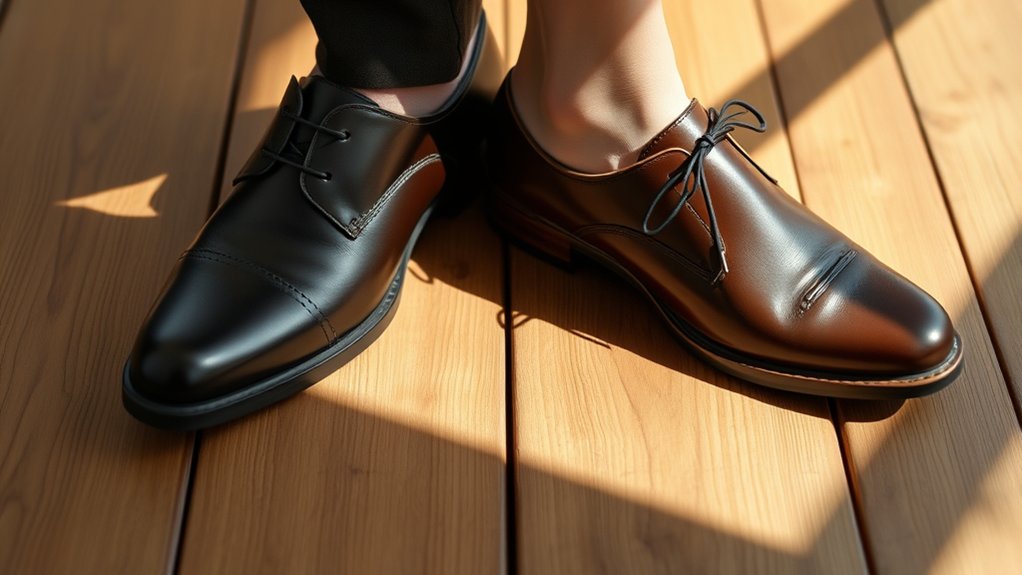
What exactly does B width mean when you’re choosing shoes for men and women? In women’s footwear, B width represents the standard or medium fit. It balances narrow and wide options comfortably.
Manufacturers often default to B width unless specified otherwise. This aligns with common fashion trends that favor versatile fits.
For men, however, B width means a narrower fit than the typical D width. It caters to slim-footed individuals and usually requires deliberate selection or customization.
Material differences also influence how the fit feels. Flexible fabrics may accommodate slight width variations, while rigid materials demand precise sizing.
Knowing that B width varies by gender helps you pick shoes that match both your foot shape and current fashion trends. This way, you get ideal comfort and style no matter the shoe’s material or intended use.
How B Width Changes With Shoe Size
You’ll notice that B width shoes scale proportionally with shoe size. So, a size 6B shoe is actually narrower than a size 10B.
This proportional scaling helps keep the shoe balanced by adjusting the width to match the overall length.
Knowing how size affects width means the B designation gives you a consistent fit, no matter what foot size you wear. It’s all about making sure the shoe feels just right across different sizes.
Proportional Width Scaling
Because foot dimensions vary with length, B width shoes adjust proportionally to maintain a perfect fit. As the shoe size increases, the B width measurement also expands to preserve consistent shoe fit and foot comfort. This proportional scaling ensures that smaller sizes have narrower widths, while larger sizes provide more room.
This helps prevent the shoe from feeling too tight or too loose. By adapting width to length, B width shoes support natural toe spread and maintain foot stability regardless of size. It’s all about keeping your feet comfortable and stable no matter what size you wear.
This precise adjustment is essential for maintaining ideal comfort and performance across different foot lengths. So, you get reliable support without compromising fit as your shoe size changes. It’s a smart way to make sure every step feels just right.
Size Impact On Width
How does the width of B size shoes adjust as the shoe size changes? B width shoes scale proportionally with length to maintain fit and comfort. For example, a size 6B shoe is narrower than a size 10B, ensuring the foot is supported correctly without excess pressure or looseness.
This scaling also affects heel height and arch support, which are calibrated to fit the shoe’s overall dimensions. Key points to consider include:
- Width expands gradually with shoe size to accommodate wider feet while preserving structural integrity.
- Heel height adjustments align with shoe length and width to maintain balance and comfort.
- Arch support adapts proportionally, ensuring consistent foot stability across sizes in B width shoes.
This proportional adjustment maintains both fit and functionality as shoe size varies. It’s all about making sure the shoe feels just right, no matter what size you wear.
Maintaining Shoe Balance
Understanding the proportional scaling of B width shoes as sizes increase helps explain how balance is maintained throughout the sizing range.
As shoe length grows, B width adjusts proportionally, ensuring consistent toe room and support that matches your foot’s natural shape. This shoe width variability is essential.
Smaller sizes like 6B are narrower than larger sizes such as 10B, reflecting precise dimensional shifts.
By scaling the width in relation to length, manufacturers preserve foot stability and prevent discomfort caused by ill-fitting shoes. This dynamic adjustment maintains proper fit and natural toe spread.
That’s critical for balance and overall foot health.
When you choose B width shoes, you’re getting a design that adapts to your size, supporting stability and comfort effectively across different foot lengths.
Signs You Need B Width Shoes
If your current shoes feel loose at the heel or your foot keeps slipping around, it might be time to try a B width.
You might also notice some gaps on the sides or even get blisters along the outer edge of your foot. These are clear signs that your shoes don’t fit properly in terms of width.
Switching to B width shoes can really help improve both your comfort and stability.
Common Fit Issues
When your shoes cause heel slipping, toe crowding, or your toes hit the front despite the correct length, it’s a clear sign you might need B width shoes. Proper fit means no pressure points. So, if you experience pinched sides or discomfort across the foot’s widest part, switching widths is essential.
Men with narrow feet often find D or wider sizes unstable or prone to creasing. This usually means a narrower fit is necessary.
Common fit issues signaling the need for B width include:
- Persistent blisters or calluses on the foot’s outer edges
- Snugness or pain when walking due to insufficient width
- Difficulty applying lace tightening techniques effectively without discomfort
Choosing B width ensures better support and complements color matching footwear for both style and comfort. It’s all about finding the right fit that feels good every step of the way.
Foot Symptoms Indicating Width
Foot discomfort often signals that your shoe width isn’t right. If you notice foot swelling or toe crowding, your shoes may be too narrow. Symptoms like pinched toes, numbness, or heel slipping also indicate insufficient width.
Blisters, calluses, or corns on the sides of your toes or ball of the foot suggest your shoes don’t accommodate your foot’s natural shape.
| Symptom | Possible Cause |
|---|---|
| Toe crowding | Narrow toe box, insufficient width |
| Foot swelling | Shoes too tight, lack of room |
| Blisters/Calluses | Friction from tight shoe sides |
| Heel slipping/Numbness | Improper fit across width |
Recognizing these signs helps you choose B width shoes that fit comfortably and reduce foot discomfort. So, pay attention to what your feet are telling you!
How B Width Fits Different Shoe Styles
Although B width serves as a standard medium fit in women’s shoes and a narrow fit in men’s, its comfort and support depend a lot on the shoe style. Shoe material differences and customization options play a big role in how B width performs across different designs.
B width fits vary by style, material, and customization, affecting comfort and support in men’s and women’s shoes.
For example, flexible materials in athletic shoes allow better accommodation of natural toe spread. On the other hand, rigid materials in dress shoes can cause a snugger fit.
Athletic shoes with B width focus on stability and room for foot movement. Dress shoes often feel narrower because of their structured designs and less flexible materials.
Casual shoes vary quite a bit. Plus, customization options like insoles can really help enhance fit and comfort.
Knowing these factors helps you pick B width shoes that balance support and comfort just right.
Common Myths and Misconceptions About B Width
Understanding how B width fits across different shoe styles naturally leads to clarifying common myths surrounding this designation. You might assume B width always means medium for women and narrow for men. But sneaker design and shoe material considerations cause variations.
Width labels differ across brands, and B width isn’t universally available for men. Proper fit depends on your foot shape, not just width labels.
| Myth | Reality | Consideration |
|---|---|---|
| B width = medium for women only | Varies by style and size | Sneaker design impacts fit |
| B width suits everyone | Depends on individual foot measurements | Shoe material flexibility affects fit |
| B width is narrowest for women | Width ranges from AAA to EE | Material affects width feel |
| B width common for men | Often requires specialty or custom shoes | Brand variation in widths |
Where to Buy B Width Shoes
Since B width shoes are more common in women’s footwear, finding them for men can take a bit more effort. You might need to check out specialty stores or look online to find the right pair.
Think about places that offer a wide selection of shoe materials and colors, so you can get both comfort and style. You can explore specialty shoe stores and boutiques that provide professional fitting and personalized advice.
Online platforms like Zappos, Amazon, and ShoeMall let you filter by B width across many brands. Brands such as Nike, New Balance, and Clarks are known for offering B width in athletic and casual styles.
Plus, you can find custom options from Allen Edmonds and Johnston & Murphy for a precise fit.
These options make sure you find B width shoes that fit your foot perfectly and match your style preferences.
Why Proper B Width Matters for Foot Health
When you wear shoes with the proper B width, you allow your toes to spread naturally, which reduces pressure points and discomfort. This precise fit enhances foot arch support, ensuring your foot maintains proper alignment and stability.
Adequate shoe cushioning combined with correct width minimizes friction, preventing blisters, calluses, and corns.
Wearing shoes too narrow or wide disrupts gait mechanics, increasing the risk of ankle instability and foot deformities like bunions and hammertoes.
Proper B width also reduces fatigue and strain by distributing pressure evenly across the foot during movement.
Prioritizing accurate B width promotes *ideal* foot function, comfort, and long-term health. It’s essential for anyone seeking effective foot care through well-fitted footwear.
Taking the time to find the right width really makes a difference.
Frequently Asked Questions
Can B Width Shoes Be Stretched if They Feel Too Tight?
Yes, you can stretch B width shoes to adjust the fit, especially if they feel a bit tight.
Try using shoe stretching tools or consider professional services for the best results. Just be careful to avoid any structural damage.
This way, you can get a more comfortable fit without compromising the shoe’s integrity.
Are B Width Shoes More Expensive Than Other Widths?
You won’t usually see significant price differences for B width shoes since manufacturing costs are similar to standard widths.
However, custom or designer B widths might cost more because of the specialized materials and production processes involved.
Do Children’s Shoes Also Come in B Width?
Yes, children’s sizing often includes B width, which offers a standard shoe fit for average foot shapes. You’ll find B width options in many kids’ shoes, ensuring proper support and comfort during growth stages.
It’s pretty common actually, so if you’re shopping for kids’ shoes, you’ll likely see B width available. This helps make sure the shoes aren’t too tight or too loose for your child’s feet.
How Do Insoles Affect the Fit of B Width Shoes?
Insoles act like puzzle pieces, altering B width fit by changing internal space. Different insole types and arch support can tighten or loosen fit, so you must carefully balance thickness and shape for ideal comfort and foot health.
It’s all about finding the right combo that works for your feet. Sometimes a thicker insole feels great, but it might make your shoes a bit snug. Other times, a thinner one can give you more wiggle room without losing support.
Is B Width Consistent Across Different Shoe Brands?
You shouldn’t expect width consistency for B shoes across brands, as shoe material and last shape affect fit. Always check each brand’s sizing chart and try shoes on, since B width varies with construction and material flexibility.
It’s kind of like buying clothes from different stores—sizes can differ even if the label says the same. So, don’t just rely on the width letter alone. Trying them on is really the best way to make sure they fit comfortably.
Conclusion
Choosing the correct B width brings balanced comfort and better biomechanics to your feet. By being aware of how B width shifts with size and style, you’ll avoid aches and awkward fits.
Remember, proper proportions prevent pain and protect your foot health. Don’t dismiss the details. Discover dependable, durable shoes designed to deliver.
Buy wisely, wear well, and walk with confidence, knowing your shoes fit flawlessly for function and form.