What Does Ew Mean In Shoe Size – Width Guide Explained
EW in shoe size means Extra Wide, giving you about 1/4 inch more room across your foot’s widest part compared to standard widths. It’s designed for wider or swollen feet, reducing pressure points, preventing blisters, and improving overall comfort.
EW fits offer extra support and flexibility, which is essential if you experience pain, swelling, or deformities like bunions. Knowing this helps you choose the right fit.
Plus, there’s plenty more to understand about sizing, measuring, and foot health.
Key Takeaways
- “EW” in shoe sizing stands for Extra Wide, providing about 1/4 inch more width than standard shoes.
- EW shoes accommodate wider feet or swelling, reducing pressure points, blisters, and foot pain.
- Width labels range from narrow (B) to extra wide (EW), with EW offering the most room for wide or deformed feet.
- Men’s EW shoes are broader than women’s, so sizing and fit vary by gender and brand.
- Proper foot width measurement ensures selecting EW shoes for comfort, support, and overall foot health.
What Does EW Mean in Shoe Width?
What does “EW” mean in shoe width, and why does it matter? “EW” stands for “Extra Wide,” which is a label used mostly in men’s shoes to show that the fit is much wider than standard widths like D.
This width gives you about 1/4 inch more room across the ball of your foot, which is great if you have wider feet or if your feet tend to swell.
When you pick “EW” shoes, you’re making sure the shoe material can stretch and move without feeling tight or causing blisters. That means more comfort overall.
Plus, many shoe brands offer “EW” widths in different materials, like leather and synthetic blends, so you get durability and breathability too.
You’ll also find plenty of color options in “EW” sizes, so you don’t have to give up style just to get a better fit.
The “EW” label helps you spot shoes that give your wide feet the extra room and support they need.
Common Shoe Width Labels Including EW Explained
You’ll come across several common width labels like B, D, and EE when picking out shoes. Each one points to a specific foot measurement, so it helps you find the right fit.
For example, the EW label stands for Extra Wide. It means there’s about a 1/4 inch more room in the forefoot compared to standard sizes. That extra space is really important if you have wider feet or any foot issues.
Knowing what these width codes mean makes it easier to choose shoes that feel comfortable and give you the proper support you need.
Common Width Label Meanings
How do shoe width labels like EW affect your fit? These labels specify the shoe’s forefoot and toe box width, ensuring comfort and preventing pressure points. For example, “EW” means Extra Wide, providing more room than standard widths like D or B.
Understanding these labels helps you choose shoes that accommodate your foot shape. This improves comfort even when you use proper shoe lace techniques and maintenance such as shoe cleaning tips.
| Width Label | Description | Typical Use |
|---|---|---|
| B | Narrow | Common in women’s shoes |
| D | Standard/Medium | Common in men’s shoes |
| E or EE | Wide | Wider fit, often women’s |
| EW | Extra Wide | Extra room, mostly men’s |
Choosing the right width improves fit and foot health. So, paying attention to these labels makes a big difference!
EW Width Specifics
Since foot width varies considerably among individuals, choosing shoes labeled EW (Extra Wide) guarantees you get the additional space needed for comfort and proper fit. EW width typically offers about a 1/4 inch increase over standard D or E widths, accommodating wide or swollen feet effectively.
This designation is essential in both men’s and women’s footwear, preventing tightness and blisters by providing ample room. When selecting EW shoes, consider shoe material choices carefully. Flexible materials like leather or mesh adapt better to wider feet, enhancing comfort.
Despite evolving fashion trends favoring sleek silhouettes, EW shoes maintain a balance between style and necessary width. This way, you don’t have to sacrifice comfort for appearance.
Understanding EW specifics helps you make informed decisions tailored for wider feet without compromising on design or durability.
Comparing Width Codes
Although shoe width labels can seem confusing at first, understanding the differences among common codes like B, D, E, and EW is vital for selecting the right fit.
B and D generally denote standard or medium widths, with B narrower and D standard in men’s shoes.
EW, standing for Extra Wide, markedly exceeds these widths to accommodate wider feet or swelling. It often equates to EEE or even EEEE depending on the brand.
When comparing these codes, consider shoe material too, since rigid materials may require more generous width allowances.
Also, balancing style versus fit is essential. A stylish shoe with inadequate width can cause discomfort, while prioritizing fit ensures foot health.
Recognizing these common width labels helps you make informed choices tailored to your foot’s needs.
How Shoe Width Letters Like EW Affect Fit and Comfort
When you select shoes labeled with width letters like “EW,” you guarantee a fit designed to accommodate wider feet comfortably. These shoes offer approximately half an inch more width than standard sizes, providing extra room across the forefoot and toe box. This enhanced space prevents compression, reducing the risk of blisters and foot pain.
The shoe material must maintain structural integrity while allowing this increased volume without compromising support. Also, proper foot arch support remains essential in “EW” shoes to ensure stability and prevent strain despite the broader fit.
Differences Between Wide (E) and Extra Wide (EW) Shoes
When you’re deciding between Wide (E) and Extra Wide (EW) shoes, it helps to know how much extra space each offers. E shoes add about 1/8 inch of width, giving your feet a bit more room.
On the other hand, EW shoes provide roughly 1/4 inch, which is double the space compared to E widths.
If you experience significant foot swelling or have deformities that need extra room, EW shoes are definitely the way to go.
Choosing the right width makes a big difference—it ensures your feet stay comfortable and helps prevent pressure-related issues while you’re wearing them.
Width Measurements Comparison
Since proper fit impacts both comfort and foot health, understanding the width differences between Wide (E) and Extra Wide (EW) shoes is essential. Wide (E) shoes add about 1/8 inch of width, while Extra Wide (EW) shoes provide roughly 1/4 inch, doubling the space for your foot. This distinction affects shoe material flexibility and how fashion trends accommodate wider fits.
Key differences include:
- Volume: EW shoes offer considerably more internal space than E.
- Suitability: E fits mildly wide feet; EW supports very wide or swollen feet.
- Fit impact: Choosing the correct width prevents pressure points and enhances comfort.
Knowing these measurements helps you select footwear that balances style with precise functional fit. It’s all about feeling good and looking good in your shoes!
Foot Conditions Needing EW
Although Wide (E) shoes accommodate mildly wider feet, Extra Wide (EW) shoes are essential if you deal with significant foot swelling, deformities, or conditions like bunions and hammertoes.
EW shoes offer about ¼ inch more width than Wide (E) options, providing important space to reduce pressure on sensitive areas.
If you have diabetic neuropathy, plantar fasciitis, or severe edema, selecting EW footwear fashion designed with flexible shoe material options is critical to accommodate your foot’s unique shape.
These materials often include stretchable leather or mesh, allowing for better conforming without compromising support.
Choosing the correct width prevents aggravation of deformities and helps maintain foot health.
Comfort Benefits Explained
Understanding the specific comfort benefits of Wide (E) versus Extra Wide (EW) shoes helps you select the ideal fit for your foot’s needs.
Wide (E) shoes add about 1/8 inch in width, suited for moderately wide feet.
Extra Wide (EW) shoes provide roughly 1/4 inch more space.
This extra room is perfect for considerably wider or swollen feet.
This increased width distinctly reduces pressure points and prevents discomfort.
When you’re choosing between styles and keeping up with fashion trends, it’s good to remember these comfort benefits.
Wide (E) shoes offer a balance between style and extra room without compromising a sleek design.
Extra Wide (EW) shoes prioritize foot health by allowing natural movement and minimizing tightness.
Both widths work well with evolving fashion trends while addressing diverse foot width needs effectively.
Signs You Need Extra Wide (EW) Shoes
If your feet feel cramped or you experience persistent pressure despite wearing standard wide shoes, you likely need extra wide (EW) footwear. Look for signs like redness, irritation, or blisters on your feet’s sides, as these indicate narrow shoes.
Cramped feet or persistent pressure in wide shoes may mean you need extra wide footwear for comfort.
Pain in your toes, arch, or heel after use also signals a need for extra width. Swelling or deformities such as bunions often require the additional space EW shoes provide.
When selecting EW shoes, consider style trends and material choices to guarantee proper fit without sacrificing aesthetics.
Also, if you use orthotics or custom insoles, extra width accommodates these comfortably.
Choosing the right EW shoe width enhances foot health and prevents discomfort caused by insufficient shoe volume.
How EW Width Differs in Men’s and Women’s Shoe Sizes
Recognizing the need for extra wide (EW) shoes leads naturally to thinking about how these widths differ between men’s and women’s footwear. In men’s shoes, EW means a width broader than the standard D or E, usually adding about 1/4 inch to the fit.
Women’s EW sizing is less common and often means a width wider than B or C. But both men’s and women’s EW shoes adapt to fashion trends and the constraints of shoe materials. This can influence how comfortable and well the shoes fit.
Here are some key distinctions. Men’s EW gives a noticeably broader fit, perfect for wider feet. Women’s EW sizing is closer to D or 2E widths since women’s shoe lasts tend to be narrower.
Also, because sizing varies across brands, you should always check specific sizing charts when picking out EW shoes.
How to Measure Your Foot Width at Home
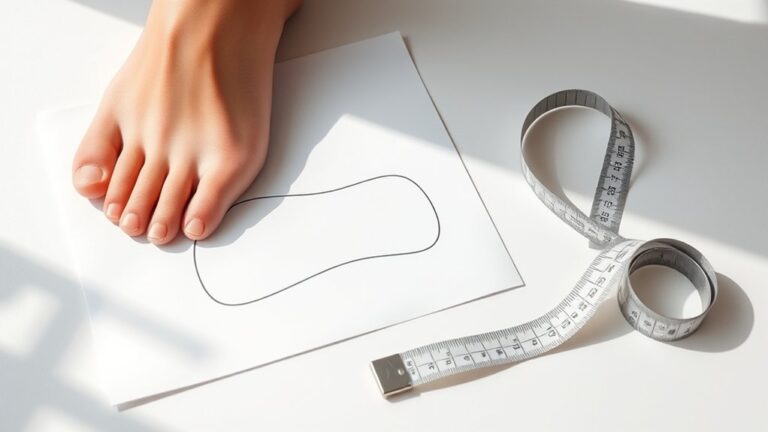
How exactly can you measure your foot width accurately at home? First, stand on a sheet of paper and trace your foot’s outline. Then, mark the widest points across the ball area, near the foot arch.
Next, use a ruler or measuring tape to measure the distance between these marks. This measurement, in inches or centimeters, reflects your foot width. For precise shoe styling, compare this to standard width charts. A wider measurement might indicate an “EW” size.
Alternatively, a Brannock device offers exact width readings. Recording your foot width guarantees your shoe selection accommodates your foot arch and overall comfort.
| Step | Tool Needed | Key Focus Area |
|---|---|---|
| Trace foot outline | Paper, pen | Full foot |
| Mark widest points | Pen | Ball area near arch |
| Measure width | Ruler/tape measure | Distance between marks |
| Compare size | Size chart/Brannock | Correct shoe width |
Why the Right Width Matters for Foot Health
Because your feet naturally expand throughout the day, wearing shoes with the correct width, such as E WIDE (EW), becomes essential to avoid discomfort and prevent issues like blisters, pressure points, and impaired circulation.
Proper width selection in footwear fashion and shoe manufacturing guarantees your feet receive adequate support and space, reducing risks of bunions and deformities over time.
When you choose the right width, you optimize foot health by maintaining proper foot alignment and stability. It also helps prevent circulation impairment and associated complications.
Plus, it enhances overall comfort and reduces injury risk.
Ignoring width specifications compromises not only daily comfort but also long-term foot integrity, especially if you experience swelling or deformities.
Where to Buy EW Shoes and Access Fit Guides
When searching for EW shoes, you’ll find that specialty retailers like Tecovas, Dr. Comfort, and Justin Boots offer durable options aligned with seasonal footwear trends. These brands provide detailed fit guides online and in-store to help you select the right width, ensuring ideal shoe material durability and comfort.
Many online stores feature size and width filters, while some offer virtual fitting tools or expert assistance. Visiting a local store for professional measurement is a reliable way to confirm your need for EW shoes before purchasing.
| Retailer | Fit Guide Access | Features |
|---|---|---|
| Tecovas | Online & In-store charts | Durable leather, seasonal styles |
| Dr. Comfort | Virtual fitting tool | Orthopedic support, wide widths |
| Justin Boots | Measurement instructions | Sturdy soles, seasonal boots |
| Online Retailers | Size & width filters | Broad selection, customer support |
| Local Stores | Professional fittings | Personalized service, durability check |
Frequently Asked Questions
Can EW Shoes Accommodate Custom Orthotics?
Yes, EW shoes accommodate custom orthotics by providing extra width and depth, enhancing orthotic comfort.
When shoe fitting, you’ll find they prevent pressure points and guarantee proper support. This is essential for maintaining foot health and comfort.
Are EW Shoes Generally More Expensive Than Standard Widths?
Think of EW shoes like custom-tailored suits. Fashion trends favor size diversity, but extra effort and materials cost more.
Do All Shoe Brands Offer EW Width Options?
Not all shoe brands offer EW width options, as shoe sizing standards vary widely. You’ll find EW mainly through specialty brands focusing on comfort. Fashion trends often prioritize standard widths, which limits extra-wide availability across mainstream lines.
How Does EW Sizing Impact Athletic Shoe Performance?
EW sizing improves shoe fitting by providing extra width, enhancing comfort during intense activity. You’ll experience reduced pressure, better foot alignment, and stability.
This leads to ideal performance and decreased injury risk through comfort enhancement and natural foot movement. It’s all about making your feet feel good so you can move better.
Can Children Wear EW Width Shoes?
Yes, children can wear EW width shoes if their feet need extra room.
When you think about fashion trends and shoe styling, it’s important to pick shoes that fit properly. Choosing EW shoes ensures comfort and supports healthy foot development. Plus, it doesn’t mean you have to sacrifice style.
Conclusion
Now that you know EW means Extra Wide, you’re better equipped to find shoes that fit like a glove, not a vice. Getting the right width is essential. It prevents discomfort, foot pain, and long-term issues.
By measuring your foot width accurately and understanding labels, you can navigate shoe shopping with confidence. Remember, your feet deserve room to breathe and move freely. So don’t settle for anything less than the perfect width.