How To Measure Kids Shoe Size – Step By Step Guide
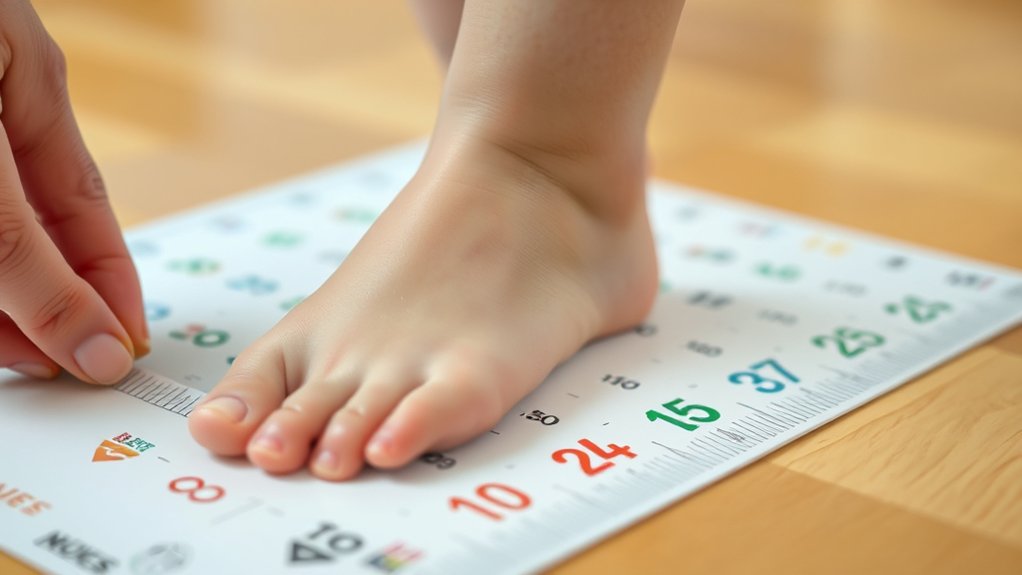
To measure your child’s shoe size accurately, have them stand barefoot on a flat surface with their heels against a wall. Trace their foot outline and measure the length from the heel to the longest toe. Then, measure the width at the widest part of the foot.
If their feet differ in size, go with the larger measurements. Add about 1 cm to allow some growing room and pick shoes that are soft and flexible. It’s a good idea to check their shoe size regularly, especially during growth spurts.
Keep following along to learn the best sizing and fit practices to keep your child comfortable and support their development.
Key Takeaways
- Have the child stand barefoot on a flat surface with heels against a wall for accurate foot positioning.
- Trace each foot’s outline and measure from heel to longest toe in centimeters or inches.
- Measure foot width by wrapping a flexible tape around the widest part, ensuring a snug fit without tightness.
- Record the larger foot measurements and add 0.8–1.2 cm of growth room when selecting shoe size.
- Recheck foot size every 6-8 weeks for young children to adjust shoe size during rapid growth phases.
Prepare To Measure Your Child’s Feet For Kids’ Shoe Size
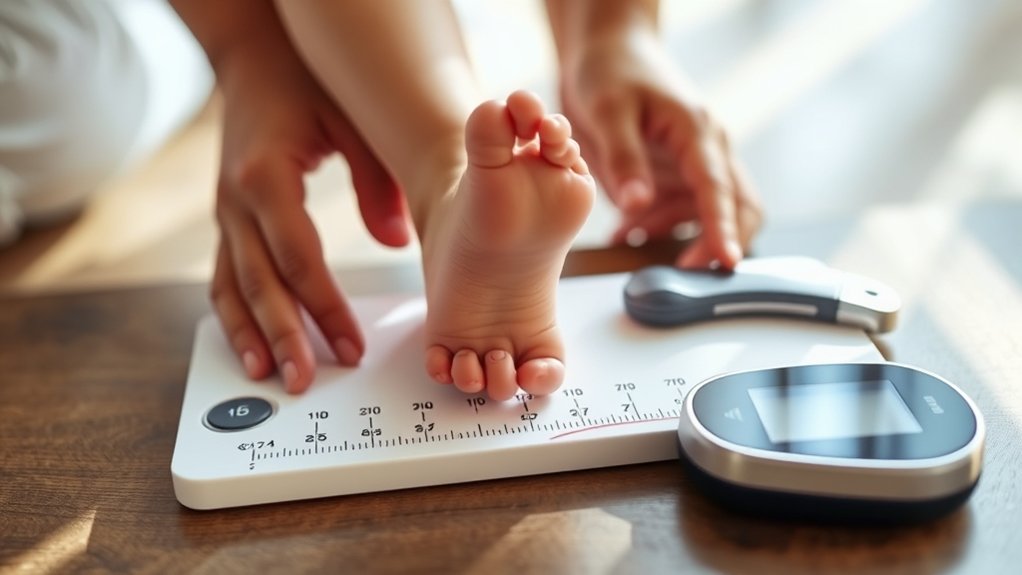
Before measuring your child’s feet, gather essential tools like a ruler, measuring tape, or a printable size guide to guarantee accuracy. You’ll want your child to stand barefoot on a hard, flat surface with weight evenly distributed to get a true measurement.
Gather tools and ensure your child stands barefoot evenly on a hard surface for accurate foot measurement.
Have them wear socks similar to those they’ll wear with the new shoes, as shoe materials affect fit and comfort. Position your child’s heel firmly against a wall or flat edge to establish a consistent starting point. Prepare a pen or pencil to trace their foot or mark the longest points.
Accurate measurement is vital, especially since proper shoe materials support healthy foot development. This helps prevent discomfort and promotes natural growth.
Taking these preparatory steps ensures you select shoes that fit well and nurture your child’s evolving feet.
Step-By-Step Guide To Tracing And Measuring Foot Length
First, grab a piece of paper, a pencil, and a ruler—make sure you have everything you need before you start.
Next, have your child stand with their full weight on one foot, flat on the paper. This helps get the most accurate tracing possible.
Once you’ve traced the foot, go ahead and mark the key points.
Then, measure carefully to record the correct foot length. It’s easier than it sounds!
Preparing Measurement Materials
When you prepare to measure your child’s foot, gather essential materials such as a piece of paper, a pencil or pen, and a ruler or measuring tape. You can also use tape to secure the paper on a flat, hard surface to prevent it from slipping.
Accurate shoe sizing depends on capturing precise foot anatomy, so make sure the child stands barefoot or with socks for consistency. Position the paper next to a wall, allowing the child’s heel to rest against it for a stable reference point.
This setup helps you trace the foot accurately, outlining the heel and the longest toe, which is usually the big toe or the second toe.
Having these materials ready sets the foundation for measuring foot length correctly and picking the right shoe size.
Positioning Feet Correctly
Once you’ve gathered your materials and set up a stable surface, position your child’s feet correctly to guarantee an accurate measurement. Proper foot placement is vital for selecting footwear fashion that fits well and complements the shoe material’s properties. Follow these steps:
Have your child stand barefoot on a flat, hard surface with heels touching the wall. Make sure their weight is evenly distributed to avoid any foot distortion.
Place a sheet of paper under each foot for tracing.
Use a pencil with firm pressure to trace the foot outline without indenting the paper. Mark the longest points: the heel and the tip of the longest toe.
This precise positioning helps capture the true foot length.
Getting this right is essential for choosing shoes that accommodate growth and match footwear fashion trends while respecting the shoe material’s fit and comfort requirements. Taking a little extra care here really makes a difference!
Recording Accurate Measurements
Although positioning your child’s feet correctly is essential, recording accurate measurements is equally important to guarantee a perfect fit.
Start by placing your child’s foot flat on paper, making certain they bear full weight to reflect true foot anatomy.
Trace carefully around the foot with a pencil held upright, staying close to the edges for precision.
Mark the heel and the longest toe to capture maximum foot length.
Measure the distance between these points using a ruler or tape measure in centimeters or inches.
Don’t forget to record both feet’s measurements, noting the longer one since sizes may vary.
Accurate measurement ensures shoes made from quality shoe materials will accommodate natural foot structure and growth.
This provides comfort and support essential for healthy foot development.
Taking the time to measure properly makes a big difference in how well shoes fit and feel.
How To Measure Foot Width And Circumference For Kids’ Shoes
To measure foot width, have your child stand with their full weight on both feet. Then, measure across the widest part at the ball of the foot.
When it comes to circumference, wrap a flexible tape or ribbon snugly around the widest area just behind the toes. Make sure to keep the tape level, and then record the measurement.
You can use this number to compare with width sizing charts and find the best shoe fit.
Measuring Foot Width
When measuring your child’s foot width, wrap a flexible measuring tape or a piece of ribbon around the widest part of their foot, typically just behind the toes. Make certain the tape is snug but not tight, then record the measurement in centimeters or inches.
Use a ruler to measure the length of the ribbon if needed.
Be sure to measure both feet, as widths can vary, and use the larger size.
Compare this measurement with the shoe brand’s width chart to choose the correct fit.
Keep in mind that different shoe materials and styles can impact comfort.
Wrap tape around widest foot part
Make certain the tape is snug but not tight
Measure both feet for accuracy
Note measurement in cm or inches
Match to brand width chart for fit
Wrapping For Circumference
Since foot width alone doesn’t capture the full shape of your child’s foot, measuring circumference gives you a better idea for picking shoes that fit well.
To do this, wrap a flexible ribbon or lace around the widest part of the foot, just behind the toes and over the ball.
Make sure it’s snug but not tight so you get an accurate measure of the foot’s shape.
Mark where the ribbon overlaps, then measure that length with a ruler in centimeters or inches.
Be sure to measure both feet because one might be a bit bigger.
Use the larger measurement when you’re choosing shoes.
Combining foot circumference with length helps you find shoes made from materials that really accommodate your child’s foot, keeping them comfortable and supported as they grow.
Check Printable Size Guide Accuracy Before Measuring
Although it might seem like a simple step, ensuring your printable size guide is accurate before measuring your child’s feet is essential. Without proper size verification, you risk measurement accuracy. That can lead to ill-fitting shoes.
To verify the guide’s accuracy, follow these steps:
Print the size guide at 100% scale without any resizing. Use a standard credit card or ID card to check known dimensions on the guide. Confirm the credit card fits exactly within the designated measurement lines.
Double-check with a ruler or measuring tape for length and width precision. Reprint the guide if any discrepancies appear between actual and printed measurements.
This way, you can be confident that your measurements will be spot on.
How To Use Foot Measurements To Find The Right Kids’ Shoe Size
To find the right kids’ shoe size, start by accurately measuring their feet. Focus on both the length from heel to toe and the circumference around the widest part. Have your child stand barefoot on a hard surface to guarantee precise measurements.
Begin by measuring your child’s barefoot length and width on a hard surface for the most accurate shoe size.
Make sure to measure both feet, then use the larger measurement to pick the size. Input these numbers into a reliable size chart or size finder tool.
Remember, shoe material affects fit, so think about flexibility and stretch when choosing shoes. It’s also a good idea to compare insoles of different sizes to check comfort and allow room for growth.
Using these measurements properly helps ensure a well-fitting shoe. This supports healthy foot development and avoids discomfort from shoes that are too tight or too loose.
What To Do When Your Child’s Feet Are Between Sizes
Accurately measuring your child’s feet gives you a solid foundation for choosing the right shoe size. But what happens when their feet fall between sizes? In that case, always opt for the larger size to guarantee comfort and allow room for growth.
Here’s what you should do:
- Measure both feet and select the size based on the longer foot.
- Check the width and choose a wider size if necessary to avoid tightness.
- Use the size chart to allow about 0.8–1.2 cm of growing room at the toes.
- Consider shoe materials; soft, flexible ones accommodate slight size variations better.
- Factor in shoe color selection for style preferences without compromising fit.
Choosing the right size and material ensures your child’s feet stay comfortable and healthy as they grow. It really makes a difference in keeping them happy on their feet!
How Often To Recheck Your Child’s Shoe Fit
Since children’s feet grow quickly, you should recheck their shoe fit regularly to maintain comfort and proper support. Frequent measurements guarantee ideal shoe comfort and promote healthy foot development, especially during rapid growth phases or spurts. For younger kids, check every 6-8 weeks; for older children, an annual review suffices.
Using precise methods like foot tracings helps detect when a larger size is needed to avoid discomfort.
| Age Group | Growth Rate |
|---|---|
| Infants (0-1 yr) | Very Rapid |
| Toddlers (1-3) | Rapid |
| Preschool (3-5) | Moderate |
| School-age (6-12) | Slower |
| Teens (13-18) | Slowest |
Adjust recheck frequency accordingly to support your child’s foot development. It really makes a difference!
Frequently Asked Questions
Can I Measure My Child’s Shoe Size Without Them Standing?
You can measure your child’s shoe size without them standing by using proper measuring techniques. Just make sure their foot is fully extended.
Keep in mind that socks can affect accuracy, so try to measure with socks on or off consistently. That way, your results will be more reliable.
It’s pretty simple once you get the hang of it! Just take your time and be gentle with their feet.
What Type of Socks Should My Child Wear When Measuring?
Choose thin, lightweight socks, not thick or bulky ones, to guarantee accurate sock thickness during measurement. This helps you achieve precise shoe fitting by preventing extra volume and distortion.
Keeping your child’s foot size true and reliable is really important. So, stick with socks that won’t add any extra bulk during the measuring process. This way, you get the best fit possible!
How Do Shoe Sizes Vary Between Different Brands?
You’ll notice brand sizing differences make shoe size charts vary widely. Always compare your child’s measurements to each brand’s specific chart. One size in one brand might fit differently in another because of these inconsistencies.
Is It Necessary to Measure Both Feet Every Time?
Yes, you should measure both feet every time because shoe width and arch height can differ between feet. This guarantees you select shoes that fit comfortably, accommodate asymmetries, and support your child’s growing feet properly.
It might seem like extra work, but it really makes a difference. After all, no two feet are exactly the same! Measuring both ensures you get the best fit every time.
Can Foot Size Predict When My Child Will Outgrow Shoes?
Think of your child’s feet as growing trees. Shoe fitting isn’t just about size but timing.
While foot size helps with growth prediction, combining regular measurements and growth patterns guarantees you don’t miss when shoes outgrow their purpose.
It’s all about keeping an eye on those changes so your child stays comfortable and supported.
Conclusion
By measuring your child’s feet accurately, you guarantee a comfortable fit that supports healthy growth. For example, when Sarah’s mom measured her feet every three months, she avoided painful blisters and costly returns.
Remember to check both length and width, use an accurate printable guide, and adjust sizes as needed. Regularly rechecking the fit keeps your child’s shoes supportive and comfortable, making every step a confident one.