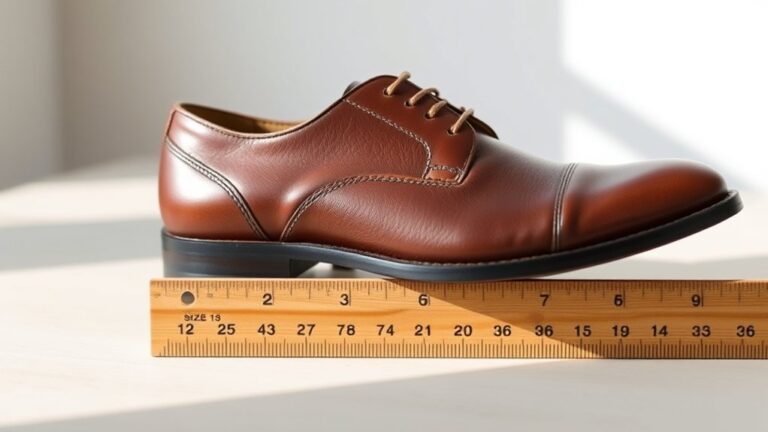
What Shoe Size Is 36 – Conversion Chart Explained
When you see European size 36, it typically means a foot length around 22.5 cm (8.86 inches). For women, this converts roughly to US sizes 6.5 to 7 and UK sizes 3.5 to 4. For men, it’s about US 4 to 5 and UK 3.
Kids near size 36 align with youth sizes 4 to 4.5 in US terms. Keep in mind, fit varies due to brand, materials, and gender-specific differences. Understanding these nuances helps guarantee you find the right, comfortable fit.
Key Takeaways
- European size 36 generally corresponds to a foot length of about 22 to 23 cm (8.66 to 9.06 inches).
- Women’s size 36 converts roughly to US 6.5–7, while men’s size 36 equals US 4–4.5.
- UK sizes for EU 36 are approximately 3.5–4 for women and around 3 for men.
- Shoe fit varies by brand, material, last construction, and manufacturing standards despite standardized sizing.
- Always measure foot length accurately and consult brand-specific size charts for precise conversion and fit.
What Does European Shoe Size 36 Mean in Centimeters and Inches?
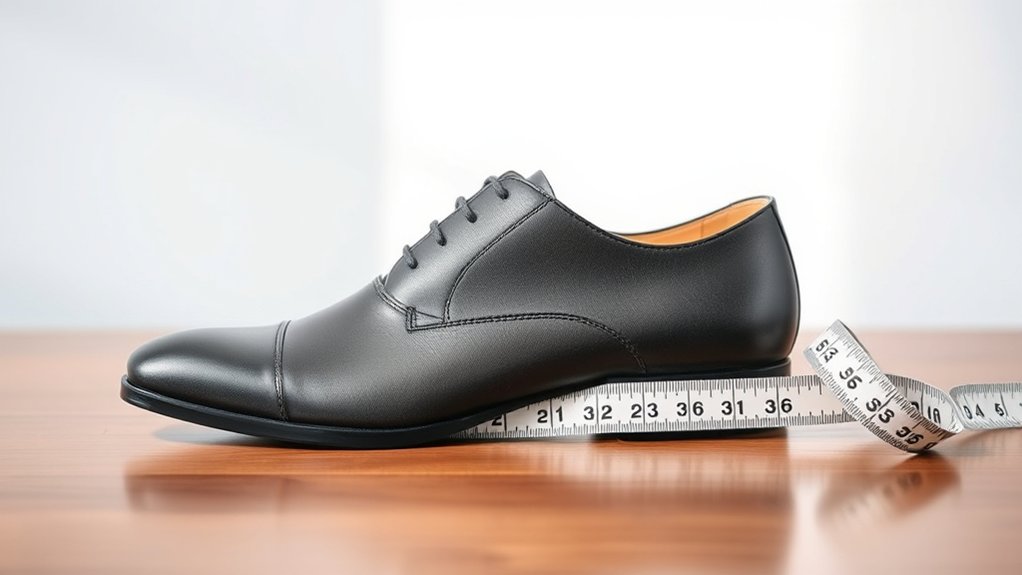
When you see a European shoe size 36, it corresponds to a foot length of approximately 23 centimeters, which converts to about 9.06 inches. This precise measurement helps you select shoes that fit well, considering the shoe material’s flexibility and stretchability.
Different materials, such as leather or synthetic fabric, may slightly influence the fit despite the standardized length.
Materials like leather or synthetic fabric can subtly affect shoe fit beyond standard sizing.
Color options typically don’t affect size, but they can impact your selection based on style preferences. Knowing the exact length in centimeters and inches allows you to compare size 36 accurately across brands and assures compatibility with various shoe material types.
This information aids in choosing shoes that provide comfort and durability while matching your preferred color options for both casual and formal wear. It really makes finding the right pair easier and more reliable, no matter what style you’re going for.
Converting Size 36 to US and UK Sizes for Men and Women
Although European size 36 primarily serves smaller feet, converting it to US and UK sizes requires attention to gender and brand differences. Size 36 corresponds to about 22 centimeters (8.66 inches) in foot length.
In US sizing, this typically converts to women’s 6.5 to 7 and men’s 4.5 to 5.
For UK sizes, women’s equivalents range from 3.5 to 4, while men’s hover around size 3.
Since brand variability affects exact fits, always consult specific size charts to assure accuracy.
Understanding these conversions is essential, especially as fashion trends increasingly emphasize precise fits impacting shoe durability.
Proper sizing ensures that shoes maintain structural integrity and comfort over time, aligning with both aesthetic preferences and long-term wearability.
Men vs. Women: How Size 36 Converts Differently
Understanding how size 36 converts differently for men and women helps you select the right fit more accurately. This gender-specific fit distinction is essential since size conversion nuances vary significantly between the two.
For example, women’s size 36 usually corresponds to a US women’s 6.5–7.5, while men’s size 36 aligns with a US men’s 4–4.5.
Foot lengths also differ slightly: about 22.5 cm for women’s and 22.0 cm for men’s size 36.
Keep these points in mind:
- Women’s sizes are roughly 1.5 to 2 sizes larger than men’s for the same EU number
- Brand-specific charts can show variations in conversions
- Size 36 men’s shoes fit smaller feet than women’s size 36
- Gender-specific fit impacts comfort and performance
Always verify with brand sizing charts to manage size conversion nuances effectively. It really helps avoid surprises when you’re picking out shoes.
Kids’ Shoe Sizes That Overlap With Size 36 Explained
Since kids’ shoe sizes overlap with adult sizes around EU 36, it’s important to recognize the specific youth measurements that correspond to this size.
In shoe manufacturing, youth sizes 4Y to 7Y closely align with EU 36, translating to approximately 22.5 cm foot length. These sizes typically match US youth sizes 4 to 4.5, fitting feet around 8.5 to 9 inches.
Understanding this overlap allows you to select appropriate footwear without confusion. Additionally, footwear materials used in kids’ sizes often mirror those in adult shoes, ensuring durability and comfort at this crossover point.
As children grow, recognizing this progression helps you transition smoothly between youth and adult shoe categories. This way, you optimize fit and function while keeping technical accuracy in sizing standards.
How to Measure Your Foot to Confirm Size 36 Fit
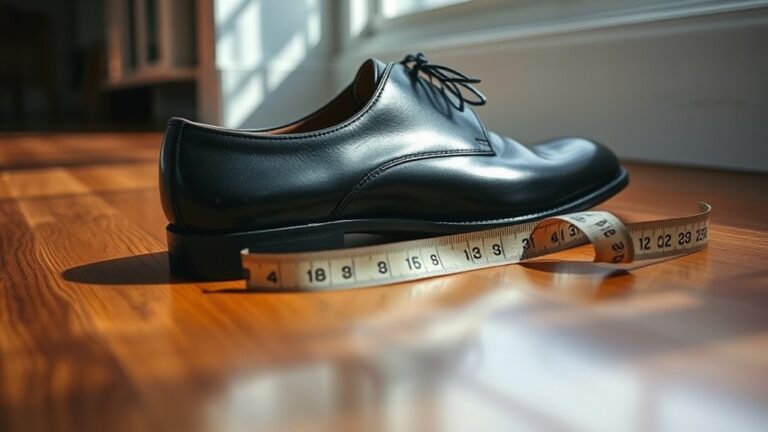
Try measuring your foot length in the afternoon when your feet are a bit swollen—that way, you get a more accurate size. Use a ruler or tape measure and measure from your longest toe all the way back to your heel.
Make sure to measure both feet because they’re often different sizes. Go with the larger foot when deciding on your size to make sure your shoes fit comfortably.
Once you have your measurements, check them against the size chart. It’s a good idea to add about 1 cm of extra space to your foot length. This will help you figure out if size 36 is the right fit for you.
Foot Length Measurement
How can you guarantee a size 36 shoe fits perfectly? Start by measuring your foot length accurately. This makes sure the shoe really fits your foot’s true size, taking into account sock thickness and how flexible the shoe material is.
Here’s how to do it right:
- Measure in the evening when your feet tend to swell the most. This gives you a more realistic size.
- Stand barefoot with your heel against a wall and measure to your longest toe.
- Use a ruler or tape measure to note the length in centimeters or inches.
- Measure both feet and pick the size that matches your longer foot.
Getting your foot length spot on helps you avoid that annoying discomfort from shoes that don’t fit well. It’s especially important if you’re thinking about different shoe materials or thicker socks.
This way, you can be confident that size 36 is truly your fit before buying.
Sizing Accuracy Tips
Although it might seem straightforward, confirming your foot length accurately is essential to guaranteeing a size 36 shoe fits perfectly.
Stand while measuring from your heel to the tip of your longest toe using a ruler or tape measure in centimeters, ideally at day’s end when feet are swollen.
Record both feet and base your size on the larger measurement, typically around 22.5 cm for size 36 EU.
Always consult brand-specific size charts, as variations occur due to shoe material and design.
Remember, shoe material affects fit and stretch, while color options might influence perceived shoe shape.
Accurate measurement combined with these considerations ensures a comfortable, precise fit, minimizing returns and enhancing satisfaction with your size 36 footwear choice.
Why Size 36 Shoes Fit Differently Across Brands
You’ll notice that size 36 shoes fit differently across brands because each one uses its own sizing standards and last shapes. It’s kind of like how clothing sizes can vary depending on the brand.
The way they measure length and width isn’t always the same, which leads to differences in how a size 36 actually feels.
So, even if you pick up two pairs labeled size 36, they mightn’t fit exactly alike.
Once you understand that each brand has its own way of sizing, it makes sense why the same size number doesn’t always mean the same fit.
Brand Size Variability
Because manufacturers use different lasts and sizing standards, size 36 shoes can fit quite differently across brands. You might notice variations in length, width, and internal volume, which can affect comfort and shoe durability.
Brand reputation often reflects how consistently a brand manages these sizing nuances.
When selecting size 36 shoes, consider these factors: differences in footbed measurements caused by manufacturing processes, variability in shoe width and shape within the same size, and target market influences on design and fit standards.
Also, keep in mind the impact of brand-specific lasts on the overall shoe structure.
Understanding these elements helps you choose size 36 shoes that align with your foot shape and durability expectations.
This way, you can be sure of a reliable and comfortable fit no matter the brand.
Measurement Standards Differences
When brands measure and construct their lasts differently, size 36 shoes can fit inconsistently across manufacturers. Material differences and varying manufacturing standards play a key role. Some brands use wider lasts or add more padding, which changes the internal fit.
Also, size 36 corresponds to different foot lengths depending on whether the brand follows European, UK, or US sizing systems.
| Factor | Impact on Size 36 Fit |
|---|---|
| Last Construction | Varies width and volume |
| Sizing Standards | Alters corresponding foot length |
| Material Differences | Affects flexibility and comfort |
Because of these discrepancies, you should always check each brand’s sizing chart before buying. Knowing about these measurement standards differences makes it easier to find the right fit, even though size 36 can vary across brands.
Using Conversion Charts to Shop for Size 36 Shoes Accurately
Although shoe sizes vary internationally, using conversion charts lets you accurately identify that a European size 36 generally matches a US women’s 6.5 or men’s 4.5.
To shop for size 36 shoes accurately, first measure your foot length in centimeters or inches. Then, compare it to the chart, considering brand-specific variations.
Remember, shoe material affects fit and flexibility, so factor it into your comfort testing when selecting shoes. Check the brand’s exact size guide to account for minor deviations.
Use foot measurements to cross-reference multiple regional sizes.
Consider shoe material, as rigid or stretchable materials impact sizing. Conduct comfort testing, especially with international purchases, to ensure proper fit.
This method reduces sizing errors and improves selection accuracy across global markets.
Tips for Choosing the Right Size 36 Shoes Online
How can you guarantee a perfect fit when ordering size 36 shoes online? First, always consult the brand-specific size chart, since sizing varies widely among manufacturers.
Measure your foot length and width in centimeters or inches at the end of the day, when feet are largest, then match these dimensions precisely to the size 36 recommendations.
Check customer reviews for feedback on fit accuracy, especially noting if the shoe runs larger or smaller.
Consider the shoe material: flexible materials like leather may stretch, while synthetic fabrics maintain shape.
Staying updated with current fashion trends helps you select shoes that combine style and comfort.
Finally, buy from retailers offering easy returns or try shoes in-store to ensure your size 36 shoes fit perfectly and meet your expectations.
Frequently Asked Questions
Are Size 36 Shoes Suitable for Wide Feet?
Size 36 shoes aren’t always suitable for wide feet unless they come in wide widths. You’ll want to check the fit carefully because fashion trends tend to favor slim designs.
Also, proper shoe maintenance can really help keep comfort and shape in check. So, don’t just assume the size fits—make sure it feels right!
Can Size 36 Shoes Be Resoled or Repaired Easily?
Wondering if you can resole size 36 shoes easily? With proper shoe manufacturing involving stitched soles and correct shoe storage, you’ll find resoling straightforward.
However, glued soles complicate repairs. They require skilled techniques and careful handling. It’s a bit trickier but still doable with the right approach.
What Materials Are Best for Comfortable Size 36 Shoes?
You should choose shoe materials like genuine leather or breathable mesh for comfort enhancement. Adding memory foam insoles, stretchy fabrics, lightweight EVA soles, and moisture-wicking linings guarantees size 36 shoes offer ideal flexibility, cushioning, and dryness.
These materials work together to keep your feet comfortable all day long. Plus, breathable mesh helps prevent overheating, while leather provides durability and a great fit. So, when picking size 36 shoes, focus on these features to enjoy both comfort and style.
Do Size 36 Shoes Come in Half Sizes?
Yes, size 36 shoes sometimes come in half sizes like 36.5. Shoe manufacturing trends adapt to fashion trends, offering half sizes for a more precise fit.
Always check brand-specific charts for availability in your preferred style. It really depends on the brand and the type of shoe you’re looking for. So, don’t hesitate to look around!
How Do Size 36 Shoes Accommodate Arch Support Needs?
You might not realize it, but size 36 shoes often accommodate arch support well. Their shoe fit includes enough internal space and usually removable insoles. This lets you add custom orthotics tailored precisely to your arch support needs.
Conclusion
Now that you know exactly what size 36 means across different systems, you’re armed with precise info to find your perfect fit. Remember, size 36 can vary wildly between brands, like maneuvering through a labyrinth of measurements. So always measure your foot and consult conversion charts carefully.
With these tips, you’ll avoid the frustration of wrong sizes and shop confidently online. This way, you can ensure your shoes fit flawlessly every single time.