What Size Is A 36 Shoe – Conversion Chart And Guide
A Euro size 36 shoe generally converts to a US women’s size 5.5 to 6.5 and men’s 4 to 5.5. UK sizes range from 3.5 to 4.5 depending on gender. Foot length measures about 22 to 23.5 cm.
Exact fits vary by brand, style, and material, so measuring your foot precisely is essential. Using size charts and conversion tools helps guarantee the best match.
Keep in mind, nuances in sizing affect comfort and fit. Understanding these details will guide you further.
Key Takeaways
- Euro size 36 generally converts to US women’s 6–6.5 and men’s 4–5, with variations by brand and style.
- A size 36 shoe corresponds to a foot length of approximately 22.5–23.5 cm (8.86–9.25 inches).
- Use precise foot measurements and consult specific size charts for accurate conversion and optimal fit.
- Size 36 fits older children and adults but rarely fits infants or toddlers due to smaller foot sizes.
- Shoe fit varies by material, brand, and style, so trying on multiple pairs is recommended for the best comfort.
What Does Euro Size 36 Mean in US, UK, and Other Regions
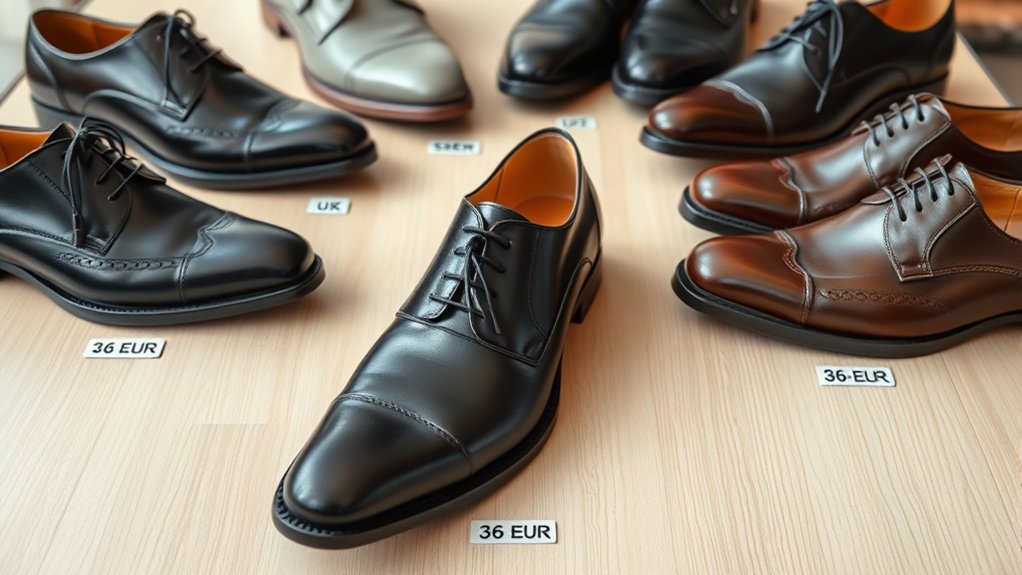
How do you translate a Euro size 36 into US, UK, and other regional shoe sizes? Euro 36 typically equates to a US women’s size 5.5 to 6 and men’s size 4 to 4.5.
In the UK, it corresponds to women’s sizes 3.5 to 4 and men’s 3 to 3.5.
This size reflects a foot length of about 22 centimeters (8.66 inches).
Historically, European sizing, including size 36, has influenced fashion trends by offering a standardized measurement system that contrasts with the more varied UK and US scales.
Keep in mind, conversion charts can differ slightly by brand due to manufacturing nuances, so always consult specific sizing guides for precision.
Euro 36 is considered small to medium, fitting a broad range of regional sizing systems efficiently.
How to Measure Your Foot for a Precise Size 36 Fit
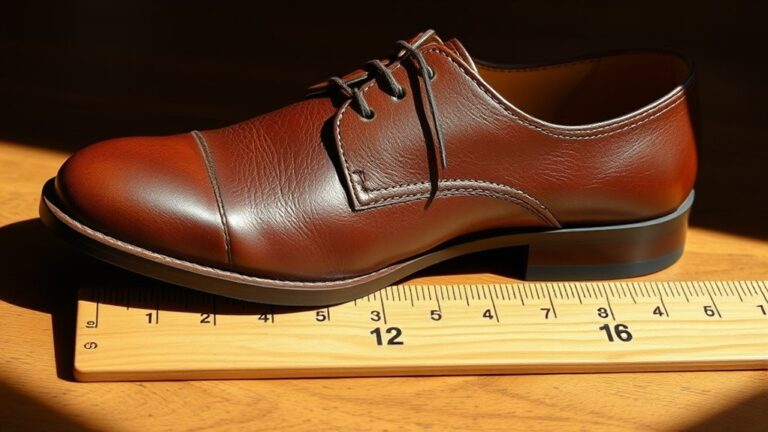
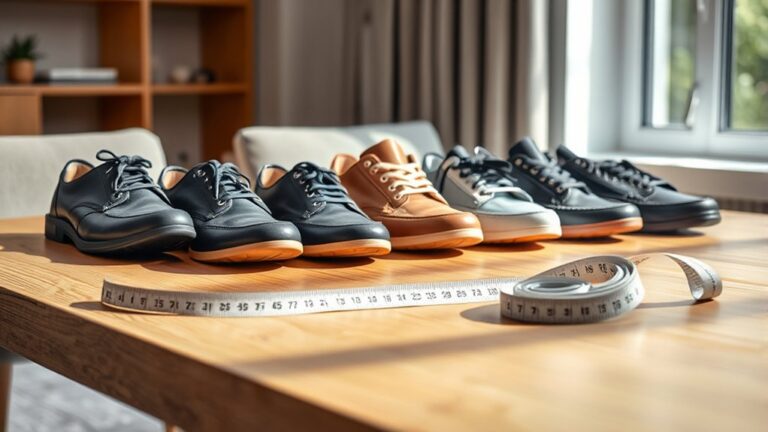
Before selecting a size 36 shoe, you’ll need to measure your foot accurately to guarantee the best fit. Stand upright on a flat, hard surface wearing socks or stockings. Use a ruler or measuring tape to mark the longest point of your foot, usually the big toe, and the outer edge of your heel.
Measure your foot standing upright on a flat surface to ensure the best size 36 shoe fit.
Measure the distance between these points, making sure your foot is fully extended. It’s a good idea to repeat this for both feet and use the larger measurement to determine your length.
Don’t forget to assess your foot arch and shoe width, as these affect comfort and fit. Then, match your measurements against a size chart to confirm if a size 36 corresponds to your foot length and width.
This way, you can ensure an ideal fit and support.
Women’s Size 36 Conversion Chart: US, UK, Inches, and CM
Although shoe sizing varies internationally, a women’s size 36 typically converts to a US size 6 to 6.5 and a UK size 3.5 to 4. The foot length for this size measures approximately 23 centimeters or 9 inches, providing a clear metric for accurate fitting.
When selecting shoes, you should consider how fashion trends influence the availability of specific sizes and shoe materials, which can affect fit and comfort. Using a conversion chart helps you translate size 36 into the correct US and UK sizes. This way, you can be sure to choose the right shoe regardless of brand or origin.
This precision is essential, especially as shoe materials, ranging from leather to synthetics, respond differently to foot dimensions. That impacts overall fit and durability, so it’s worth paying attention to these details when shopping.
Men’s Size 36 Shoe Conversion: Equivalent US and UK Sizes
When you’re looking at a men’s size 36 shoe, it usually lines up with a US size somewhere between 4.5 and 5.5.
At the same time, the equivalent UK size tends to fall around 3.5 to 4.5.
This generally fits a foot that’s about 9.25 inches long, or roughly 23.5 centimeters.
Just a heads-up: since sizing can vary a bit depending on the brand, it’s always a good idea to double-check the specific measurements before making a purchase.
UK Size Equivalents
Since UK shoe sizes run about one full size smaller than US sizes for men, a UK size 36 typically converts to a US size between 4.5 and 5.0, depending on the brand.
When considering UK size equivalents, it’s important to note that a men’s UK 36 generally matches a European size 36, with an approximate foot length of 23 centimeters.
Given regional sizing differences, size chart accuracy becomes vital. You should always refer to specific brand charts to guarantee precise conversions.
UK size 36 is classified as a small adult size, often overlapping with women’s UK sizes of about 3.5 to 4.0.
Understanding these distinctions helps you navigate international sizing systems effectively and avoid fitting errors.
US Size Comparisons
If you need to convert a men’s size 36 shoe, you’ll find it generally corresponds to a US size between 3.5 and 4.
The equivalent UK size is typically around 3. This conversion is essential for ensuring shoe comfort, especially when considering variations in foot arch support across brands.
Since UK sizes run approximately one size smaller than US, size 36 aligns closely with UK 3.
Keep in mind, though, that small discrepancies in conversion exist depending on the manufacturer.
To optimize shoe comfort and proper fit, particularly for those with specific foot arch needs, always verify sizing with the brand’s detailed chart.
Accurate conversion helps prevent discomfort and supports foot health by matching shoe dimensions precisely to your foot’s shape.
Conversion Chart Details
Although European size 36 is standardized around a foot length of approximately 23 centimeters, converting it to US and UK sizes requires attention to specific variations.
For men, a size 36 generally corresponds to a US size 4 or 4.5 and a UK size 3.5 or 4.
When using a conversion chart, you have to consider individual factors such as shoe material flexibility and the shape of your foot arch. These things influence fit even if the sizing is standard.
Brands might show slight deviations, so it’s always a good idea to verify measurements against your foot’s actual length and arch support needs.
Understanding these nuances helps you pick the right size, keeping comfort and performance in check.
This is especially important because different shoe materials can change the internal dimensions and support profiles within the same nominal size.
Size 36 Shoe Conversions for Kids and Infants (When Relevant)
When you look at size 36 shoes in European sizing, you’ll find they generally fit older kids rather than infants or toddlers. These shoes correspond to foot lengths of about 22.5 to 23 cm (8.86 to 9.06 inches).
Infants rarely wear size 36 since historical shoe standards and cultural sizing practices assign smaller sizes to younger children.
European size 36 aligns roughly with a US kids’ size 4 to 5, but this varies due to differing measurement systems. Understanding these cultural sizing differences helps when converting sizes for older children.
Since size 36 shoes measure about 9.1 inches, they suit children with more developed feet, not infants whose footwear typically ranges much smaller.
This distinction reflects both historical and contemporary sizing conventions globally. So, when shopping for kids or infants, it’s good to keep these factors in mind to find the right fit.
Tips for Getting the Right Fit When Converting Size 36
Ensuring the right fit when converting size 36 requires accurate foot measurements and careful comparison with standardized size charts. Begin by measuring your foot length precisely in centimeters or inches. Then, use a reliable conversion chart or digital calculator to match these measurements to size 36 standards.
Remember, shoe comfort hinges not only on length but also on width and overall fit, so consider your personal style preferences and foot shape. Since sizing can vary slightly between brands, always verify return policies when shopping online.
If possible, try on shoes to confirm fit before purchasing.
Why Size 36 Fits Differ: Brand and Style Variations Explained
Because shoe sizing lacks universal standardization, a size 36 can fit differently depending on the brand and style. Brand consistency varies due to differences in shoe lasts, materials, and manufacturing processes. This causes size 36 shoes to sometimes run smaller or larger than standard measurements.
You’ll notice that some brands prioritize narrow or wide fits, which directly affects comfort and sizing accuracy. Style impact also plays a fundamental role. Athletic shoes often allow more flexibility and space, whereas formal styles tend to have a more rigid, precise fit.
These variations mean a size 36 in one brand might feel tighter or looser in another. So, to guarantee the best fit, you should always consult specific size charts and try on multiple pairs. It’s a good idea to keep these brand and style differences in mind.
How to Use a Shoe Size Converter Tool for Size 36 and Beyond
Although shoe size standards vary globally, using a shoe size converter tool lets you quickly find accurate equivalents for size 36 across different measurement systems. Start by selecting the correct gender or age category to tailor conversions precisely.
Then, input size 36 in your preferred units—US, Europe, inches, or centimeters—and check out the equivalent sizes. For example, European 36 matches US women’s 6.5 or men’s 5.
Make sure to pay close attention to country-specific standards and measurement units to ensure accuracy.
Also, consider fashion trends and material differences because these can affect the fit even when sizes seem equivalent.
Use the guide’s tips for precise foot measurement to confirm compatibility.
This way, you get reliable conversions for size 36 and beyond, helping you pick shoes that fit well and match your style preferences.
Frequently Asked Questions
Are Size 36 Shoes Suitable for Wide Feet?
Size 36 shoes typically have a narrow shoe width, so if your foot shape is wide, they might feel tight. You should seek size 36 options labeled wide or with extra width to guarantee proper comfort and fit.
It’s all about making sure your feet have enough room to breathe and move comfortably. Don’t hesitate to try on different styles or brands that offer wide fits in this size. That way, you can find the perfect match without any pinching or discomfort.
What Materials Are Best for Comfortable Size 36 Shoes?
You’ll want shoe materials like breathable leather, flexible mesh, and soft cotton linings for comfort enhancement in size 36 shoes. Memory foam insoles and shock-absorbing rubber soles also optimize cushioning and reduce impact effectively.
These materials work together to keep your feet comfortable throughout the day. Plus, they help with ventilation and support, which is especially important in smaller sizes. So, choosing the right materials really makes a difference!
How Do Insoles Affect the Fit of Size 36 Shoes?
Insoles impact size 36 shoes by altering sneaker cushioning and arch support, affecting fit snugness. Thicker insoles may require sizing up to maintain comfort, while thinner ones can feel loose. So, always adjust accordingly for the best fit.
It’s a bit of a balancing act. You want enough padding without making the shoes too tight. And sometimes swapping insoles means trying a different size to keep things comfy. Just pay attention to how your feet feel, and you’ll find the right combo.
Can Size 36 Shoes Be Altered for a Better Fit?
You can alter size 36 shoes for a better fit, especially if shoe manufacturing used flexible materials. Adjustments like stretching or adding insoles accommodate your foot arch, improving comfort without major resizing or custom modifications.
It’s pretty simple to make these small tweaks. Just a little change can make your shoes feel way more comfortable. And the best part? You don’t have to go through complicated procedures to get that perfect fit.
What Styles Are Most Popular in Size 36 Shoes?
You’ll find fashion trends favoring size 36 in ballet flats, ankle boots, and casual sneakers. Prioritize shoe maintenance like cleaning and conditioning to preserve fit, support, and appearance.
This way, your trendy footwear lasts longer and performs well. Taking a little time to care for your shoes really pays off!
Conclusion
When converting a size 36 shoe, remember that “measure twice, cut once” applies perfectly. Accurate foot measurement guarantees the best fit across US, UK, and other sizing systems.
Since brand and style affect fit, use conversion charts and shoe size converter tools to navigate differences confidently. By understanding these technical details, you’ll avoid sizing errors and step into comfort with precision every time.
Your ideal size 36 fit is just a careful conversion away.